Plant Overview
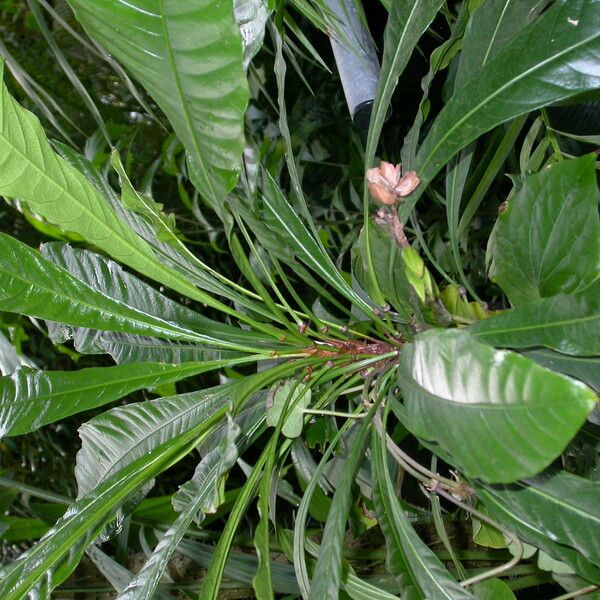
Known affectionately as the Fried Egg Plant or Jasmine of the Woods, Erythrochiton brasiliensis is a hidden gem from the shaded floors of the Brazilian rainforest. It is celebrated by collectors for its striking, architectural flowers that look like a sunny-side-up egg resting in a bright red cup. Despite its exotic appearance, it is a slow-growing, resilient shrub that brings a touch of the Amazonian understory into the home.
🔍 How to Identify
- 🍳 The "Fried Egg" Bloom: The most distinct feature is the flower—a brilliant white five-petaled blossom (the egg white) emerging from a deep red, star-shaped calyx (the cup), featuring yellow centers.
- 🍃 Glossy Foliage: The leaves are long, lance-shaped, and a deep, leathery green. They often grow in clusters at the top of the stem, giving the plant a palm-like silhouette.
- 🪵 Growth Habit: It typically grows as a single-stemmed small tree or shrub. Interestingly, the flowers often appear to emerge directly from the stems or even the midribs of the leaves.
🏡 In Your Garden
- ☁️ Shadow Dweller: Because its ancestors live on the dark rainforest floor, this plant is highly sensitive to direct sunlight. In your home or garden, it requires "bright-indirect" light; direct rays will quickly scorch and bleach its beautiful dark leaves.
- 💧 Thirst for Humidity: This is not a "set it and forget it" desert plant. It craves high humidity and consistent moisture. If the air is too dry, the leaf tips will turn brown and crispy, signaling it needs a pebble tray or a humidifier nearby.
- 🌱 Acidic Ambitions: It thrives in rich, slightly acidic soil. Because it has a sensitive root system, it dislikes being moved frequently, so choose its "forever home" in your garden or a large pot carefully.
⚠️ Safety & Toxicity
- 🐾 Pet Safety: Erythrochiton brasiliensis is generally considered non-toxic to cats and dogs. However, it is not an edible plant.
- 👶 Child Safety: While not poisonous, the sap of plants in the Rutaceae family can occasionally cause mild skin irritation in sensitive individuals. It is best kept out of reach of curious toddlers who might be tempted by the "egg" flowers.
✨ Fun Fact
Unlike most plants that bloom in a specific season, a happy Erythrochiton brasiliensis is an "ever-bloomer." Under the right tropical conditions, it can produce its unique fried-egg flowers year-round, one after another!

Detailed Care Instructions
Erythrochiton Brasiliensis plant requires regular watering to ensure proper growth and development. It is recommended to water the plant once a week, or more frequently in hot, dry weather conditions. When watering, it is important to avoid getting the leaves wet as this can lead to fungal growth and disease. Instead, water the soil directly at the base of the plant, ensuring that the water reaches down to the roots. Overwatering should be avoided as it can lead to root rot and other issues. It is also important to provide good drainage for the plant by ensuring that the soil is not waterlogged. This can be achieved by using a well-draining soil mix and by providing adequate drainage holes in the pot or container.
The recommended soil for the Erythrochiton Brasiliensis plant is a well-draining, nutrient-rich soil with a neutral to slightly acidic pH level. The soil should be loamy and should contain organic matter such as compost or peat moss. The plant prefers a soil that is moist but not waterlogged, and it cannot tolerate standing water. It is recommended to use a slow-release fertilizer to provide the plant with necessary nutrients throughout the growing season. Additionally, adding perlite or sand to the soil mixture can help improve drainage and prevent root rot.








