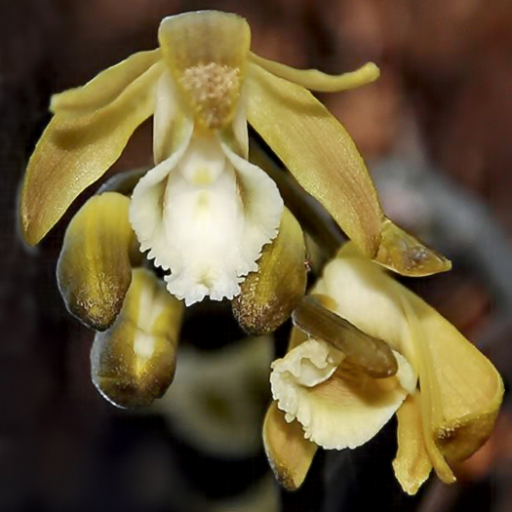
Plant Overview
Often called the Black Bootlace Orchid, this mysterious Australian native is a true botanical rebel. Unlike most plants that rely on green leaves and sunlight to survive, the Erythrorchis cassythoides is a leafless, "vampiric" climber that thrives in the shadows. It looks more like a tangled mess of dark wiring than a living flower until it erupts into a spectacular display of pale, fragrant blooms.
🔍 How to Identify
- 🐍 The Stems: Long, wiry, and scrambling, these stems are typically dark brown to jet black, mimicking the appearance of old bootlaces or tangled vines.
- 🚫 The Leaves: You won’t find any green here. Instead of leaves, the plant features small, scale-like structures that hug the stem, as it has no need for photosynthesis.
- 🌸 The Flowers: In late spring, it produces large, branched clusters of cream to pale yellow flowers. Each bloom is delicate, often fragrant, and provides a startling contrast against the dark stems.
🌲 Habitat & Ecology
- 🍄 The Fungal Connection: This orchid is "mycoheterotrophic," meaning it steals its nutrients from underground fungi rather than the sun. Because of this complex relationship, it is almost never seen in home gardens as it cannot survive without its specific fungal partner.
- 🧗 The Climber: In the wild, it is found in the sclerophyll forests of Eastern Australia. It uses its specialized roots to "climb" up the trunks of Eucalyptus or Stringybark trees, reaching heights of up to 6 meters (20 feet) to display its flowers.
⚠️ Safety & Toxicity
- 🟢 Status: Generally non-toxic.
- 🐾 Details: While there are no records of this orchid being poisonous to humans or pets, its rarity and specialized lifestyle mean it should never be disturbed or consumed. Its "bootlace" stems are tough and could pose a choking or entanglement hazard if a curious pet decided to chew on them.
✨ Fun Fact
Because it doesn't need leaves to produce food, the Black Bootlace Orchid can stay dormant underground for years. It only sends up its "bootlace" vines when conditions are perfect for flowering, making a sighting of this plant a lucky event for hikers and botanists alike!

Detailed Care Instructions








