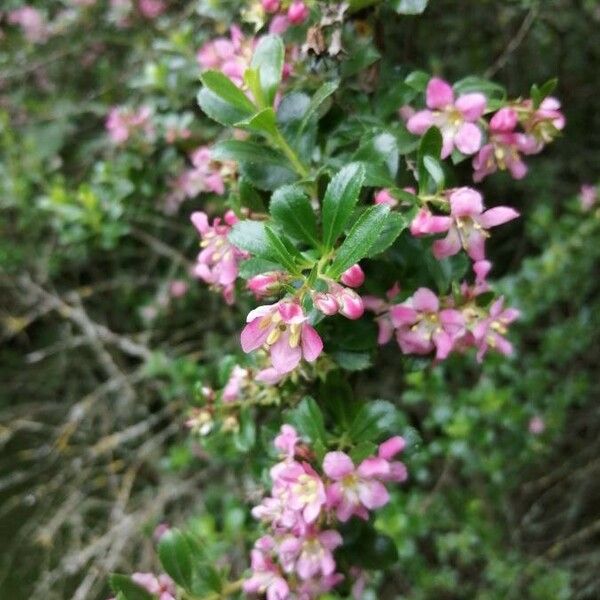
Plant Overview
Known affectionately as the "Curry Bush" or "Resin Bush," this evergreen Chilean beauty is famous for its olfactory surprise. While it looks like a typical ornamental shrub, a warm breeze or a light rain releases a savory, mouth-watering aroma that smells exactly like a pot of simmering curry. It is a tough, salt-tolerant survivor that brings a sensory experience to any coastal or Mediterranean-style garden.
🔍 How to Identify
- 🌿 Sticky Foliage: The small, oval, dark-green leaves are coated in a distinct resin, making them feel slightly tacky or "gummy" to the touch.
- 🌸 Summer Blooms: In mid-to-late summer, the plant produces dense, upright clusters (panicles) of tiny, tubular white flowers that contrast beautifully against the dark leaves.
- 🍃 Serrated Edges: If you look closely at the foliage, the leaf margins are finely toothed, giving the bush a textured, crisp appearance.
🏡 In Your Garden
- 🌊 Coastal Warrior: This plant is incredibly salt-tolerant and wind-resistant, making it a top choice for "frontline" coastal hedging where other plants might wither from the sea spray.
- ✂️ Growth & Pruning: It is a fast grower with an upright habit. To prevent it from becoming "leggy" or sparse at the bottom, it’s best to give it a light trim after the flowering season to encourage bushier growth.
- ☀️ The Scent Trigger: To get the most out of its famous fragrance, plant it in a sunny spot. The sun’s heat helps volatilize the resins, filling your garden with its unique spicy scent.
⚠️ Safety & Toxicity
- ✅ Generally Safe: Escallonia illinita is not considered toxic to humans, dogs, or cats.
- 🧤 Resin Sensitivity: While not poisonous, the sticky resin on the leaves can occasionally cause mild skin irritation for people with very sensitive skin. It is also a bit "messy," so you might want to wear gloves when pruning to keep the sap off your hands and tools.
✨ Fun Fact
The "Curry Bush" doesn't actually contain any of the spices found in curry powder! Its scent is a result of complex volatile compounds in its resin that evolved to protect the plant from pests and water loss in its native Chilean habitat.

Detailed Care Instructions
To grow Escallonia Illinita, also known as New Zealand Christmas Tree, you can follow these steps:
- Choose the right location: Escallonia Illinita thrives in full sun to partial shade. Select a spot in your garden that receives at least six hours of direct sunlight daily. Ensure the soil is well-draining.
- Prepare the soil: Dig a hole that is two times wider and slightly deeper than the root ball of the plant. Mix some compost or well-rotted manure into the soil to improve its fertility and drainage.
- Planting: Gently remove the plant from its container or loosen the roots if it is in a root ball. Place it in the prepared hole, ensuring that the top of the root ball is level with the soil surface. Backfill the hole with the amended soil, pressing it down lightly around the roots.
- Watering: Give the newly planted Escallonia Illinita a deep watering to settle the soil and ensure good root establishment. Afterward, water regularly, especially during hot, dry periods, to keep the soil evenly moist. Avoid overwatering, as this can lead to root rot.
- Mulching: Apply a layer of organic mulch around the base of the plant to conserve moisture, suppress weed growth, and provide insulation for the roots. Keep the mulch a few inches away from the plant stem to prevent rot.
- Pruning: Escallonia Illinita benefits from regular pruning to maintain its shape and promote bushiness. Prune back any dead, damaged, or crossing branches in early spring. You can also lightly trim the plant after it flowers to encourage more blooms.
- Fertilizing: Apply a balanced slow-release fertilizer in spring to provide essential nutrients for healthy growth. Follow the package instructions for application rates.
- Pests and diseases: Monitor the plant regularly for any signs of insect pests, such as aphids or scale. Treat with an appropriate insecticide if necessary. Escallonia Illinita is generally resistant to diseases, but ensure good air circulation and avoid excessive moisture to prevent fungal issues.
- Winter care: If you live in a colder climate, provide winter protection for your Escallonia Illinita by mulching heavily around the base and wrapping the plant with burlap if necessary. This will help insulate it from frost and winter winds.
By following these steps, you should be able to successfully grow Escallonia Illinita in your garden.
The best way to water this particular plant is to use a watering can or hose with a gentle flow. The soil should be allowed to dry out slightly between waterings, but not to the point of becoming completely parched. It's important to water at the base of the plant, rather than directly on the leaves or flowers, in order to avoid water damage or disease. Checking the moisture level of the soil with a finger or moisture meter can help determine when it's time to water. In general, it's best to aim for consistent, moderate watering rather than irregular or excessive watering.
To fertilize Escallonia Illinita, follow these instructions:
- Choose a balanced, slow-release granular fertilizer labeled for use on shrubs or evergreen plants.
- Before applying the fertilizer, water the plant thoroughly to ensure the soil is moist.
- Scatter the granules evenly around the base of the plant, avoiding direct contact with the stems.
- Follow the package instructions for the recommended amount of fertilizer to apply based on the size of the plant.
- Gently work the granules into the top layer of the soil using a small garden hoe or a hand cultivator.
- Once applied, water the plant again to activate the fertilizer and help it reach the root zone.
- Apply the fertilizer in early spring, just before new growth starts, and again in early fall to promote healthy growth.
- Keep in mind that it's important not to over-fertilize, as this can lead to excessive foliage growth and may affect the overall health of the plant.
Escallonia Illinita is a versatile and hardy plant that can thrive in a variety of soil conditions. However, optimal growth and health can be achieved by using a specific type of soil.
When selecting soil for Escallonia Illinita, it is crucial to choose a well-draining medium. This plant prefers soil that does not become waterlogged, as overly wet conditions can lead to root rot and other fungal diseases. Adequate drainage ensures that excess water moves away from the roots, allowing the plant to uptake necessary nutrients efficiently.
Ideally, a sandy loam soil mix is preferred for Escallonia Illinita. Sandy loam consists of a balanced combination of sand, silt, and clay particles. This type of soil allows for both water retention and efficient drainage, creating a suitable balance for the plant's growth.
Another important factor to consider is the soil's pH level. Escallonia Illinita performs best in slightly acidic to neutral soils, with a pH range between 5.5 and 7.0. This pH range provides optimal conditions for nutrient uptake and overall plant health.
To enhance the soil's fertility and provide adequate nutrition for the plant, it is advisable to incorporate organic matter into the soil. Adding well-rotted compost or aged manure can improve the soil's nutrient content and structure. This organic matter increases moisture retention, improves drainage, and promotes beneficial microbial activity in the soil.
In summary, Escallonia Illinita thrives in well-draining soil with a slightly acidic to neutral pH. A sandy loam soil mix that incorporates organic matter is an excellent choice to provide the plant with the necessary nutrients and growing conditions for healthy growth.
Escallonia illinita is a popular ornamental plant that can be easily propagated using different methods. Here's a detailed guide on how to propagate Escallonia illinita:
- Collection of Stem Cuttings:
- Take stem cuttings during spring or early summer, as this is the time when the plant is actively growing.
- Choose healthy, non-flowering stems that are around 4-6 inches long.
- Cut just below a leaf node, using sharp, sterilized pruning shears.
- Remove any leaves from the lower half of the cutting to reduce moisture loss.
- Optional: Dip the lower end of the cutting in a rooting hormone to enhance root development.
- Plant the cuttings in a well-draining potting mix, leaving at least two leaf nodes above the soil surface.
- Water the cuttings thoroughly and place them in a warm, humid environment with bright, indirect light.
- Mist the cuttings regularly to maintain the humidity levels.
- Once roots have formed, usually within 6-8 weeks, the cuttings can be transplanted into individual pots or a garden bed.
- Take stem cuttings during spring or early summer, as this is the time when the plant is actively growing.
- Layering:
- Select a healthy and flexible stem from the parent plant during spring or early summer.
- Bury a section of the stem horizontally in the soil, leaving the tip exposed.
- It's helpful to wound the buried section by removing a small strip of bark, as this will encourage root formation.
- Secure the buried section in place using stakes or small rocks to prevent it from popping out.
- Keep the layered stem consistently moist by watering as needed.
- After a few months, check for root development by gently tugging on the layered stem. If there is resistance, it indicates the roots have formed.
- Once well-developed roots are present, cut the layered stem from the parent plant and transplant it to its desired location.
- Select a healthy and flexible stem from the parent plant during spring or early summer.
- Division:
- Older Escallonia illinita plants can be propagated through division.
- Carefully remove the plant from the ground and gently separate the root system into smaller clumps using a sharp, sterilized knife or garden fork.
- Each divided clump should have several healthy shoots and an intact root system.
- Replant the divided clumps in well-prepared soil in the desired location, ensuring they are at the same depth as before.
- Water the divisions thoroughly and continue to water regularly until they become established.
Remember that when propagating Escallonia illinita, it's crucial to provide optimal growing conditions including well-draining soil, adequate sunlight, and regular watering. Patience is key, as it may take several weeks or even months for successful propagation.
- Older Escallonia illinita plants can be propagated through division.








