Plant Overview
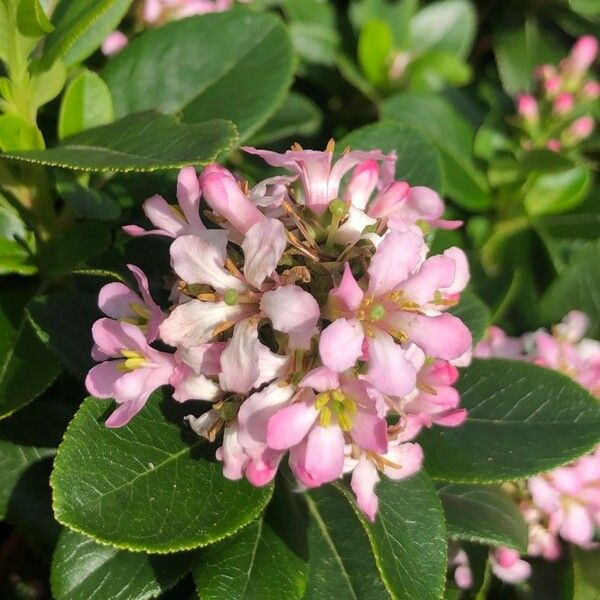
Known as the "Pink Escallonia," this Chilean native is a superstar of coastal landscapes. It is beloved for its ability to shrug off salty sea breezes while maintaining a lush, polished appearance. Often used as a decorative hedge or a "living wall," it provides a vibrant burst of color when most other shrubs are just starting their season.
🔍 How to Identify
- 🍃 Glossy Foliage: The leaves are small, oval, and have a distinct waxy sheen that makes the plant look "polished" even when it isn't in bloom.
- 🌸 Bell-Shaped Blooms: It produces dense clusters of tiny, tubular flowers that range from soft blush to a deep, candy pink.
- 🦷 Serrated Edges: If you look closely at the leaf margins, you’ll notice very fine, neat "teeth" along the edges, giving the foliage a crisp texture.
🏡 In Your Garden
- 🌊 Coastal Warrior: This plant is famous for its salt tolerance. Its waxy leaf coating acts as a natural shield, making it the perfect choice for wind-swept gardens near the ocean where other plants might "burn."
- ✂️ Pruning for Privacy: Because it grows relatively quickly and responds well to shearing, it is a favorite for evergreen hedging. Just be sure to prune right after flowering to ensure you don't cut off next year's flower buds.
⚠️ Safety & Toxicity
- 🟢 Status: Generally safe and non-toxic.
- 🐾 Details: Escallonia laevis is not known to be poisonous to cats, dogs, or horses. However, the stems can be quite woody and the resinous sap may cause very mild skin irritation for people with highly sensitive skin, so wearing gloves during heavy pruning is recommended.
✨ Fun Fact
The genus Escallonia was named in honor of Antonio Escallón y Flórez, an 18th-century Spanish traveler and botanist who first "discovered" these resilient shrubs while exploring the rugged landscapes of South America.

Detailed Care Instructions
To grow Escallonia Laevis, a flowering evergreen plant, follow these steps:
- Choose the right location: Escallonia Laevis thrives in full sun or partially shaded areas. Make sure the location has well-draining soil.
- Prepare the soil: Loosen the soil and add organic matter such as compost to improve its fertility and drainage.
- Planting: Dig a hole that is slightly wider and deeper than the plant's root ball. Place the plant in the hole, making sure the top of the root ball is level with the ground. Backfill the hole with soil, gently firming it around the roots.
- Watering: Water the plant immediately after planting to help the soil settle and eliminate any air pockets. Throughout the growing season, provide regular watering to keep the soil consistently moist but not waterlogged. During periods of heavy rainfall, reduce watering to prevent root rot.
- Mulching: Apply a layer of organic mulch around the base of the plant, such as wood chips or straw. Mulch helps retain moisture, suppresses weed growth, and protects the roots from extreme temperatures.
- Pruning: Escallonia Laevis generally requires minimal pruning. However, you can shape and control its growth by selectively removing any dead, damaged, or overgrown branches. It's best to prune it lightly after flowering.
- Fertilizing: Feed the plant with a balanced slow-release fertilizer in the spring. Follow the manufacturer's instructions for the appropriate dosage.
- Protection: If you live in a colder region, protect the plant during the winter by covering it with a layer of burlap or providing a windbreak. Escallonia Laevis is generally hardy, but extreme cold temperatures can damage the foliage.
By following these steps, you can successfully grow Escallonia Laevis and enjoy its beautiful flowers and evergreen foliage.

Place in a bright room that is sun drenched almost all day. Or directly in a south-facing window.

To properly water this species of plant, it is important to first check the moisture level of the soil to avoid overwatering. One method is to stick a finger about 1-2 inches into the soil and feel for moisture. If the soil feels dry, it is time to water. When watering, use a gentle stream of water and avoid splashing the leaves. Water thoroughly and allow excess water to drain from the bottom of the container. It is best to water this plant deeply but infrequently, rather than giving it frequent shallow waterings. During periods of high heat or drought, it may be necessary to increase the frequency of watering.
To fertilize the plant, apply a balanced, slow-release fertilizer in the spring just as new growth starts to emerge. Use caution not to over-fertilize as this can lead to excessive growth and weaken the plant. Additionally, be sure to water the plant thoroughly after fertilizing to prevent burn.
Escallonia Laevis prefers well-draining soil that is rich in nutrients and organic matter. The soil should be slightly acidic with a pH range of 5.5-7.0. It thrives in loamy soil but can also grow in sandier or clay soil as long as it is well-draining. When planting, it is recommended to mix in compost and other organic matter to improve the soil structure and provide nutrients to the plant. It is also important to ensure that the soil is not compacted and has good aeration to promote healthy root growth.
To propagate this type of plant, take semi-ripe cuttings in early summer. Choose healthy stems that are about 4-6 inches long, with no flowers or buds. Cut just below a node and remove the lower leaves, leaving only two or three leaves at the top. Dip the cut end in rooting hormone powder and plant in a moist, well-draining potting mix. Keep the cuttings in a warm, bright area, but out of direct sunlight. Mist regularly to keep the soil moist and cover the pot with a plastic bag to create a humid environment. After a few weeks, roots should begin to form. You can then gradually acclimate the new plant to outdoor conditions before planting in a permanent location.
Common pests of the escallonia include Scale insect, spider mites, whiteflies. Make a habit of checking your escallonia frequently for pests so that any infestations can be caught and managed early.








