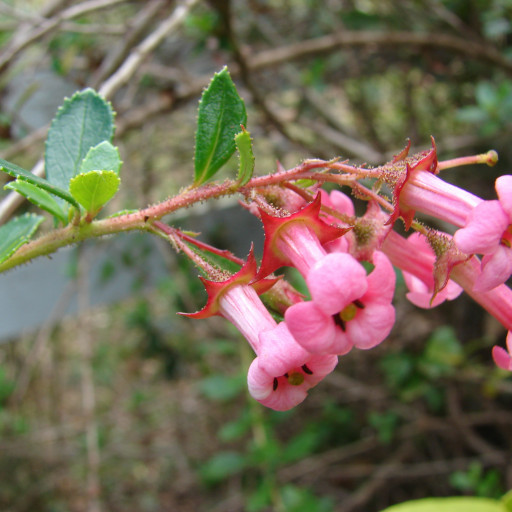
Plant Overview
Known as the "Red Escallonia," this vibrant evergreen is a true survivor from the rugged slopes of the Chilean Andes. It has earned a reputation as the "Coastal King" because of its incredible ability to thrive in salty sea air where other plants might wither. Whether used as a dense "living fence" or a standalone splash of color, it brings a lush, Mediterranean feel to any landscape.
🔍 How to Identify
- 🍃 Foliage: Small, oval leaves with finely serrated (toothed) edges. They are a deep, lustrous green and have a slightly leathery texture that keeps them looking fresh year-round.
- 🌸 Flowers: Distinctive clusters of small, tubular flowers that range from a rich crimson to a deep rosy pink. They typically bloom in mid-to-late summer, covering the bush in red.
- 🧪 Sticky Stems: If you touch the young branches or the base of the flowers, you’ll notice a slightly resinous or "sticky" feel—a natural coating that helps the plant retain moisture.
🏡 In Your Garden
- 🌊 Sea Breeze Shield: This plant is exceptionally wind-resistant and salt-tolerant. It is the perfect choice for coastal gardens where it can act as a frontline defense against harsh spray.
- ✂️ The Shape-Shifter: Because it grows relatively quickly, it is highly responsive to pruning. If left alone, it can become a bit "leggy" (sparse at the bottom), so a light trim after the flowers fade keeps it bushy and dense.
- ☀️ Sun Seeker: While it can survive in partial shade, it produces the most dramatic floral display when given a spot in full sun, which helps "bake" the stems to trigger more blooms.
⚠️ Safety & Toxicity
- ✅ Low Risk: Escallonia rubra is generally considered non-toxic to humans, dogs, and cats. It is a very safe choice for family gardens and playgrounds.
- 🧤 Minor Irritation: The resinous sap on the stems isn't poisonous, but it can be a bit messy or occasionally irritate very sensitive skin. Wearing gloves during a heavy pruning session is recommended purely for comfort.
✨ Fun Fact
The Escallonia is a "pollinator magnet." Even though the flowers are small and tubular, they are packed with high-quality nectar, making your garden the most popular destination in the neighborhood for long-tongued bees and butterflies during the heat of July.

Detailed Care Instructions
| Lighting | Full Sun |
To grow Escallonia Rubra plants, follow these steps:
- Select a suitable planting location: Escallonia Rubra prefers full sun or partial shade, well-draining soil, and protection from strong winds.
- Prepare the soil: Ensure the soil is loose, fertile, and well-draining. Add organic matter like compost to improve soil fertility and drainage.
- Planting: Dig a hole slightly larger than the root ball of the plant. Place the plant in the hole, making sure it is at the same depth as it was in the nursery container. Backfill the hole with soil, gently firming it around the roots.
- Watering: After planting, thoroughly water the plant. During the first year, keep the soil consistently moist but not waterlogged. Once the plant is established, reduce watering frequency, allowing the top inch of soil to dry between waterings.
- Mulching: Apply a layer of organic mulch, such as wood chips or straw, around the base of the plant. This helps retain moisture, suppress weed growth, and protect the roots from temperature extremes.
- Fertilizing: Feed Escallonia Rubra with a balanced, slow-release fertilizer in early spring and again in mid-summer. Follow the product instructions for application rates.
- Pruning: Prune Escallonia Rubra in late winter or early spring to maintain its shape and encourage bushier growth. Remove dead or damaged branches, and lightly trim back the tips of the branches to promote dense foliage.
- Protection: Protect the plant from extreme cold temperatures by covering it with a frost blanket or straw in winter.
- Pest control: Escallonia Rubra is relatively resistant to pests but can occasionally be affected by aphids or spider mites. Regularly inspect the plant and treat any infestations with organic insecticidal soap or neem oil.
- Propagation: Escallonia Rubra can be propagated from semi-ripe cuttings taken in late summer or early autumn. Dip the cuttings in rooting hormone, plant them in a well-draining propagation mix, and keep them in a warm, humid environment until roots develop.
By following these steps, you should be able to successfully grow Escallonia Rubra plants. Good luck!

Place in a window with dappled sun or a spot in the middle of a room. Or directly in a window facing west or east.

Escallonia Rubra plant requires regular watering, especially during hot and dry weather. When watering, it is important to avoid getting water on the foliage, as this can lead to the development of mildew and other fungal diseases. Instead, water the base of the plant, directing the water toward the root system. It is best to water early in the morning or in the evening, as watering during the heat of the day can result in water loss due to evaporation. Adequate watering is key to ensuring that the plant remains healthy and vibrant, so be sure to keep a close eye on moisture levels and adjust watering frequency as needed.
To fertilize this plant, use a slow-release, balanced fertilizer in the early spring, and again in early summer. Avoid using too much fertilizer, as this can lead to excessive growth and weaken the plant. Water thoroughly after fertilizing to prevent fertilizer burn. Additionally, consider incorporating organic matter, such as compost, into the soil to improve overall soil health and nutrient availability.
The recommended soil for Escallonia Rubra plant is a well-draining, fertile soil that is slightly acidic in nature with a pH level of around 6.5. The soil should be rich in organic matter and have good moisture-retaining properties. It should also be free from clay and compacted soil as these can lead to poor drainage and root rot. A mix of loamy soil, peat moss, and perlite can be used to create a suitable growing medium for the plant. Additionally, regular fertilization with a balanced fertilizer can help to promote healthy growth and flowering.
Escallonia Rubra plant can be propagated through various methods such as division, layering, and stem cuttings. To propagate through stem cuttings, select a healthy stem and remove a section that is 4-6 inches long. Cut the bottom of the stem at a 45-degree angle to increase surface area for rooting. Remove the leaves from the lower half of the stem to prevent moisture loss. Dip the cut end of the stem in rooting hormone powder and plant it in a pot filled with moist soilless mix. Cover the pot with a plastic bag or plastic wrap to create a greenhouse effect and keep the soil moist. Place the pot in a warm and bright location but out of direct sunlight. After a few weeks, check for roots by gently tugging on the stem. Once roots have formed, remove the plastic and transplant the new plant into a larger pot or in the garden.








