Plant Overview
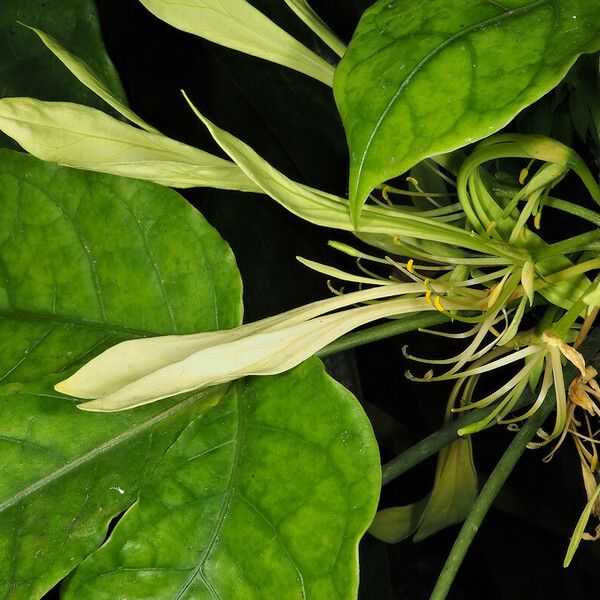
Often called the "Forest Medusa" or the "Fountain Plant," Euadenia eminens is a rare and striking shrub native to the shaded tropical understories of West and Central Africa. Its name "eminens" suggests its standout nature, but it is the bizarre, tentacle-like flowers that truly stop people in their tracks. Looking more like a piece of living art or a creature from a deep-sea reef than a traditional garden plant, it adds a prehistoric, ethereal vibe to any collection.
🔍 How to Identify
- 🌼 Medusa Flowers: The most distinct feature is the spray of long, slender, drooping petals (up to 4 inches long) that hang down like yellowish-green ribbons or "tentacles."
- 🍃 Trifoliate Foliage: The leaves are divided into three large, lance-shaped leaflets that grow from a single point, featuring a glossy, deep-green finish.
- 🌳 Upright Stature: It grows as a slender, woody shrub or small tree, often reaching 6 to 9 feet tall, with flowers typically emerging at the tips of the branches.
🏡 In Your Garden
- ☁️ The Shade Specialist: Because it originates from the floor of African rainforests, it thrives in dappled or deep shade. It is an excellent choice for those dark corners of a greenhouse or tropical garden where other flowering plants might struggle.
- 💧 Humidity is Key: This plant is not drought-tolerant. It requires consistently moist, organic-rich soil and high ambient humidity. If the air is too dry, those delicate, ribbon-like petals will wither prematurely.
⚠️ Safety & Toxicity
- 🟢 Low Risk: Euadenia eminens is generally considered non-toxic to humans and is not known to be a major hazard.
- 🐾 Pet Precaution: While not listed as a deadly plant, it is always best to keep exotic ornamentals out of reach of curious pets, as ingesting dense plant matter can cause mild stomach upset or nausea.
✨ Fun Fact
Although it looks wildly alien, this plant is a member of the Capparaceae family—making it a distant, "high-fashion" cousin of the common culinary Caper you find in Mediterranean cooking!

Detailed Care Instructions







