Plant Overview
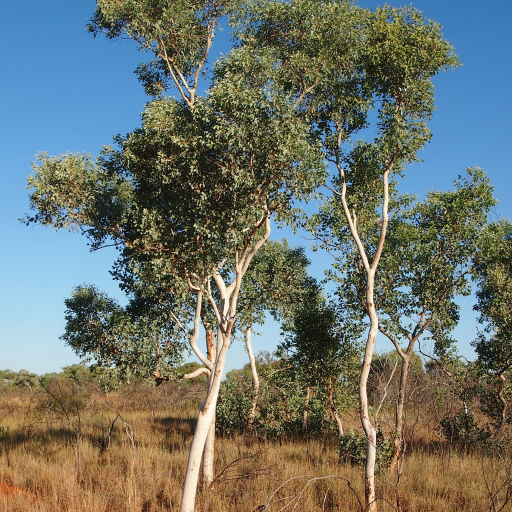
Often called the Poplar Gum because its broad, fluttering leaves look more like a European Poplar than a typical gum tree, Eucalyptus alba is a tropical masterpiece. Known for its strikingly smooth, "ghostly" white trunk, this tree acts as a luminous sentinel in Northern Australian and Southeast Asian landscapes. It is a favorite for those who want the iconic Eucalyptus look but with a softer, lush foliage aesthetic.
🔍 How to Identify
- ⚪ The Bark: The most distinct feature is its smooth, powdery white to cream-colored bark. Periodically, it sheds in thin flakes to reveal a surprising "blush" of pink or orange underneath.
- 🍃 The Foliage: Unlike the long, thin "sickle" leaves of most Eucalyptus, these leaves are broad, ovate (egg-shaped), and a vibrant light green. They often shimmer and rustle in the slightest breeze.
- 🌼 The Flowers: It produces delicate, creamy-white clusters of flowers that are rich in nectar, appearing usually during the dry season to feed local honeyeaters and bees.
🏡 In Your Garden
- ☀️ Sun & Space: This is a sun-worshipper that thrives in tropical or subtropical heat. Because it can grow quite large and has a vigorous root system, it is best suited for large gardens or acreages where it can provide expansive shade.
- 💧 Resilient Roots: One of its best traits is its ability to handle "wet feet" better than most gum trees. It is naturally found in low-lying areas, making it a great choice for spots in the garden that might stay damp after heavy rain.
⚠️ Safety & Toxicity
- 🐾 Pet Warning: Like most Eucalyptus species, the leaves contain concentrated essential oils (eucalyptol). While humans love the scent, it is toxic to dogs, cats, and horses if ingested, causing symptoms like drooling, lethargy, or vomiting.
- 🧤 Skin Sensitivity: While generally safe to touch, some people with sensitive skin may experience mild irritation from the oils if handling crushed leaves or sap for extended periods.
✨ Fun Fact
The Eucalyptus alba is a "color-shifting" tree! Just before the bark sheds, the entire trunk can turn a deep, burnished khaki or salmon-pink color, looking as if the tree has caught the permanent glow of a sunset.

Detailed Care Instructions
To grow Eucalyptus Alba plants, you can follow these steps:
- Source the seeds or saplings: You can purchase Eucalyptus Alba seeds or saplings from a reputable nursery or online plant retailer.
- Choose a suitable location: Eucalyptus Alba prefers a sunny location with well-draining soil. Ensure that the chosen spot receives at least six hours of direct sunlight per day.
- Prepare the soil: Eucalyptus Alba grows best in slightly acidic to neutral soil (pH 5.5-7). Prepare the soil by loosening it and removing any weeds or grass. You can also add organic matter such as compost or well-rotted manure to improve soil fertility and drainage.
- Planting the seeds or saplings:
- Seeds: Sow the seeds in pots or trays filled with seed-starting mix. Lightly cover the seeds with a thin layer of soil, and water them gently. Keep the soil moist but not overly wet until germination occurs. Once the seedlings are strong enough, transplant them into larger pots or directly into the ground.
- Saplings: Dig a hole slightly larger than the root ball of the sapling. Place the sapling in the hole, ensuring that it is planted at the same depth as it was when it was growing in the nursery container. Backfill with soil and gently firm it around the roots. Water the newly planted sapling thoroughly.
- Seeds: Sow the seeds in pots or trays filled with seed-starting mix. Lightly cover the seeds with a thin layer of soil, and water them gently. Keep the soil moist but not overly wet until germination occurs. Once the seedlings are strong enough, transplant them into larger pots or directly into the ground.
- Watering: Eucalyptus Alba prefers medium to low water requirements once established. Water the plant deeply, allowing the top few inches of soil to dry out between waterings. Avoid overwatering, as it can lead to root rot.
- Mulching: Apply a layer of organic mulch, such as wood chips or bark, around the base of the plant. Mulch helps to retain moisture, weed control, and keep the soil temperature more stable.
- Pruning: Eucalyptus Alba does not require extensive pruning. However, you can selectively remove any dead or damaged branches to maintain its shape and promote healthier growth.
- Fertilization: Eucalyptus Alba generally does not require frequent fertilization. However, you can apply a balanced slow-release fertilizer in spring to help with growth. Follow the instructions on the fertilizer packaging for the correct application rate.
- Protection from frost: Eucalyptus Alba is generally frost-tolerant once established. However, young plants may benefit from protection during severe frost. Cover them with frost cloths or blankets to prevent frost damage.
- Monitor for pests and diseases: Keep an eye out for common pests such as eucalyptus gall wasp or leaf-eating insects. Use appropriate organic or chemical control methods if required. Watch out for any signs of diseases such as powdery mildew or root rot, and take necessary action promptly.
Remember to check the specific care requirements for Eucalyptus Alba as they may vary slightly depending on your climate and specific growing conditions.

Place in a bright room that is sun drenched almost all day. Or directly in a south-facing window.

1. Observe the plant's soil moisture levels regularly. Eucalyptus Alba plants require moderate watering, so it's crucial not to let the soil dry out completely or become too saturated.
2. Water the plant thoroughly, ensuring the water reaches the roots. One way is by using a watering can or hose with a gentle spray nozzle.
3. Avoid watering the plant's leaves, as the water may sit on them and promote fungal growth.
4. The frequency of watering varies depending on the season, humidity, and temperature. During summer, for instance, the plant may need more frequent watering than in winter.
5. Mulch around the base of the plant to keep moisture in the soil, prevent weed growth, and insulate the roots.
6. Lastly, understand that overwatering may cause root rot and damage the plant. Therefore, it's necessary to strike a balance between watering and ensuring the soil drains well.
To fertilize Eucalyptus Alba, follow these instructions:
- Choose a balanced, slow-release fertilizer with an N-P-K ratio of around 10-10-10 or 20-20-20. This ensures a good supply of essential nutrients without causing excessive growth.
- Apply the fertilizer in early spring or late winter when the plant starts actively growing. This is the optimal time for nutrient uptake.
- Scatter the fertilizer evenly around the base of the plant, avoiding direct contact with the stem to prevent any potential damage.
- Water the area well after applying the fertilizer to help dissolve it and facilitate nutrient absorption.
- The recommended frequency of fertilization depends on the fertilizer type and the specific needs of your Eucalyptus Alba. Generally, fertilize once or twice a year, but follow the instructions on the product label for accurate guidelines.
- Monitor the plant's response to fertilization. If it appears healthy and vibrant, you can continue with the same feeding routine. However, if there are signs of nutrient deficiencies or excessive foliage growth, adjust the fertilization accordingly.
Remember, it's crucial to always follow the specific instructions provided by the fertilizer manufacturer for optimal results. Keep in mind the unique needs of Eucalyptus Alba and adjust the fertilization routine if necessary.
Eucalyptus Alba plant requires well-draining soil that is rich in organic matter. The soil should have a pH level ranging from slightly acidic to neutral. It is recommended to use a soil mix that is a combination of sand, loam, and sphagnum peat moss. The sand provides good drainage while the loam and sphagnum peat moss provide nutrient-rich soil that is well-aerated. It is essential to avoid using heavy clay soils as they do not provide good drainage for the plant's roots. Additionally, it is recommended to add some perlite to the soil mix as it helps to improve soil drainage and aeration. The plant also requires regular irrigation to keep the soil moist but not waterlogged.
Eucalyptus alba, a species native to Australia, can be propagated through various methods, including seed propagation and vegetative propagation. Here are the steps to propagate Eucalyptus alba:
- Seed Propagation:
- Collect mature seeds from the Eucalyptus alba tree. Mature seeds are usually brown in color.
- Clean the seeds by removing any debris or plant material.
- Fill seed trays or pots with a well-draining potting mix.
- Place the seeds on the surface of the potting mix, spacing them apart.
- Lightly cover the seeds with a thin layer of the same potting mix or vermiculite.
- Water the seeds gently to ensure the soil is moist but not waterlogged.
- Place the tray or pots in a warm location with indirect sunlight.
- Keep the soil consistently moist by misting or light watering.
- Germination usually occurs within 2-4 weeks.
- Once the seedlings have developed a few pairs of leaves, they can be transplanted into individual pots or a prepared garden bed.
- Collect mature seeds from the Eucalyptus alba tree. Mature seeds are usually brown in color.
- Vegetative Propagation:
- Collect a healthy and mature Eucalyptus alba stem or branch cutting.
- Use a sharp and clean knife or pruning shears to cut a 6-8 inch long cutting, preferably from the current year's growth.
- Remove any leaves from the bottom half of the cutting.
- Dip the cut end of the cutting in a rooting hormone powder or gel to promote root development.
- Fill small pots or containers with a well-draining potting mix or a mix of perlite and peat moss.
- Make a hole in the potting mix and insert the cutting, press the soil gently to secure it in place.
- Water the cutting thoroughly until the excess water drains from the bottom of the pot.
- Place a clear plastic bag or a propagator dome over the cutting to create a mini greenhouse environment that retains humidity.
- Position the cuttings in a warm and bright location, but away from direct sunlight.
- Mist the cutting periodically to maintain humidity levels.
- Roots should start developing within 4-8 weeks.
- Once the cutting has rooted and shows signs of new growth, it can be transplanted into a larger pot or directly into the ground.
Remember to provide the appropriate care, such as regular watering, adequate sunlight, and suitable soil conditions, to ensure the healthy growth and establishment of your propagated Eucalyptus alba plants.
- Collect a healthy and mature Eucalyptus alba stem or branch cutting.








