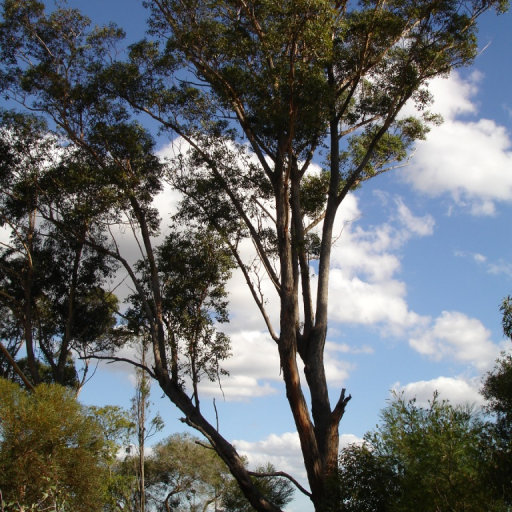
Plant Overview
Often called the Southern Mahogany or Bangalay, this coastal giant is a cornerstone of the Australian landscape. It is known for its rugged, persistent bark and its ability to stand tall against the salty spray of the Pacific Ocean. Historically, its dense, reddish timber was a favorite for heavy construction and boat building, earning it a reputation for being as tough as it is beautiful.
🔍 How to Identify
- 🪵 The Bark: Unlike many "gum" trees that shed their skin to reveal smooth trunks, this species keeps a thick, fibrous, and deeply furrowed grey-brown bark that covers the entire trunk and larger branches.
- 🍃 The Foliage: The leaves are "discolorous," meaning they are a deep, glossy green on the top and a significantly paler matte green underneath—a helpful trick for distinguishing it from similar-looking Eucalypts.
- ☁️ The Buds & Blooms: It produces small, white-to-cream flowers arranged in clusters of 7 to 11. The buds are uniquely shaped like little clubs or cylinders with a blunt, conical cap.
🏡 In Your Garden
- 🌊 Salt & Wind Specialist: This is the ultimate "coastal warrior." It thrives in sandy soils and handles salt-laden winds better than almost any other Eucalyptus, making it a perfect windbreak for seaside properties.
- 🌳 Space Requirements: Because it can reach heights of 65 to 130 feet, it is not a "pot plant" or a small backyard tree. It requires a large landscape where its wide-spreading canopy can provide deep, cool shade without interfering with structures.
- 💧 Thirsty Roots: While many Eucalypts are drought-experts, the Southern Mahogany prefers a bit more moisture and is often found near lagoons or marshes in the wild.
⚠️ Safety & Toxicity
- 🐾 Pet Warning: Like most Eucalyptus species, the leaves contain concentrated essential oils (eucalyptol) that are toxic to dogs, cats, and horses if ingested. Keep an eye on curious chewers.
- 👶 Child Safety: While beautiful, the fallen woody "gumnuts" can be a choking hazard for toddlers, and the oils can cause skin irritation or stomach upset if the leaves are swallowed.
- 🍂 Falling Limbs: As a large timber tree, it has a tendency to drop heavy branches during extreme heat or storms—always plant it a safe distance from walkways and seating areas.
✨ Fun Fact
The common name "Bangalay" is derived from the local Indigenous Australian languages of the New South Wales coast, where the tree has been respected for centuries for its durable wood and medicinal properties.

Detailed Care Instructions
To grow Eucalyptus Botryoides, also known as the Southern Mahogany or Bangalay, follow these steps:
- Source seeds or seedlings: Obtain Eucalyptus Botryoides seeds or seedlings from a reputable nursery or seed supplier. Make sure the source is reliable and the seeds are fresh.
- Choose the right location: Select a sunny location with well-drained soil. Eucalyptus Botryoides prefers full sun but can tolerate partial shade.
- Prepare the soil: Ensure the soil is well-drained, as Eucalyptus Botryoides does not thrive in waterlogged soil. If necessary, improve the soil drainage by adding organic matter such as compost.
- Sow the seeds or plant the seedlings: If using seeds, scarify them by lightly scratching the outer shell, or soak them in warm water for 24 hours before planting. Sow the seeds in pots or seed trays filled with a well-draining potting mix and cover them lightly with soil. Alternatively, if using seedlings, dig a hole slightly larger than the root ball and place the seedling into the hole, backfilling with soil.
- Water adequately: Water the seeds or seedlings regularly to keep the soil moist but not waterlogged. Once the plants are established, Eucalyptus Botryoides can tolerate periods of drought, but it is still important to water during prolonged dry spells.
- Mulch and weed control: Apply a layer of organic mulch around the base of the plants to conserve moisture, suppress weed growth, and protect the roots from temperature extremes. Regularly remove any weeds or grass competing for resources.
- Prune if necessary: Eucalyptus Botryoides generally does not require pruning, but if you want to control its shape, you can prune dead or damaged branches. It is best to prune during the dormant season.
- Monitor for pests and diseases: Keep an eye out for common pests like aphids, leaf-eating caterpillars, and gall wasps. Regularly inspect the plants for signs of diseases such as powdery mildew or root rot and take appropriate action if needed.
- Be patient: Eucalyptus Botryoides is a slow-growing plant, so be patient and provide proper care to encourage healthy growth.
- Observe local regulations: Ensure that Eucalyptus Botryoides is suitable for your region and follows any local regulations regarding its cultivation.
Remember to consult local resources or experts for specific tips and advice tailored to your location and climate.

Place in a bright room that is sun drenched almost all day. Or directly in a south-facing window.

To properly water this plant, it is important to ensure that the soil remains consistently moist but not waterlogged. You can achieve this by regularly checking the soil moisture level using a moisture meter or by testing the soil with your finger. Water the plant deeply and thoroughly, allowing the water to penetrate deep into the soil. Ensure that the plant is receiving enough water during periods of drought or hot weather. Avoid overwatering as this can lead to root rot and other diseases. Ideally, the plant should be watered in the morning or evening when temperatures are cooler, and the root system can absorb the water better.
To fertilize the plant, use a slow-release fertilizer with a ratio of 3:1:2 (nitrogen:phosphorus:potassium) in early spring and again in early summer. Apply the fertilizer evenly around the base of the plant and water it in thoroughly. Avoid fertilizing in late summer and fall, as this can promote late-season growth that may not have time to harden off before winter. Always follow the manufacturer's instructions on the fertilizer label and never over-fertilize.
A suitable soil for the Eucalyptus Botryoides plant should have good drainage and aeration. The soil should not retain too much water as this can cause root rot. A mix of organic matter and a well-balanced fertilizer can be added to the soil to provide nutrients for the plant. The pH level of the soil should be between 5.5 and 6.5. It is recommended to use a soil that is suitable for growing eucalyptus trees, which can often be found at garden centers or specialty stores. Additionally, it is important to ensure that the plant is planted in a location that receives full sunlight or partial shade, depending on the climate.
To propagate this plant, take cuttings from a healthy mature branch. Cut the branch at a 45-degree angle with a clean, sharp blade, making sure the cutting is at least 6 inches long and has at least two leaves. Remove any leaves from the bottom half of the cutting. Dip the cut end of the cutting in rooting hormone and plant it in well-draining soil in a small pot. Keep the soil moist but not wet and place the pot in a bright, warm spot with indirect sunlight. After a few weeks, roots should start to form and the cutting can be transplanted into a larger pot or into the ground in a suitable location.








