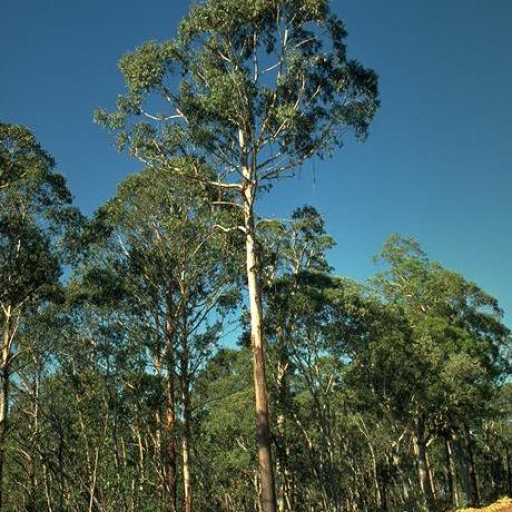
Plant Overview
Known as the Alpine Ash or Gum-topped Stringybark, Eucalyptus delegatensis is a towering icon of the Australian high country. Often found standing tall in the misty, subalpine regions of Victoria, New South Wales, and Tasmania, this tree is one of the world's tallest flowering plants. It is a sensitive giant that tells a story of fire and rebirth, dominating the landscape with its striking "two-tone" appearance.
🔍 How to Identify
- 🪵 The "Stocking" Bark: The lower half of the trunk is covered in thick, rough, fibrous grey bark, while the upper trunk and branches are smooth, creamy white, or bluish-green.
- 🍃 Sickle Leaves: Mature leaves are long, glossy green, and distinctively curved like a sickle (falcate), hanging vertically to shed heavy mountain rain.
- 🍇 Woody Fruit: It produces small, barrel-shaped or cup-shaped woody capsules (gumnuts) that appear in clusters and hold the tree’s tiny seeds.
🏡 In Your Garden
- 🏔️ Mountain High: This species is not suited for small urban gardens; it is a forest giant that can reach heights of over 90 meters. It requires deep, well-drained soil and a cool, moist climate with plenty of winter chill.
- 🔥 Fire Sensitivity: Unlike many Eucalyptus species that resprout from their base after a bushfire, the Alpine Ash is often killed by intense heat. It relies entirely on the fire to crack open its seed pods, dropping millions of seeds into the nutrient-rich ash to start the cycle over.
⚠️ Safety & Toxicity
- 🐾 Pet Safety: Like most Eucalyptus species, the leaves contain concentrated oils (cineole) that are toxic to dogs, cats, and horses if ingested in large quantities.
- 👶 Human Caution: While the scent is refreshing, the leaves and oil should not be consumed. Skin contact with the oils is generally safe for most, though those with sensitive skin may experience mild irritation.
✨ Fun Fact
The Alpine Ash is a "pioneer" of the high altitudes. Because it doesn't have a lignotuber (a woody swelling at the base for resprouting), it lives its life on a knife's edge—if a second fire occurs before the young saplings are old enough to produce seeds, the entire local population of these giants can vanish!

Detailed Care Instructions
Growing Eucalyptus delegatensis, commonly known as alpine ash or woollybutt, can be rewarding due to its fast growth and attractive, aromatic foliage. Native to southeastern Australia, this species thrives in cool, mountainous environments. Here's a step-by-step guide to help you grow Eucalyptus delegatensis:
1. Climate and Site Selection:
- Climate: Eucalyptus delegatensis prefers a cool, temperate climate. It is suited for regions with high rainfall and can tolerate frosty conditions.
- Sunlight: Choose a location that receives full sun for optimal growth.
- Soil: Well-drained soils are essential. This species prefers loamy or sandy soils, although it can adapt to a range of soil types.
2. Propagation:
- Seeds: Eucalyptus delegatensis is primarily propagated from seeds.
- Seed Collection: Collect mature seed capsules from an established tree. Capsules are generally mature when they turn brown.
- Seed Preparation: Dry the capsules to release the seeds. Once separated, the seeds can be stored in a cool, dry place until sowing.
- Sowing: Sow seeds in a seed tray filled with a sterilized seed-raising mix. Lightly cover the seeds with a thin layer of the mix or sand.
- Watering: Keep the soil moist but not waterlogged by misting it regularly.
- Germination: Place the tray in a warm, well-lit area. Germination generally takes around 2-4 weeks.
3. Transplanting Seedlings:
- Seed Collection: Collect mature seed capsules from an established tree. Capsules are generally mature when they turn brown.
- Timing: Transplant seedlings when they have developed a few sets of true leaves and are strong enough to handle.
- Location: Prepare planting holes in your chosen site. Ensure the spacing allows each tree adequate room to grow. As a general guide, space trees at least 2-3 meters (6.5-10 feet) apart.
- Planting: Gently remove seedlings from the seed tray, taking care not to damage the roots. Plant each seedling at the same depth it was growing in the tray.
- Watering: Water the seedlings thoroughly after planting.
4. Care and Maintenance:
- Watering: Water regularly during the establishment phase, especially in dry periods. Once established, Eucalyptus delegatensis is relatively drought-tolerant.
- Mulching: Apply a layer of organic mulch around the base of the seedlings to conserve moisture, suppress weeds, and regulate soil temperature.
- Fertilizing: In most situations, eucalypts do not require heavy fertilization. However, if your soil is particularly poor, a balanced slow-release fertilizer can help young trees establish.
- Pruning: Pruning is generally not necessary, but you can remove any dead or damaged branches to maintain the shape and health of the tree.
5. Pests and Diseases:
- Monitoring: Keep an eye out for common pests such as leaf-eating beetles and psyllids. If you notice any issues, treat them promptly with appropriate measures, such as insecticidal soap or horticultural oil.
- Disease Prevention: Eucalyptus species can be susceptible to fungal diseases, particularly in overly wet conditions. Ensure proper spacing for good air circulation and avoid overwatering to minimize disease risks.
By following these steps and providing the right conditions, you can successfully grow Eucalyptus delegatensis and enjoy the benefits of this versatile and attractive tree.

Place in a bright room that is sun drenched almost all day. Or directly in a south-facing window.

To water this plant, you should first check the soil for moisture using a moisture meter or by sticking your finger into the soil. If the soil is dry to the touch, it's time to water. Use a watering can or hose to apply water slowly and evenly to the soil around the base of the plant, avoiding getting water on the leaves or trunk. Once the soil has absorbed enough water, stop watering and allow any excess to drain away. During periods of high heat or drought, you may need to water this plant more frequently. It's important not to overwater, as this can lead to root rot and other issues.
Here's how you can fertilize your Eucalyptus delegatensis:
- Soil Preparation: Before planting, enrich the soil with organic matter such as compost or well-rotted manure to improve soil structure and nutrient content.
- Time of Fertilization: The best time to fertilize is during the growing season, which typically spans from spring to early autumn.
- Type of Fertilizer: Use a balanced, slow-release fertilizer with an N-P-K ratio of around 8-8-8 or 10-10-10. This ensures a steady supply of essential nutrients.
- Application Method:
- Initial Feeding: At the time of planting, mix the slow-release fertilizer into the soil around the planting hole.
- Top Dressing: In subsequent years, apply the fertilizer as a top dressing in early spring. Sprinkle it evenly around the base of the plant, keeping it at least 6 inches away from the trunk to avoid root burn.
- Initial Feeding: At the time of planting, mix the slow-release fertilizer into the soil around the planting hole.
- Watering: After applying the fertilizer, water the plant thoroughly to help dissolve the nutrients and facilitate their uptake by the roots.
- Frequency: For newly planted or young trees, fertilize once in early spring and again in mid-summer. Mature trees generally require less frequent feeding, perhaps just once annually in early spring.
- Observation and Adjustment: Monitor the plant's growth and health. If you notice yellowing leaves or stunted growth, it may indicate a nutrient deficiency, possibly requiring additional feeding or soil amendment.
- Weed Control: Keep the area around the base free of weeds, which can compete for nutrients.
Following these steps should help ensure your plant receives the nutrients it needs to thrive.
Eucalyptus Delegatensis prefers a well-draining soil that is high in organic matter. It does well in soils with a pH range of 6 to 7.5 and is tolerant of both sandy and clay soils. The soil should be kept consistently moist, but not waterlogged, as this can cause root rot. Adding a layer of mulch around the base of the plant can help the soil retain moisture and also provide nutrients as it decomposes. It is important to avoid using soil that is too compacted or heavy, as this can restrict root growth and cause stress to the plant.
Eucalyptus delegatensis can be propagated through both seeds and cuttings, though propagation by seeds is generally more common and reliable. Here is a detailed guide for both methods:
Propagation by Seeds:
- Seed Collection:
- Collect mature capsules from healthy trees. These capsules are typically harvested from December to February, depending on the local climate.
- Allow the capsules to dry for several days in a warm and dry environment. As they dry, they will open and release the seeds.
- Collect mature capsules from healthy trees. These capsules are typically harvested from December to February, depending on the local climate.
- Seed Storage:
- Store seeds in a cool, dry place if you are not planting them immediately. Seeds can remain viable for several years if stored properly.
- Store seeds in a cool, dry place if you are not planting them immediately. Seeds can remain viable for several years if stored properly.
- Preparation for Sowing:
- Mix the seeds with a fine, sandy soil to ensure even distribution when sowing.
- Use a well-draining seed-raising mix.
- Mix the seeds with a fine, sandy soil to ensure even distribution when sowing.
- Sowing:
- Sow seeds in trays or pots filled with the prepared seed-raising mix.
- Lightly cover the seeds with a thin layer of soil, about 1-2 mm thick.
- Water gently to avoid washing away the seeds.
- Sow seeds in trays or pots filled with the prepared seed-raising mix.
- Germination:
- Place the trays or pots in a warm environment with indirect sunlight.
- Maintain even moisture by misting the soil surface as needed.
- Seeds typically germinate within 2 to 4 weeks.
- Place the trays or pots in a warm environment with indirect sunlight.
- Seedling Care:
- Once seedlings are large enough to handle, they can be pricked out and transplanted into individual pots.
- Ensure good air circulation and plenty of light to promote healthy growth.
- Harden off seedlings by gradually acclimating them to outdoor conditions before planting them in their final location.
Propagation by Cuttings:
- Once seedlings are large enough to handle, they can be pricked out and transplanted into individual pots.
- Cutting Selection:
- Select healthy, semi-hardwood cuttings from new growth. Cuttings should be about 10-15 cm long.
- Make sure the cuttings have several leaves but remove the lower leaves to reduce water loss.
- Select healthy, semi-hardwood cuttings from new growth. Cuttings should be about 10-15 cm long.
- Preparation:
- Cut the base of the cutting just below a node (where a leaf attaches to the stem).
- Dip the cut end into a rooting hormone to encourage root formation.
- Cut the base of the cutting just below a node (where a leaf attaches to the stem).
- Planting the Cuttings:
- Insert the cuttings into a well-draining growing medium, such as a mix of sand and peat.
- Water the cuttings well and place them in a humid environment, like a propagation tray with a plastic cover or a misting tent.
- Insert the cuttings into a well-draining growing medium, such as a mix of sand and peat.
- Root Development:
- Maintain high humidity and keep the cuttings in a bright, but not directly sunny, location.
- Ensure the soil remains moist but not waterlogged.
- Rooting can take several weeks to a few months.
- Maintain high humidity and keep the cuttings in a bright, but not directly sunny, location.
- Transplanting:
- Once roots are well-developed, transplant the cuttings into individual pots filled with a suitable potting mix.
- Gradually acclimate the young plants to outdoor conditions before planting them in their final location.
General Tips:
- Once roots are well-developed, transplant the cuttings into individual pots filled with a suitable potting mix.
- Whether using seeds or cuttings, ensure that the young plants are protected from frost and extreme weather conditions.
- Regularly monitor for pests and diseases to ensure healthy growth.
- Provide adequate water, especially during dry periods, but avoid waterlogging.
By following these steps, you can successfully propagate Eucalyptus delegatensis and enjoy its many benefits in your landscape.








