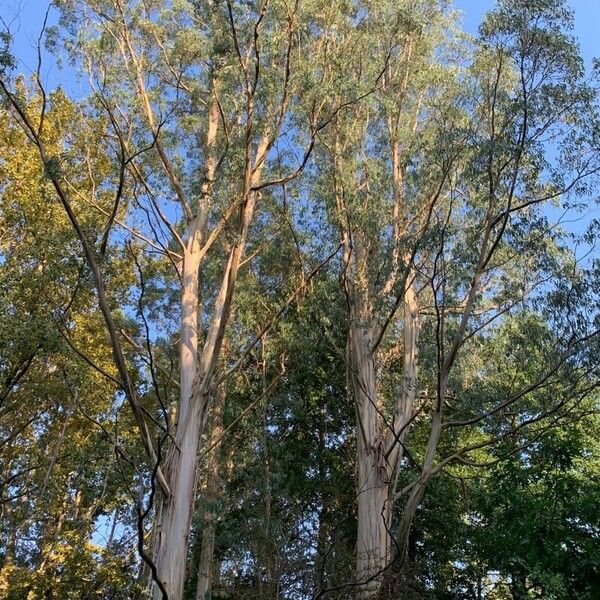
Plant Overview
Often called the Tingiringi Gum, this Australian native is a high-altitude survivor that brings a ghostly, ethereal beauty to any landscape. Known for its intense silvery-blue foliage that seems to glow in the twilight, it is a favorite among florists for its elegant branches. In the wild, it braves the frost and snow of the Victorian and New South Wales mountains, making it one of the hardiest "Gums" available for cool-climate gardeners.
🔍 How to Identify
- ❄️ Foliage: Juvenile leaves are strikingly round and a powdery, waxy silver-blue. As the tree matures, the leaves transition into a more elongated, sickle-like shape with a grey-green hue.
- 📜 Bark: The trunk features smooth, shedding bark that peels away in long, decorative ribbons to reveal shades of cream, grey, and occasionally a soft copper underneath.
- ☁️ Flowers: In late summer, it produces small, delicate clusters of white, star-burst flowers that are a magnet for local pollinators.
🏡 In Your Garden
- ✂️ Pruning Nuance: Many gardeners choose to "coppice" this plant—cutting it back almost to the ground every few years. This forces the tree to stay in its juvenile state, ensuring a constant supply of those sought-after round, silver leaves rather than letting it grow into a tall, leggy tree.
- 🏔️ Tough as Nails: Unlike many of its cousins, the Tingiringi Gum is exceptionally frost-tolerant. It prefers well-drained, slightly acidic soil and thrives in positions with high wind, as its flexible branches are built to dance rather than break.
⚠️ Safety & Toxicity
- 🐾 Status: Toxic to pets (Cats, Dogs, and Horses).
- 🧴 Details: While the scent is refreshing to humans, the essential oils (eucalyptol) found in the leaves can cause vomiting, diarrhea, and lethargy if ingested by animals. Some sensitive individuals may also experience minor skin irritation when handling the fresh sap or crushed leaves.
✨ Fun Fact
The specific name glaucescens is derived from the Latin word for "becoming sea-green." That distinctive waxy "bloom" on the leaves isn't just for looks—it acts as a natural sunscreen and a barrier to prevent moisture loss in harsh mountain environments!

Detailed Care Instructions







