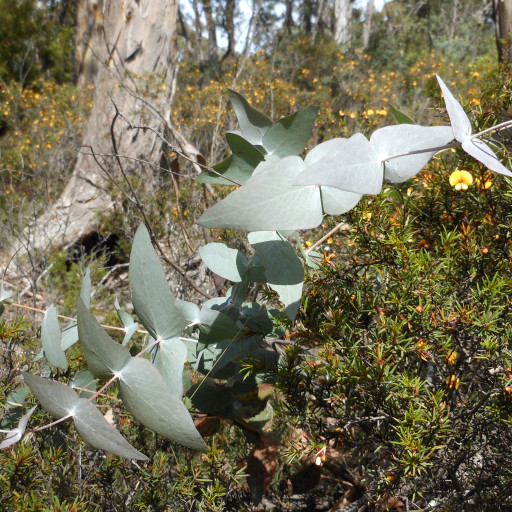
Plant Overview
Often called the Tasmanian Blue Gum, this aromatic giant is the pride of the Australian bush and a staple in global apothecary gardens. Its refreshing, camphorous scent is instantly recognizable, often evoking the atmosphere of a relaxing spa or a winter remedy. While it begins its life as a charming, silvery-blue ornamental, it quickly transforms into a towering forest monarch with a wild, peeling personality.
🔍 How to Identify
- 🍃 Leaf Evolution: This plant is a shapeshifter; juvenile leaves are round, stalkless, and covered in a waxy blue-grey powder, while adult leaves transition into long, dark green "sickles."
- 🪵 Peeling Bark: The trunk is a living canvas, with old grey bark shedding in long, shaggy ribbons to reveal smooth, creamy-white or yellowish patches underneath.
- 🌸 Pom-pom Blooms: It produces unique, woody flower buds with a textured "cap" that pops off to reveal a fuzzy burst of creamy-white stamens that look like tiny shaving brushes.
🏡 In Your Garden
- ☀️ Sun & Space: This tree is a dedicated sun-worshipper that requires wide-open spaces; it is generally not recommended for small suburban yards because its aggressive growth and "thirsty" roots can interfere with pipes and foundations.
- 💧 The Taproot Factor: If you are growing one, choose its permanent home carefully. It develops a deep, sensitive taproot very early, meaning it hates being moved and often suffers fatal shock if transplanted once established.
⚠️ Safety & Toxicity
- 🐾 Toxic to Pets: The concentrated essential oils (eucalyptol) found in the leaves are toxic to dogs, cats, and horses. Ingestion can lead to vomiting, drooling, and lethargy.
- 🧴 Skin Sensitivity: While the oil is used medicinally, direct contact with the sap or high concentrations of crushed leaves can cause skin irritation or "dermatitis" in people with sensitive skin.
✨ Fun Fact
In the 19th century, the Blue Gum was nicknamed the "Fever Tree." It was planted in swampy regions across Europe and Africa to "purify the air" and stop malaria. It turns out the trees weren't medicinal to the air; they were just so thirsty that they drained the swamps entirely, destroying the breeding grounds for mosquitoes!

Detailed Care Instructions
| Lighting | Full Sun |
To grow Eucalyptus Globulus (also known as Blue Gum Eucalyptus) plants, you can follow these steps:
- Obtain seeds or seedlings: You can either collect seeds from existing Eucalyptus Globulus plants or purchase them from nurseries. Alternatively, you can also buy small Eucalyptus Globulus seedlings.
- Prepare suitable containers: Fill small pots or containers with well-draining potting soil. It's important to ensure that the containers have drainage holes to prevent waterlogging.
- Plant the seeds or seedlings: If you have seeds, sow them on the soil surface and lightly cover them with a thin layer of soil. For seedlings, gently transplant them into the prepared containers, ensuring that the root system is protected.
- Provide adequate sunlight: Eucalyptus Globulus plants require full sun exposure for proper growth. Place the containers in a sunny location, such as near a south-facing window or outdoors in a sunny spot.
- Water regularly: Keep the soil consistently moist, but not overly saturated. Eucalyptus plants prefer well-draining soil, so avoid allowing the pots to sit in standing water.
- Maintain proper temperature and humidity: Eucalyptus Globulus plants thrive in temperatures between 50-80°F (10-27°C). They also prefer higher humidity levels, so misting the leaves occasionally can help maintain suitable humidity.
- Prune periodically: As the Eucalyptus Globulus plant grows, it can develop multiple stems. If desired, you can prune it to maintain a single-stemmed or multi-stemmed appearance.
- Transplant to larger containers or outdoor location: If growing the Eucalyptus Globulus plant indoors, you may need to transplant it to a larger container as it grows. If you intend to plant it outdoors, select a suitable location that offers full sun, well-draining soil, and enough space for it to grow to its full height.
- Provide regular maintenance: Ensure the plant receives adequate water, sunlight, and nutrients. Eucalyptus Globulus plants benefit from occasional fertilization using a balanced, slow-release fertilizer.
Please note that Eucalyptus Globulus plants mostly thrive in USDA hardiness zones 9-11. If you live in a colder climate, you may need to grow them as indoor plants or treat them as annuals during the growing season.

Place in a bright room that is sun drenched almost all day. Or directly in a south-facing window.

To water this plant, ensure that the soil is well-draining and not waterlogged. Water it deeply once a week and avoid getting water on the leaves. Allow the top inch of soil to dry out in between watering to prevent root rot. Give the plant enough water to penetrate the entire root system, but do not overwater. Check the soil moisture regularly to ensure the plant is getting the right amount of water.
To fertilize this plant, apply a slow-release, well-balanced fertilizer in the early spring. Be careful not to over-fertilize, as this can lead to nutrient burn and negatively affect growth. It is also important to ensure that the soil stays moist but well-drained. Regular watering and mulching can help with this. Avoid fertilizing during the fall and winter months, as the plant is dormant during this time.
For optimal growth and health of a particular tree species, it is essential to choose the appropriate type of soil. For the Eucalyptus Globulus plant, it is recommended to use well-draining soils that can retain some moisture. Ideal soil pH for this plant ranges from slightly acidic to neutral, between 6.0 and 7.5. This plant also requires good aeration and proper nutrients. Fertile soils that are rich in organic matter, such as compost or manure, can provide the necessary nutrients for vigorous growth. It is also important to avoid using heavy, clay soils or soils that are prone to long-term waterlogging, as this can cause root rot and other diseases. Overall, using well-draining, fertile soil with good aeration and proper pH levels can help ensure healthy growth and longevity of the Eucalyptus Globulus plant.
- Collecting the Seeds: The first step to propagate Eucalyptus Globulus plant is to collect the seeds. These seeds can be obtained from mature trees that are growing in the wild or from a previous crop of trees that have been harvested. The seeds should be collected when they are fully mature and have started to turn brown.
- Preparing the Soil: Once the seeds are collected, the next step is to prepare the soil for planting. Eucalyptus Globulus plants prefer well-drained soil that is rich in organic matter. The soil should also be acidic in nature with a pH range of 4.5 to 6.0. The soil can be prepared by adding a layer of organic matter or compost to the topsoil.
- Sowing the Seeds: After the soil is prepared, the seeds can be sown directly into the ground. The seeds should be sown at a depth of about 1cm and covered with a thin layer of soil. The seeds should be watered regularly to keep the soil moist until they germinate.
- Germination: The seeds of Eucalyptus Globulus plant usually take about two to four weeks to germinate. During this time, the soil should be kept moist but not waterlogged. Once the seeds have germinated, the seedlings should be thinned out to encourage healthy growth.
- Transplanting: Once the seedlings are strong enough, they can be transplanted into individual pots. The pots should be filled with well-drained soil and the seedlings should be planted at the same depth as they were in the ground. The seedlings should be watered regularly and kept in a warm and sunny location.
- Hardening off: After a few weeks, the seedlings can be gradually exposed to the outdoors. This process is known as hardening off and helps the seedlings to adjust to the outdoor environment. The seedlings can be placed outside for a few hours a day and gradually increase the exposure time.
- Planting out: Once the seedlings are strong enough, they can be planted out into their permanent positions. This should be done in late spring or early summer when the soil is warm and moist. The Eucalyptus Globulus plant requires full sun and well-drained soil to thrive.
Common pests of the tasmanian bluegum include Scale insect, mealybugs, spider mites, aphids. Make a habit of checking your tasmanian bluegum frequently for pests so that any infestations can be caught and managed early.








