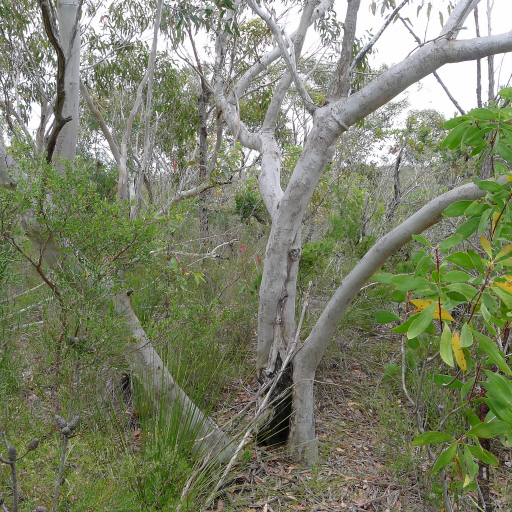
Plant Overview
Affectionately known as the Scribbly Gum, this tree looks like a canvas for a tiny, invisible artist. Native to the sandstone regions of New South Wales, Australia, it is famous for the chaotic zig-zag patterns etched into its smooth, silvery bark. It is a resilient, medium-sized tree that adds a sculptural and artistic flair to any landscape it inhabits.
🔍 How to Identify
- 🎨 The "Scribbles": The most iconic feature—smooth, white, or light grey bark marked with distinctive dark zig-zags that look like pencil drawings or "nature’s graffiti."
- 🍃 Leathery Leaves: Narrow, lance-shaped leaves that are thick and leathery. They typically hang vertically to minimize sun exposure and water loss.
- 🌼 Puffball Flowers: Small, creamy-white blossoms that appear in clusters (umbels). When in full bloom, they look like soft, fuzzy stars against the green canopy.
🏡 In Your Garden
- 🏜️ Sandstone Specialist: This tree is a master of poor, sandy, or skeletal soils. If your garden has rocky or nutrient-poor ground where other plants fail, the Scribbly Gum will likely feel right at home.
- 🌬️ Drought Warrior: Once established, it is incredibly water-efficient. It has evolved to survive the harsh Australian summers, making it a "set and forget" choice for large, low-maintenance landscapes.
- 📐 Architectural Growth: It doesn't always grow straight. It often develops a gnarly, twisted trunk and "limby" branches, providing a dramatic silhouette against the sky.
⚠️ Safety & Toxicity
- 🐾 Toxic to Pets: Like most Eucalyptus species, the leaves contain concentrated essential oils (eucalyptol) which are toxic to dogs, cats, and horses if chewed or swallowed.
- 👶 Choking Hazard: While not a "poisonous" plant in the traditional sense for humans, the fallen woody seed pods (gumnuts) can be a choking hazard for small children playing nearby.
- 🔥 Fire Context: Eucalypts are high in oils and can be highly flammable. In fire-prone areas, they should be planted at a safe distance from residential structures.
✨ Fun Fact
The "scribbles" are actually the work of the Scribbly Gum Moth larvae (Ogmograptis scribula). The larvae tunnel through the bark as they feed, and when the tree sheds its old bark, the intricate "map" of their journey is revealed to the world!

Detailed Care Instructions

Place in a bright room that is sun drenched almost all day. Or directly in a south-facing window.

The presence of a dry surface layer of soil does not indicate that the plant requires water. Instead, stick your finger 1-2" (3-5 cm) deep in the soil to feel dampness or moisture content. If the soil seems dry, it's time to water your greens. If the soil is still moist, however, it is better not to water your plant and instead wait a day or two. Overwatering or waterlogging raises the risk of root rot. So if the soil takes longer than a week to dry, check the light conditions because it's likely that the plant isn't getting enough light. It's fine if the upper layer of soil is dry between waterings, but the deeper soil layer should always have some moisture.








