Plant Overview
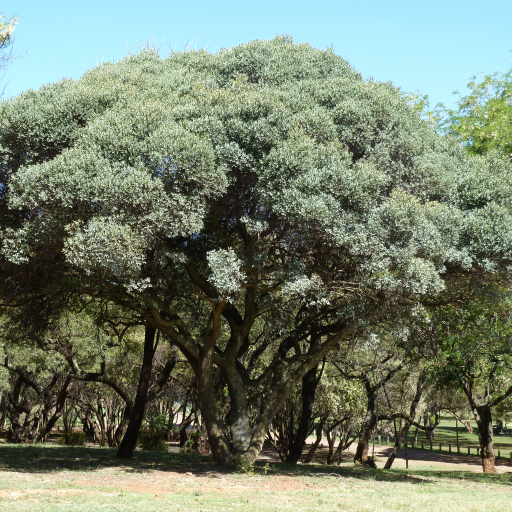
The Blue Guarri (Euclea crispa) is a resilient backbone of the African landscape, known for its shimmering, blue-green foliage that stands out against the dusty savanna. Often nicknamed the "Magic Guarri" in local folklore, it is a symbol of persistence, thriving in rocky terrains where other plants struggle. Beyond its beauty, it has been a staple in traditional African life for centuries, used for everything from dyeing clothes to dental hygiene.
🔍 How to Identify
- 🍃 The Foliage: Look for stiff, leathery leaves with a distinct blue-grey or olive-green hue. The margins are often wavy or "crisped" (hence the name crispa), giving the canopy a textured, ruffled appearance.
- 🌳 Growth Habit: It typically grows as a dense, multi-stemmed shrub but can mature into a neat, small tree with a rounded crown. It is remarkably slow-growing, which results in very dense, heavy wood.
- 🍒 The Berries: Small, round fruits about the size of a pea appear in clusters. They transition from green to a dark reddish-brown or black when ripe, usually covered in fine, velvety hairs.
🏡 In Your Garden
- 🪨 Rugged Resilience: This plant is a "rock star" in the literal sense. It is highly drought-tolerant and thrives in rocky outcrops or poor soil, making it a perfect candidate for xeriscaping or stabilizing slopes in water-wise gardens.
- 🦋 Wildlife Magnet: It acts as a bustling hub for biodiversity. While the tiny, bell-shaped cream flowers are subtle to us, their sweet scent is a beacon for honeybees and butterflies, while the dense branches provide high-quality nesting sites for birds.
⚠️ Safety & Toxicity
- ✅ General Safety: The Blue Guarri is generally considered non-toxic to humans and common household pets. It is a safe, "friendly" shrub for high-traffic garden areas.
- 👅 Astringent Berries: While the berries are technically edible and sought after by birds and monkeys, they are incredibly astringent and "furry" on the tongue. They aren't particularly tasty for humans and are best left for the wildlife.
✨ Fun Fact
🪥 The Natural Toothbrush: In many parts of Southern Africa, the frayed twigs of the Blue Guarri are traditionally used as "chew sticks." The wood fibers are naturally abrasive and contain antimicrobial compounds, making them a highly effective, built-in toothbrush provided by nature!

Detailed Care Instructions
To grow Euclea Crispa, also known as the Blue Guarri plant, follow these steps:
- Climate and location: Determine if the plant is suitable for the climate in your area. Euclea Crispa is native to South Africa, so it thrives in warm temperate to subtropical regions. Choose a location that receives full sun or partial shade.
- Soil: The plant prefers well-draining soil, rich in organic matter. Prepare the soil by loosening it with a garden fork or tiller, removing any weeds or rocks.
- Planting: Dig a hole that is slightly larger than the root ball of the plant. Place the plant in the hole, ensuring that the top of the root ball is level with or slightly above the soil surface. Fill the hole with soil, firming it gently around the plant.
- Watering: Initially, water the plant thoroughly to help establish its roots. After that, water regularly but avoid overwatering, as Euclea Crispa prefers slightly dry conditions. Allow the top layer of soil to dry out between waterings.
- Mulching: Apply a layer of organic mulch around the base of the plant to help retain moisture and suppress weed growth. Keep the mulch a few inches away from the stem to avoid rot.
- Fertilizer: Euclea Crispa generally does not require much fertilization, but you can provide a slow-release balanced fertilizer in early spring. Follow the instructions on the fertilizer package for application rates.
- Pruning: Prune the plant to maintain the desired shape and remove any dead or damaged branches. This can be done in late winter or early spring before new growth appears.
- Pests and diseases: Keep an eye out for any pests, particularly aphids, spider mites, or scale insects. Use appropriate organic or chemical treatments if necessary. Euclea Crispa is generally resistant to diseases.
- Propagation: You can propagate Euclea Crispa from stem cuttings or seeds. Take stem cuttings in spring or early summer and root them in a well-draining rooting medium. Alternatively, collect seeds from mature fruits and sow them in a seed tray filled with a mix of soil and sand.
- Enjoy the plant: Once established, Euclea Crispa requires minimal care. Enjoy the attractive glossy leaves, fragrant flowers, and berries that attract birds.
Remember to consult local nurseries or horticultural experts for specific regional advice on growing Euclea Crispa in your area.

Place in a bright room that is sun drenched almost all day. Or directly in a south-facing window.

To water this plant, ensure you feel the soil with your fingers before you water it. This will help you determine if the soil is dry enough to need water. If the soil feels completely dry, it may be time to water the plant. Use a watering can to slowly pour water onto the soil until it is moist. Be sure not to overwater the plant, as it may cause root rot. Allow the soil to dry out again before watering. Water more frequently during warmer months and less during colder months. Ensure the pot has proper drainage to avoid waterlogging.
To fertilize the Euclea Crispa plant, it is recommended to follow these instructions:
- Choose a balanced, slow-release fertilizer with equal amounts of nitrogen (N), phosphorus (P), and potassium (K). An NPK ratio of 10-10-10 or 14-14-14 is suitable.
- Apply the fertilizer during the active growing season, which is typically spring and summer.
- Dilute the fertilizer according to package instructions or use the recommended dosage for the size of your plant.
- Water the soil around the base of the plant thoroughly before applying the fertilizer to ensure proper absorption.
- Scatter the fertilizer evenly on the soil surface, ensuring that it does not come into direct contact with the stem or leaves of the plant.
- Gently rake or lightly water the fertilized area to incorporate the fertilizer into the soil.
- It is important to avoid overfertilization, as it can cause harm to the plant. Follow the recommended dosage and frequency specified on the fertilizer packaging.
- Regularly monitor the plant for any signs of nutrient deficiency or excess. Adjust the fertilization schedule accordingly based on the plant's response and the specific requirements of your Euclea Crispa plant.
Euclea Crispa plant requires a well-draining and nutrient-rich soil mix. A sandy loam soil is ideal, which is a balanced mixture of sand, silt, and clay. The pH of the soil should be slightly acidic to neutral, with a range between 6.0 and 7.5. To improve the drainage of heavy soils, it is recommended to add perlite or coarse sand to the soil mix. The plant also benefits from the addition of organic matter, such as compost or aged manure, to provide nutrients for healthy growth. Avoid using heavy clay or compacted soils, as it can cause waterlogging and hinder root development.
To propagate Euclea Crispa plants without using their common names, you can follow these steps:
- Obtain a healthy Euclea Crispa plant: Find a mature plant of Euclea Crispa that is free from diseases or pests. It is important to choose a plant that is vigorous and has desirable characteristics.
- Prepare a propagation container: Select a suitable container for propagation, such as a seed tray or small pots. Ensure the containers have adequate drainage holes to avoid waterlogging.
- Prepare the growing medium: Create a well-draining and nutrient-rich growing medium by combining equal parts of organic compost and coarse sand. Mix the components thoroughly to ensure consistent moisture retention without becoming waterlogged.
- Take semi-hardwood cuttings: Identify healthy, semi-mature wood from the Euclea Crispa plant. Cut sections of the stem measuring around 6-8 inches in length. Remove any leaves from the lower 2/3 of the stem, leaving only a few leaves on the upper end.
- Apply rooting hormone (optional): Using a commercial rooting hormone, dip the lower end of the cutting into the hormone powder or gel. This step can increase the chances of successful rooting.
- Plant the cuttings: Make a hole in the prepared growing medium using a dibbler or pen. Gently insert the lower end of the cutting into the hole, ensuring it is placed at least 1-2 inches deep into the soil. Firmly press the soil around the stem to secure it in place.
- Provide appropriate conditions: Place the propagation container in a warm and well-lit area, preferably with indirect sunlight. Maintain a temperature of around 70-80°F (21-27°C) to promote root growth. Avoid exposing the cuttings to direct sunlight or extreme temperatures.
- Maintain moisture levels: Regularly check the moisture level of the growing medium to ensure it remains consistently moist but not waterlogged. Water the cuttings gently, ensuring water drains out from the bottom of the container.
- Monitor for root development: After a few weeks, gently tug on the cuttings to check for resistance, indicating root development. Once roots have formed, it indicates successful propagation.
- Transplant the rooted cuttings: Once the cuttings have well-established roots, carefully transplant them into individual pots filled with well-draining potting soil. This will allow the plants to grow further until they are ready for outdoor planting or permanent containers.
Remember to provide the newly propagated plants with appropriate care, including regular watering, sufficient sunlight, and protection from extreme weather conditions, until they have fully established.








