Plant Overview
Often called the Chinese Crown Orchid or the Grass-Leafed Eulophia, this terrestrial orchid is a master of disguise. Unlike the flashy, air-dwelling orchids you find in boutique shops, this one prefers to live close to the earth, often popping up unexpectedly in garden mulch. While it originated in the tropical landscapes of Asia, it has become a famous "hitchhiker" worldwide, known for its incredible resilience and unique onion-like base.
🔍 How to Identify
- 🧅 The "Onions": The most striking feature is its large, greenish pseudobulbs that sit right on the soil surface. They look remarkably like oversized scallions or fat bulbs and act as water storage tanks.
- 🌿 Grassy Foliage: True to its name (graminea means "grass-like"), the leaves are long, thin, and pointed. Before the flowers appear, it is very easy to mistake this orchid for a common garden weed or a clump of grass.
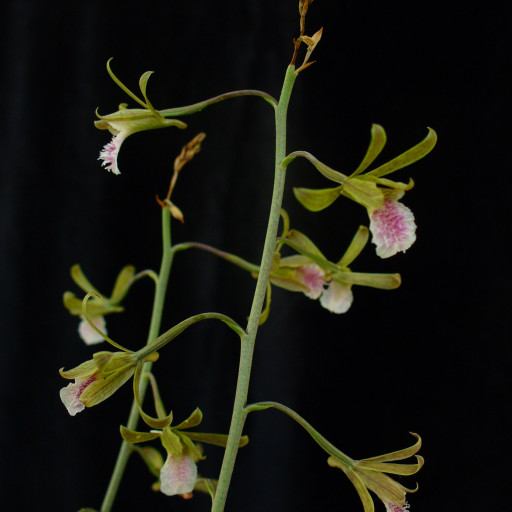
- 🌸 The Flower Spike: It sends up a tall, leafless wand (up to 3 feet high) covered in dozens of small, intricate flowers. These blooms are typically brownish-green with a pale, frilly "lip" that may show hints of rose or purple.
🏡 In Your Garden
- 🪵 The Mulch Lover: This plant has a strange obsession with wood mulch. In many parts of the world, it is an "accidental" guest, hitchhiking into home landscapes through bags of commercial mulch where its hardy bulbs have survived the processing.
- 🌱 Terrestrial Habit: Unlike epiphytic orchids that grow on trees, this species hates having its roots exposed to the air. It needs to be anchored in soil or heavy organic debris. It is a "set it and forget it" plant because it is far more drought-tolerant than most orchids.
⚠️ Safety & Toxicity
- ✅ Non-Toxic: The Chinese Crown Orchid is generally considered non-toxic to humans and common household pets like cats and dogs.
- ⚠️ Gastrointestinal Caution: While not poisonous, the bulbs are extremely fibrous. If a pet or child decides to treat the "onions" as a snack, it could cause mild stomach upset or choking due to the tough texture.
✨ Fun Fact
In the state of Florida, this orchid is actually classified as an invasive species! It is so successful at spreading through wind-blown seeds and the movement of mulch that it has escaped suburban gardens and begun competing with native plants in the wild.

Detailed Care Instructions
To grow Eulophia graminea, also known as the grass-like Eulophia, follow these steps:
- Obtain seeds or a healthy young plant from a reputable nursery or online seller. Ensure that you are getting a genuine Eulophia graminea plant to achieve the desired results.
- Choose a suitable location: Eulophia graminea thrives in warm, tropical climates. It requires bright, indirect sunlight for a significant portion of the day. Select an area that receives about 4-6 hours of sunlight daily.
- Prepare the soil: Eulophia graminea prefers well-draining soil. It can grow in sandy soil, loam, or suitable potting mix. Ensure that the soil is rich in organic matter and has good drainage. If planting in a pot, use a potting mix that retains sufficient moisture without becoming waterlogged.
- Planting: If planting from seeds, soak them in water for 24 hours before planting to facilitate germination. Plant the seeds or young plant in the prepared soil, burying them about an inch deep. Space the plants at least 8 inches apart to allow for proper growth.
- Watering: Eulophia graminea prefers evenly moist soil. Water the plant regularly, keeping the soil moist but not overly saturated. Avoid letting the soil dry out completely between waterings. Increase watering during the hotter months and reduce it slightly during the colder seasons.
- Fertilizing: Use a balanced, slow-release fertilizer to support the growth of the Eulophia graminea plant. Apply the fertilizer according to the instructions provided, usually every few months.
- Support: Eulophia graminea requires support as it grows taller. Install a trellis, stake, or use other supports to help the plant remain upright as it matures.
- Pruning: Prune any dead or diseased leaves to maintain the plant's overall health and appearance. Trim the flower stems after they have finished blooming to promote new growth.
- Protect from extreme weather: Eulophia graminea prefers temperatures between 60-90°F (15-32°C). Protect the plant from frost, excessively cold temperatures, or extreme heat.
- Repotting: If growing Eulophia graminea in a pot, consider repotting it every 2-3 years to ensure sufficient space for root growth.
By following these guidelines, you should be able to successfully grow Eulophia graminea. Remember to research and follow any specific care instructions for the particular variety or cultivar you have.

Place in a bright room that is sun drenched almost all day. Or directly in a south-facing window.

To water this plant, you should first assess the soil moisture level by inserting your finger into the soil. If the soil feels dry to the touch about an inch deep, it's time to water. Use room temperature, distilled water if possible, and pour it slowly onto the soil until it drains out of the bottom of the pot. Don't let the plant sit in standing water after watering, as this can promote fungal growth and root rot. The frequency of watering will depend on factors such as humidity and temperature, so it's important to monitor the soil moisture level regularly and adjust accordingly.
To fertilize Eulophia Graminea plant, apply a balanced fertilizer with an N-P-K ratio of 10-10-10 every two weeks during the growing season from spring to fall. Use a water-soluble fertilizer and follow the recommended dosage on the label. During the dormant season, reduce the frequency of feeding to once a month. Make sure to water the plant thoroughly after fertilizing to avoid fertilizer burn. Avoid fertilizing newly planted or transplanted Eulophia Graminea plant until they establish their roots.
It is recommended to use a well-draining soil mix for Eulophia Graminea. The soil mix should be rich in nutrients and microorganisms that contribute to soil health. It is important to avoid using heavy or clay-like soils, as they can retain too much moisture and lead to root rot. Instead, a mix of peat moss, perlite, and coarse sand or grit is recommended, as these materials improve drainage and aeration in the soil. Additionally, the soil pH should be slightly acidic to neutral, around 6.0-7.0.
Eulophia Graminea is a terrestrial orchid that can be propagated through various methods such as division, seed propagation, and tissue culture.
Division: This method involves dividing the plant into smaller sections, each with a few pseudobulbs and roots. It is best done during the growth period when the plant is actively growing. Care should be taken to prevent damage to the roots and pseudobulbs. The new divisions should be planted in a well-draining soil mix and kept slightly moist until they establish themselves.
Seed propagation: Eulophia Graminea can also be grown from seed, although it can be a slow process. The seeds should be collected when the seed pods are mature and should be cleaned and dried before sowing. The seeds can be sown in a sterile, well-draining medium and kept moist until they germinate. It can take up to a year for the seeds to germinate, and the seedlings will need to be kept in a warm and humid environment.
Tissue culture: This method involves growing multiple plants from a small tissue sample of the mother plant. This is a more complex process and requires specialized equipment and expertise. It is typically used by commercial growers to produce large quantities of plants with desirable characteristics.
Whether propagating by division or seed, Eulophia Graminea requires a warm, humid environment with filtered sunlight and good air circulation. The soil mix should be well-draining and slightly acidic. Diluted fertilizer can be added to the soil or applied as a foliar spray to encourage growth.








