Plant Overview
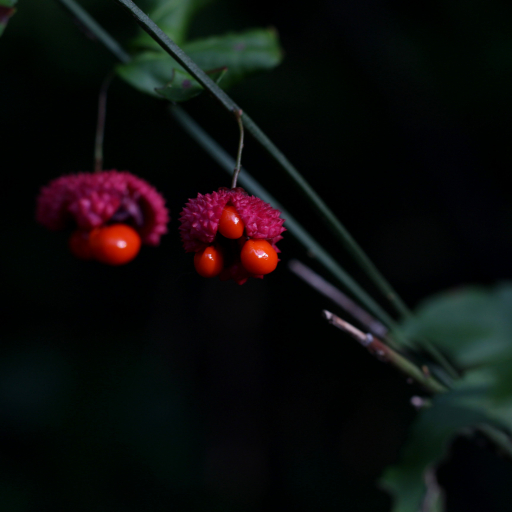
Known as "Hearts-a-burstin'" or the "Strawberry Bush," this native North American shrub is a theatrical performer in the autumn woods. While its summer presence is subtle and airy, it earns its dramatic nicknames when its neon-pink, warty seed pods explode to reveal dangling, waxy orange seeds. It is a favorite for woodland gardeners looking for high-impact seasonal color and a touch of North American folklore.
🔍 How to Identify
- 🍓 The Fruit: Its most famous feature—bumpy, bright pink, warty husks that look remarkably like strawberries before they split open to reveal four or five scarlet-orange seeds.
- 🟩 Evergreen Stems: Even in winter after the leaves fall, the thin, square-angled stems stay a vibrant, youthful green, making it easy to spot in a dormant forest.
- 🍃 Leaf Texture: The leaves are lance-shaped with fine teeth along the edges. They grow in opposite pairs and turn a lovely, translucent yellow or white-green in late autumn.
🏡 In Your Garden
- 🦌 The "Deer Magnet": Gardeners frequently call this the "Ice Cream Plant" for deer. If you live near a forest, you will likely need to cage this plant; deer find the tender green stems so delicious they will graze it down to a stump overnight.
- 💧 Woodland Requirements: This plant is a true understory species. It hates the "hot feet" of direct afternoon sun and thrives in moist, acidic soil. It is perfect for naturalizing a shady border where you want a "wild" look rather than a manicured hedge.
⚠️ Safety & Toxicity
- 🚫 Toxic Status: All parts of the Strawberry Bush are toxic to humans, dogs, and cats if ingested.
- 🤢 The Effects: The seeds contain alkaloids that act as a harsh laxative and can affect the heart if eaten in large quantities. While birds love the seeds, humans should strictly admire them visually.
- 🧤 Skin Sensitivity: Some people experience mild skin irritation when handling the sap, so wearing gloves during pruning is a wise precaution.
✨ Fun Fact
The genus name Euonymus translates from Greek to "of good name," which is ironic because many species in this family were historically known for being poisonous to cattle!

Detailed Care Instructions
| Lighting | Full Sun |
| Hardiness Zones | 5B - 9B |
To grow Euonymus Americanus, also known as American strawberry bush or hearts-a-burstin, follow these steps:
- Choose a suitable location: American strawberry bush prefers partial shade or dappled sunlight. It can tolerate a wide range of soil conditions, including sandy or clay soils, but it prefers moist, well-draining soil.
- Prepare the soil: Clear the planting area of any weeds or grass. Loosen the soil with a garden fork or tiller, mixing in compost or well-rotted manure to improve fertility and drainage if necessary.
- Planting: Dig a hole that is slightly larger than the root ball of the plant. Place the root ball into the hole, making sure the top of the root ball is level with or slightly above the soil line. Backfill the hole with soil, gently firming it around the roots. Water thoroughly after planting.
- Watering: Keep the soil consistently moist during the first growing season to help establish the plant. After that, American strawberry bush is relatively drought tolerant and may only require occasional watering during dry periods.
- Mulching: Apply a layer of organic mulch around the base of the plant, such as wood chips or leaf mulch. This will help conserve soil moisture, suppress weeds, and protect the roots from extreme temperatures.
- Pruning: American strawberry bush typically has a naturally dense, bushy growth habit and may not require regular pruning. However, you can selectively prune to maintain its shape and remove any dead or damaged branches. Pruning can be done in late winter or early spring before new growth emerges.
- Fertilizing: Euonymus Americanus generally does not require regular fertilizing. If the plant shows signs of nutrient deficiency, you can apply a balanced, slow-release fertilizer in early spring according to the manufacturer's instructions.
- Pests and diseases: American strawberry bush is relatively pest and disease resistant. However, keep an eye out for occasional aphid infestations or leaf spot diseases. If necessary, treat with insecticidal soap or a fungicide labeled for use on ornamental plants.
With proper care and maintenance, your Euonymus Americanus plant should thrive and grow steadily.

Place in a window with dappled sun or a spot in the middle of a room. Or directly in a window facing west or east.

To water this plant, ensure that the soil is dry to the touch before adding water. Place the plant in a location with well-draining soil and water slowly, allowing the water to penetrate the soil deeply. Avoid overwatering as this can cause root rot. Monitor the plant's soil moisture level regularly and adjust watering frequency as needed based on the plant's environment and weather conditions.
To properly fertilize this plant, first ensure that it is well-watered before applying any fertilizer. During the plant's growing season, which typically lasts from spring until fall, apply a balanced fertilizer with equal parts of nitrogen, phosphorus, and potassium. This can be done every four to six weeks. Avoid fertilizing during the winter months. Prior to fertilizing, it is recommended to perform a soil test to determine if any additional nutrients, such as iron or magnesium, may be needed.
The Euonymus Americanus plant requires a well-draining soil mix that is rich in organic matter. It is recommended to use a mixture of loamy soil, sand, and peat moss or compost. The soil pH should be slightly acidic, ranging from 5.5 to 6.5. The soil should be moist but not water-logged, as the plant prefers moderately moist conditions. It is important to avoid using heavy clay soils, as this can cause root rot and poor growth. Additionally, adding a layer of mulch around the base of the plant can help retain moisture and regulate soil temperature.
To propagate this plant, take cuttings in the spring or early summer. Choose healthy shoots with several leaves and cut them just below a node. Remove the lower leaves and dip the cut end into rooting hormone. Plant the cuttings in a well-draining potting mix and keep them moist but not too wet. Cover the pot with plastic to create a humid environment and place it in a bright, indirect light. In about 4-6 weeks, the cuttings should begin to root. Once the roots have formed, transplant the new plants into individual pots and care for them as normal.








