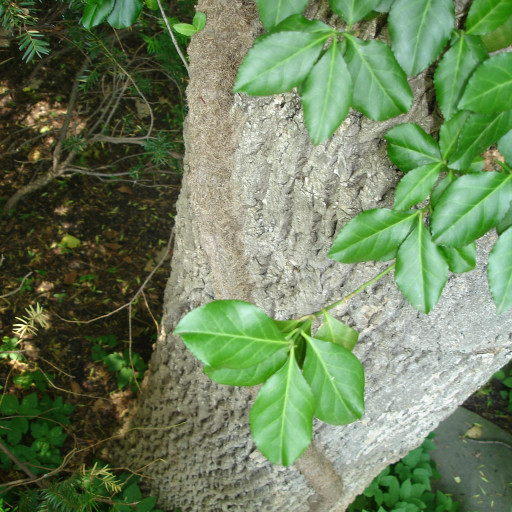
Plant Overview
Often called the "Wintercreeper," Euonymus fortunei is a versatile survivor that refuses to be ignored. Native to East Asia, this evergreen is a master of adaptation, capable of serving as a lush groundcover, a mounded shrub, or an ambitious climber that can scale a 50-foot tree. It earned its common name because it maintains its vibrant foliage through the harshest winters, providing a splash of color when the rest of the garden is dormant.
🔍 How to Identify
- 🍃 Variegated Foliage: Most garden varieties feature small, oval, leathery leaves with striking margins of creamy white or golden yellow against a deep green center.
- 🧗 Aerial Roots: Along its woody stems, you’ll find tiny, hair-like rootlets that allow the plant to "glue" itself to bricks, fences, or tree bark without the need for a trellis.
- 🎾 Hidden Fruit: In autumn, mature climbing stems may produce small, inconspicuous greenish-white flowers followed by pinkish capsules that split open to reveal showy orange seeds.
🏡 In Your Garden
- 🏗️ The Ultimate Shapeshifter: This plant exhibits "dimorphism." When kept on the ground, it stays in its juvenile phase with small leaves and no flowers. However, once it begins to climb vertically, it transitions into an "adult" form, growing larger, thicker leaves and producing fruit.
- 🌱 Tough as Nails: It is incredibly resilient to "urban stress," including poor soil, salt, and heavy pruning. While it’s great for erosion control on steep banks, be careful—its vigorous growth can become invasive in certain climates, where it may outcompete native ground plants.
⚠️ Safety & Toxicity
- 🚫 Toxic Status: All parts of the plant are considered toxic to humans, cats, and dogs.
- 🤢 The Risk: Ingestion of the leaves or berries can cause severe stomach upset, vomiting, and diarrhea. Because it contains cardiac glycosides, large ingestions can lead to more serious heart-related symptoms. It is best planted in areas where curious pets and toddlers don't frequent.
✨ Fun Fact
The plant is named after Robert Fortune, a legendary 19th-century Scottish botanist and "plant hunter." Fortune is most famous for his undercover missions into China (disguised as a Chinese merchant) to bring tea plants to India, forever changing the global tea trade.

Detailed Care Instructions
| Color | Greenish White (Flowers Are Insignificant) |
| Soil Ph | 6.0-8.0 |
| Humidity | Normal |
| Lighting | Full Sun |
| Toxicity | Toxic |
| Soil Type | Medium Moisture, Well-Drained Soil |
| Bloom Time | April |
| Difficulty | Medium |
| Plant Type | Herbaceous Perennial |
| Hibernation | Cold Period |
| Mature Size | Up To 70 Feet As A Vine; Usually Kept To 2 To 4 Feet As A Mounding Shrub |
| Native Area | China |
| Temperature | 14°C - 24°C |
| Sun Exposure | Full Sun To Part Shade |
| Hardiness Zones | 4-9 |
To grow Euonymus Fortunei, also known as wintercreeper, follow these steps:
- Choose a suitable location: Euonymus Fortunei can tolerate both partially shaded and fully shaded areas, as well as full sun in cooler regions. Ensure the soil is well-drained.
- Prepare the soil: Before planting, loosen the soil and remove any weeds or grass. Add organic matter such as compost or well-rotted manure to improve soil fertility.
- Planting: Dig a hole that is slightly larger than the root ball of the plant. Place the plant in the hole, ensuring that it is planted at the same depth as it was previously, or slightly higher. Backfill the hole with soil, gently firming it around the roots.
- Watering: Provide adequate water immediately after planting to help establish the roots. Water deeply once or twice a week, especially during dry periods, to keep the soil consistently moist. Avoid overwatering, as this can lead to root rot.
- Mulching: Apply a layer of organic mulch around the base of the plant to help retain moisture and suppress weed growth. Avoid placing mulch directly against the stems to prevent fungal diseases.
- Pruning: Euonymus Fortunei can be easily pruned to control its size and shape. Prune in late winter or early spring before new growth starts. Remove dead or damaged branches, and thin out overcrowded areas to promote air circulation and sunlight penetration.
- Fertilizing: Apply a balanced slow-release fertilizer in early spring, following the package instructions. This will provide the necessary nutrients for healthy growth.
- Pests and diseases: Euonymus Fortunei is generally resistant to pests and diseases. However, it can occasionally be affected by aphids, scale insects, or powdery mildew. Monitor the plant regularly and take appropriate measures if necessary, such as using insecticidal soap or horticultural oil.
- Winter care: Euonymus Fortunei is hardy and can withstand winter temperatures. However, in colder regions, you can apply a layer of mulch around the base of the plant to help insulate the roots and protect them from frost.
By following these steps, you should be able to successfully grow Euonymus Fortunei and enjoy its evergreen foliage and easy-care nature.

Place in a bright room that is sun drenched almost all day. Or directly in a south-facing window.

To water this plant, make sure to give it enough water to saturate the soil, but be careful not to overwater it. When checking to see if it needs watering, test the soil by inserting your finger a few inches into the soil. If it feels dry, it's time to water. Use a watering can or hose to water at the base of the plant, taking care not to get water on the leaves. Water less frequently during cooler weather or if the plant is in a location with less sun. It is best to water in the morning or early evening to avoid direct sunlight.
To fertilize this plant, use a balanced, slow-release fertilizer in early spring before new growth begins. Apply the fertilizer around the edge of the plant's root zone, making sure to keep it away from the stem. Water the plant well after fertilizing. Avoid fertilizing in late summer, as this can encourage new growth that may not have time to harden off before winter.
The preferred soil for the plant should be well-draining and loamy, as it does not tolerate clayey and waterlogged soils. The pH level of the soil should be slightly acidic to neutral with a range of 5.5 to 7.5. The plant thrives in soils that retain moisture but do not stay wet or soggy for long periods. Adding compost or organic matter to the soil helps to improve its fertility and moisture retention capacity. It is also essential to ensure that the soil provides adequate aeration to the roots. Thus, the plant requires a soil mix that is rich in nutrients, well-draining, and aerated to promote healthy growth.
To propagate this plant, start by selecting a healthy stem cutting that is about 4-6 inches long. Remove the leaves from the lower 2 inches of the stem. Dip the cut end of the stem into rooting hormone powder to promote root growth. Plant the cutting in a container filled with moist potting soil, and cover it with a plastic bag to create a humid environment.
Place the container in a warm, bright location, but out of direct sunlight. Water the cutting regularly to keep the soil moist but not waterlogged. After a few weeks, check the cutting for roots by gently tugging on it. If it resists, roots have formed and it can be transplanted to a larger container or directly into the ground. With proper care, the propagated Euonymus Fortunei plant will grow into a healthy and attractive specimen.








