Plant Overview
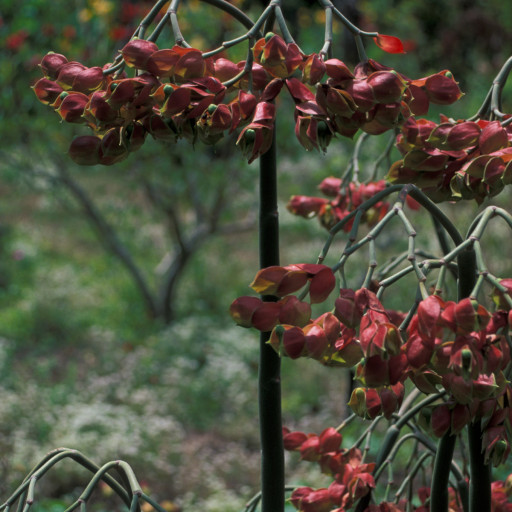
Known affectionately as the "Little Slipper Plant" or the "Tall Slipper Plant," this Mexican native is a true architectural wonder for succulent lovers. Its most striking feature isn't actually its flowers, but the colorful, shoe-shaped bracts that protect them, giving the plant a whimsical, storybook appearance. While it looks delicate and ornamental, it is a rugged survivor of rocky, arid landscapes.
🔍 How to Identify
- 👞 The "Slippers": Its most distinct trait is the small, colorful bracts (modified leaves) that curve to look like tiny pointed shoes or slippers, usually appearing in shades of pink, red, or cream.
- 🌿 Succulent Stems: The plant grows upright with thick, fleshy green stems that store water, often reaching several feet tall in ideal conditions.
- 🍃 Leaf Shape: It produces simple, lance-shaped leaves that sprout along the stems; however, the plant may drop these leaves during dry periods to conserve moisture, leaving the green "canes" exposed.
🏡 In Your Garden
- 🏜️ Drainage is King: This plant thrives on "tough love." Because it is adapted to rocky cliffsides, it requires incredibly porous, gritty soil. It will rot almost immediately if its "feet" stay wet or if planted in heavy potting mix.
- ☀️ Sun & Color: To keep those "slippers" vibrant, it needs bright light. In lower light settings, the plant becomes "leggy" (stretching toward the sun) and the colorful bracts may fade to a dull green.
- 🌡️ Winter Dormancy: It is very sensitive to frost. If the temperature drops below 50°F (10°C), it may go dormant and drop its leaves. In colder climates, it is best kept as a container plant that can be moved indoors.
⚠️ Safety & Toxicity
- 🚫 Irritant Warning: Like all members of the Euphorbia family, Euphorbia bracteata contains a milky white latex sap. This sap is caustic and can cause redness, itching, or even blisters on the skin.
- 👁️ Eye Safety: Never touch your eyes after handling this plant or pruning it, as the sap can cause severe inflammation and temporary blindness.
- 🐾 Pet & Child Safety: It is toxic if ingested. Keep it out of reach of curious pets and children, as the sap can cause swelling of the mouth and digestive distress.
✨ Fun Fact
The genus name Euphorbia was established by King Juba II of Numidia in honor of his Greek physician, Euphorbus, who reportedly used the potent sap of these plants to treat various ailments of the royal court!

Detailed Care Instructions
To grow Euphorbia bracteata, also known as the Mexican snowball or snowflake plant, follow these steps:
- Choose the right location: Euphorbia bracteata prefers a sunny spot with well-draining soil. It can tolerate partial shade, but it will thrive in full sun.
- Prepare the soil: Ensure the soil is well-draining and loosened. If the soil is heavy or clayey, consider amending it with sand or organic matter to improve drainage.
- Planting: Dig a hole slightly larger than the root ball of the plant. Place the plant in the hole and backfill with soil, ensuring that the top of the root ball is level with the soil surface. Gently pat the soil around the plant to remove any air pockets.
- Watering: Give the plant a thorough watering after planting. Going forward, water the Euphorbia bracteata regularly but allow the top few inches of soil to dry out between waterings. Overwatering can lead to root rot, so be cautious not to let the soil become waterlogged.
- Fertilization: Euphorbia bracteata does not require heavy fertilization. Apply a balanced, slow-release fertilizer once a year during the growing season (spring or early summer) to promote healthy growth.
- Pruning: Prune the plant in early spring to remove any dead or damaged branches. Avoid cutting back more than 1/3 of the plant's growth at once. Always wear gloves and protective clothing when handling Euphorbia bracteata, as its sap can cause skin irritation.
- Protection from frost: Euphorbia bracteata is generally frost-tender and may need protection during winter in colder climates. Cover the plant with a frost cloth or move it to a more sheltered location if necessary.
- Propagation: Euphorbia bracteata can be propagated through stem cuttings. Take a 3-4 inch long cutting from the main stem, allow it to dry for a day or two, then plant it in a well-draining potting mix. Keep the cutting warm and lightly moist until roots develop.
Remember, Euphorbia bracteata is a drought-tolerant plant, but it still requires regular watering to establish itself. Additionally, always handle the plant with care and avoid contact with its sap, as it can be toxic and irritating to both humans and pets.

Place in a bright room that is sun drenched almost all day. Or directly in a south-facing window.

To water this particular plant, dampen the soil around the base of the stem carefully, without soaking the leaves or any flowering parts of the plant. Allow the water to settle and be absorbed by the roots before adding any more, to prevent waterlogging or root rot. It is important not to overwater or leave water sitting in the soil, as this plant prefers a drier environment. Only water when the soil is dry to the touch, and be cautious when watering in winter months as the plant may enter dormancy and require even less water.
- Choose a well-draining soil mixture with a pH level of 6.0-7.5.
- Mix a slow-release fertilizer into the top layer of soil before planting.
- During the plant's active growing season, fertilize once a month with a balanced fertilizer.
- Avoid over-fertilization, as this can cause damage to the plant's roots.
- Water the plant thoroughly after fertilization to help distribute the nutrients evenly.
Euphorbia Bracteata plant is best grown in well-draining soil that is fertile and rich in nutrients. The recommended soil type for this plant is loamy soil, with a pH range of 6 to 7.5. It is important to ensure that the soil is well aerated, so it is advisable to add inorganic materials such as vermiculite, perlite or sand as well as organic materials like compost or well-rotted manure to improve soil texture. When planting, ensure that the soil is moist but not waterlogged as this can cause root rot. It is also important to avoid overwatering the plant as this can lead to yellowing of the leaves. Overall, the soil should be rich, well-draining and slightly acidic to provide the best growing conditions for Euphorbia Bracteata plant.
To propagate this plant, take stem cuttings from the parent plant that are at least four inches long and have a few sets of leaves. Remove any lower leaves on the stem cutting and allow the cutting to dry for a few hours to prevent rotting. Prepare a well-draining soil mix of peat moss and perlite. Dip the end of the stem cutting in rooting hormone and plant it in the soil mix. Water the cutting well and place it in bright, indirect sunlight. Keep the soil moist and mist the cutting regularly. Wait until roots have developed, usually after four to six weeks, before transplanting the cutting into a larger pot or into the ground.
Common pests of the tall slipper flower include Scale insect, mealybugs, spider mites. Make a habit of checking your tall slipper flower frequently for pests so that any infestations can be caught and managed early.








