Plant Overview
Often called the Cattle Horn Euphorbia or Buffalo Euphorbia, this South African succulent is a quirky architectural gem for any collection. Unlike many of its desert-dwelling cousins that resemble cacti, Euphorbia bubalina retains soft, lush green leaves at its crown, giving it the appearance of a miniature palm tree. Originating from the Eastern Cape, it is a resilient survivor that adds a touch of prehistoric charm to indoor and outdoor spaces alike.
🔍 How to Identify
- 🌳 The Stem: Features a cylindrical, upright stem covered in a decorative pattern of "tubercles"—small, rounded bumps left behind by old leaves that look like dragon scales.
- 🍃 The Foliage: Long, narrow, lance-shaped leaves sprout in a tufted rosette at the very top of the stems; they are soft, pliable, and a vibrant lime green.
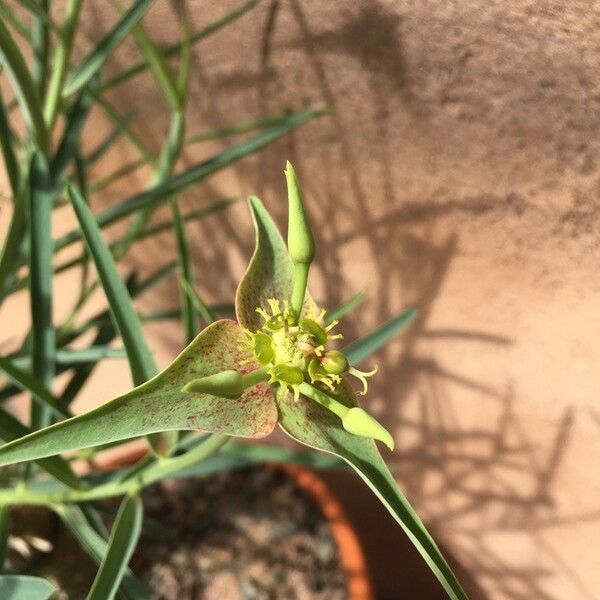
- 🌼 The "Flowers": Produces greenish-yellow structures called cyathia on long, thin stalks that look like tiny umbrellas reaching out from the leaf crown.
🏡 In Your Garden
- ⛅ Light Nuance: While many succulents crave scorching sun, the Buffalo Euphorbia actually prefers "dappled" or bright indirect light. In the wild, it often grows in the shade of larger shrubs, so it’s perfect for a bright windowsill that doesn't get baked by the midday sun.
- 🍂 Seasonal Shedding: Do not worry if your plant suddenly loses its lower leaves! This is a natural survival tactic; it sheds foliage during dry spells or winter dormancy to conserve energy, relying on its thick green stem to stay alive.
- 🪴 Potting Needs: It has a relatively delicate root system for its size. Use a very gritty, cactus-specific soil to prevent "wet feet," as sitting in soggy dirt is the fastest way to harm this plant.
⚠️ Safety & Toxicity
- 🚫 Toxic Latex: Like all members of the Euphorbia family, this plant contains a milky white sap (latex) that is highly irritating.
- 🧴 Irritant Warning: The sap can cause painful skin rashes and is extremely dangerous if it touches the eyes. Always wear gloves when pruning or taking cuttings, and keep the plant out of reach of pets and small children who might break a leaf.
✨ Fun Fact
This plant is a "ballistic" gardener! When its seed pods ripen and dry out, they explode with a distinct popping sound, launching seeds several feet away from the parent plant to ensure its offspring have plenty of space to grow.

Detailed Care Instructions
To water this plant, it is important to first assess the soil moisture level. This can be done by sticking a finger into the soil up to the second knuckle – if the soil feels dry, it is time to water. It is important not to overwater, as this can lead to root rot and other issues.
When watering, it is best to use room temperature water and allow it to saturate the soil. It may be necessary to water from the bottom of the pot, rather than pouring directly onto the soil. This can be done by placing the pot in a shallow tray or saucer filled with water and allowing the plant to soak it up for 15-20 minutes before removing.
It is important to allow the soil to dry out slightly between watering, as this will prevent overwatering and allow for healthy root growth. It is also important to avoid getting water on the leaves or stem of the plant, as this can cause damage or rot.
In general, this plant prefers well-draining soil and does not like to sit in water. As with any plant, it is important to monitor it regularly and adjust watering as needed based on environmental factors and the plant's specific needs.
The soil type recommended for this plant is well-draining and slightly sandy or loamy. It should be rich in nutrients and have a pH level between 6.0-7.5 for optimal growth. The soil should be kept moist, but not waterlogged, and should not be allowed to dry out completely between waterings. It is also recommended to use a fertilizer specifically formulated for cactus and succulent plants every two weeks during the growing season.








