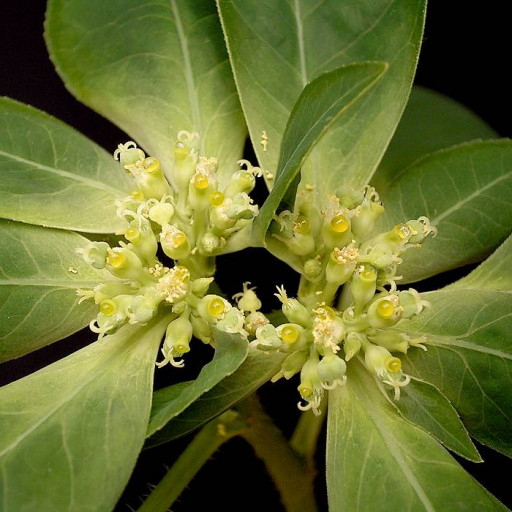
Plant Overview
Commonly known as the Toothed Spurge or the Green Poinsettia, this resilient wildflower is often found claiming territory in disturbed soils and along sun-drenched roadsides. While it lacks the flashy red bracts of its famous holiday relative, it shares the same rugged DNA and a hidden, milky secret within its stems. Native to the Americas, it is often viewed as a "tough-as-nails" survivor that thrives where other plants falter.
🔍 How to Identify
- 🌿 The Leaves: Look for lance-shaped leaves with distinct, pointed "teeth" along the edges (hence the name dentata). They usually grow opposite one another and have a slightly rough, hairy texture.
- 🌼 The Flowers: The blooms are small, inconspicuous yellowish-green clusters called cyathia. They lack traditional petals and sit at the very tip of the branches.
- 🧪 The Sap: If a leaf or stem is broken, the plant immediately leaks a thick, white, milky latex. This is a primary identifying feature of the Euphorbia family.
🏡 In Your Garden
- 🌱 The Pioneer Spirit: This plant is an "opportunist." It loves disturbed ground, such as newly tilled garden beds or gravel pathways. Because it develops a sturdy taproot early on, it is incredibly drought-tolerant but can be difficult to transplant or pull once established.
- ☀️ Sun Seeker: It thrives in full sun and well-draining soil. While it isn't usually sold as an ornamental, it plays a role in local ecosystems by providing cover, though its aggressive seeding habit means it can quickly take over a garden patch if not monitored.
⚠️ Safety & Toxicity
- 🚫 Skin Irritant: The milky sap is caustic. If it touches your skin, it can cause redness, itching, or even painful blistering. Always wear gloves if you are weeding or handling this plant.
- 🐾 Pet & Child Danger: All parts of the plant are toxic if eaten. The sap can cause severe swelling of the mouth and throat, and gastrointestinal distress in dogs, cats, and humans. Keep it away from high-traffic play areas.
✨ Fun Fact
The Toothed Spurge is a close botanical cousin to the festive Christmas Poinsettia. If you look closely at the arrangement of the top leaves and the tiny flowers, you can see the family resemblance—minus the brilliant red paint job!

Detailed Care Instructions
Growing Euphorbia dentata (also known as toothed spurge) can be relatively easy as long as you provide it with the right conditions. Here are some steps to grow Euphorbia dentata:
- Find the right location: Euphorbia dentata prefers full or partial sunlight, so choose a spot in your garden or a sunny window if you plan to grow it indoors.
- Prepare the soil: Euphorbia dentata is adaptable to a range of soils but prefers well-draining soil. Before planting, amend the soil with organic matter to improve drainage and fertility.
- Plant the seeds or seedlings: Euphorbia dentata can be grown from seeds or purchased as seedlings from a nursery. If using seeds, sow them directly in the soil surface and gently press them down. If planting seedlings, dig a hole slightly larger than the root ball and place the seedling in, backfilling with soil and gently firming it around the base.
- Watering: Water the plant thoroughly after planting and then water regularly to keep the soil slightly moist but not waterlogged. Allow the top inch of soil to dry out between waterings.
- Mulching: Apply a layer of organic mulch around the base of the plant to help retain moisture and suppress weed growth. Be careful to keep the mulch a few inches away from the stem to prevent rot.
- Fertilizing: Euphorbia dentata generally doesn't require much fertilization. However, you can apply a balanced slow-release fertilizer in early spring to promote healthy growth.
- Pruning: Regularly prune your Euphorbia dentata plant to remove any dead or damaged stems. This will help maintain its shape and promote new growth.
- Watch for pests and diseases: Euphorbia dentata can be susceptible to common garden pests such as aphids and mealybugs. Inspect the plant regularly and take appropriate measures to control any infestations. Also, ensure good air circulation around the plant to prevent fungal diseases.
Remember, Euphorbia dentata contains a toxic milky sap, so always wear gloves when handling it to avoid skin irritation.

Place in a bright room that is sun drenched almost all day. Or directly in a south-facing window.

Euphorbia Dentata is a plant that requires regular watering to maintain its health and growth. The watering schedule for this plant should be carefully monitored as it can be susceptible to overwatering. To water Euphorbia Dentata, first, check the soil moisture level by inserting your finger about one inch into the soil. If the soil feels dry, it is time to water the plant.
When watering Euphorbia Dentata, use a watering can or a hose with a gentle flow to avoid damaging the plant and causing soil erosion. Water the soil surrounding the roots until it is moist but not waterlogged. It is important to avoid pouring water directly onto the foliage as this can result in leaf damage and disease.
In particularly hot weather, or if the plant is potted and exposed to direct sunlight, it may require more frequent watering to prevent it from drying out. Conversely, in cooler weather or if the plant is in a shaded area, less frequent watering may be necessary to avoid overwatering and root rot.
Overall, Euphorbia Dentata should be watered regularly, but the frequency and amount of water needed will vary depending on the plant's environment and individual needs.
To fertilize Euphorbia Dentata plant, use a balanced fertilizer with an NPK ratio of 10-10-10 or 20-20-20. Dilute the fertilizer according to manufacturer instructions and apply it to the soil around the plant's base, avoiding contact with the stems or leaves. Water the plant thoroughly after fertilization. Fertilize Euphorbia Dentata once every two weeks during the growing season, from spring to fall, and stop fertilization during the winter months.
The ideal soil for Euphorbia Dentata plant should be well-draining with a pH level ranging between 6.0 and 7.5. The soil must be able to retain moisture, yet also allow for optimal drainage to prevent waterlogging or root rot. It is recommended to use a mixture of garden soil, sand, and peat or perlite to create a suitable growing medium for this plant. The soil should be rich in organic matter that provides essential nutrients for the plant's growth and development. It is important to avoid using heavy clay soil, as it can cause waterlogging and restrict root growth. Additionally, the soil should be free from contaminants, such as pesticides or chemicals, that can harm the plant's health and growth. Maintaining a suitable soil environment is critical for the Euphorbia Dentata plant's overall health and vitality.
To propagate this plant, take stem cuttings approximately 4-6 inches in length from a mature and healthy plant. Once you have the cutting, remove the lower leaves and dip the bottom end in rooting hormone. Next, plant the cutting in well-draining soil and keep it moist, but not overly watered. Place the cutting in a bright and warm location, but not in direct sunlight. After a few weeks, the cutting should begin to root and new growth will emerge. Once the new growth has become established, you can transfer the plant to a larger pot or into your garden bed.








