Plant Overview
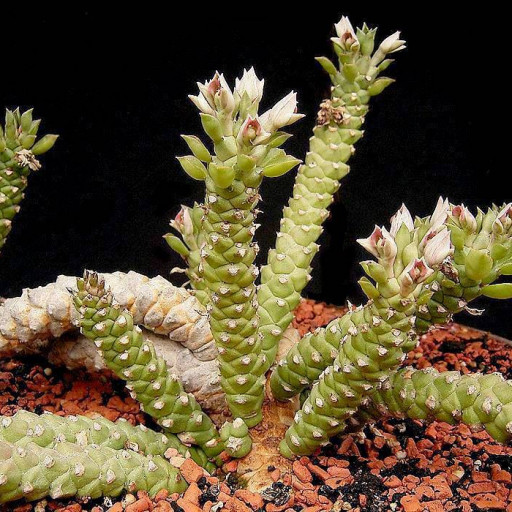
Often called the "Sausage Spurge" or simply by its former name, Monadenium guentheri, this East African native looks like something straight out of a sci-fi novel. With its snake-like cylindrical stems and geometric patterns, it is a favorite for collectors who love "ugly-cute" plants. It originates from the rocky terrains of Kenya, where it has evolved to survive harsh droughts by storing water in its thick, patterned body.
🔍 How to Identify
- 🐍 The Stems: Long, cylindrical, and succulent stems that can grow upright or decumbent (trailing). They are covered in distinct, raised hexagonal "tubercles" that give the plant a reptilian or scaly appearance.
- 🍃 The Leaves: Small, fleshy, lance-shaped leaves typically appear only at the growing tips of the stems. In many climates, these leaves are deciduous, falling off during the dormant winter season to conserve moisture.
- 🌸 The "Flowers": It produces unique cyathia (false flowers) nestled in shoe-shaped bracts. These are usually a pale green with a striking reddish or pinkish rim, looking somewhat like a tiny hooded pitcher.
🏡 In Your Garden
- 🏜️ Drainage is Non-Negotiable: Because it evolved in rocky African soils, this plant has a very sensitive root system. It is prone to "sudden collapse" if the soil stays damp. Use a gritty, mineral-heavy cactus mix and avoid deep pots that hold excess moisture at the bottom.
- ☀️ Light & Color: While it loves bright, indirect light, giving it a bit of morning sun will often "stress" the plant in a healthy way, causing the stems to take on a darker, purplish hue and keeping the growth compact rather than leggy.
- 💤 Winter Rest: This plant enters a distinct dormancy. If you notice the leaves yellowing and falling off in autumn, don't panic—it's just going to sleep. Reduce watering significantly during this time to prevent rot.
⚠️ Safety & Toxicity
- 🚫 Toxic Status: Like all members of the Euphorbia family, this plant contains a thick, milky white sap (latex) that is highly irritating.
- 🧤 Skin & Eyes: The sap can cause painful blistering or rashes on the skin and is extremely dangerous if it gets into the eyes. Always wear gloves when pruning or taking cuttings, and wash your tools afterward.
- 🐾 Pets & Kids: Keep this plant out of reach. Ingestion can cause severe gastric distress, swelling of the mouth, and vomiting in cats, dogs, and curious toddlers.
✨ Fun Fact
The "shoe-shaped" bracts that surround the tiny flowers are an evolutionary trick; they act like a landing pad for specific pollinators, and their unique shape gave the former genus name Monadenium its identity before it was reclassified into the broader Euphorbia family!

Detailed Care Instructions
| Humidity | Dry |
| Lighting | Part Sun |
| Difficulty | Medium |
| Hibernation | Cold Period |
| Temperature | 16°C - 29°C |
| Hardiness Zones | 8B - 10B |
To successfully grow Euphorbia Guentheri plant, also known as Gopher Spurge, follow these steps:
- Climate and soil requirements: Euphorbia Guentheri prefers a warm climate with plenty of sunlight. It can tolerate a wide range of soil types, but it thrives in well-draining soil. Ensure that your soil has good drainage.
- Planting: Choose a suitable location for your Euphorbia Guentheri plant, preferably an area with full or partial sun exposure. Dig a hole that is slightly larger than the root ball, then place the plant in the hole and backfill with soil, ensuring it is firmly planted. Gently water the plant after planting to settle the soil around the roots.
- Watering: Euphorbia Guentheri requires regular watering during the growing season, especially in dry periods. However, make sure to avoid overwatering as it can cause root rot. Allow the topsoil to dry out between waterings.
- Fertilization: Feed your Euphorbia Guentheri plant with a balanced, slow-release fertilizer in spring to promote healthy growth. Follow the instructions on the fertilizer packaging for the correct dosage and application method.
- Pruning: Prune your Euphorbia Guentheri plant as needed to maintain its desired shape and size. Be cautious when handling or pruning, as the plant exudes a milky sap that can irritate the skin and eyes. Wear gloves and protective clothing when working with it.
- Pests and diseases: Euphorbia Guentheri is generally resistant to most pests and diseases. Ensure good air circulation around the plant to prevent fungal diseases. If you notice any signs of pests or diseases, such as aphids or powdery mildew, treat them promptly with an appropriate organic pesticide or fungicide.
- Propagation: Euphorbia Guentheri can be propagated through stem cuttings or by division. Take stem cuttings in spring or early summer and allow the cut end to dry for a few days. Then, plant the cuttings in well-draining soil, mist them, and keep them in a warm, bright location until they develop roots. Division can be done by carefully separating the plant into smaller sections, ensuring each section has roots attached.
Remember that Euphorbia Guentheri is a drought-tolerant plant, so it is best not to overwater it. With proper care and attention, your Euphorbia Guentheri plant should grow well and thrive.

Place in a bright room that is sun drenched almost all day. Or directly in a south-facing window.

The watering strategy for this plant can be slightly different from other succulents. Ensure to allow the soil to dry out entirely before watering it again. Overwatering can lead to root rot, so it is crucial not to water the plant frequently. The best time to water this plant is during the growing season in spring and summer months. During these months, the plant is actively growing and will require more water than in winter. It is important to water the soil directly and not the leaves or stem of the plant as this can cause damage to the plant. Additionally, it is recommended to use room-temperature water to water this plant and avoid using chlorinated water. Lastly, never allow the plant to sit in standing water, as this can cause root rot and kill the plant.
For best results, fertilize the plant in the early spring or summer using a balanced, water-soluble fertilizer. Dilute the fertilizer to half strength and apply it once every two to three weeks. Be careful not to over-fertilize, as this can lead to an unhealthy and weak plant. Always follow the instructions on the label of the fertilizer, and water the plant immediately after fertilizing to prevent root burn.
Euphorbia Guentheri plant requires a well-draining soil mix to ensure the roots do not sit in water. The soil should be a blend of porous materials, such as perlite, pumice, or sand, mixed with organic matter like peat moss or coconut coir. The nutrient content of the soil should be minimal and not overly rich, as Euphorbia Guentheri prefers an arid environment with low fertility. A pH level of 6.0-7.0 is optimal for this plant. It is important to avoid using heavy clay soils or soils with high levels of moisture-retaining materials.
One method to propagate this plant is through stem cuttings. First, choose a healthy stem with several pairs of leaves. Then, using a sharp, clean knife or scissors, cut the stem at a 45-degree angle just below a leaf node. Make sure the cutting is at least 3 inches long. Remove the lower leaves from the stem, leaving only a few pairs at the top.
Next, dip the cut end of the stem into rooting hormone to encourage root growth. Plant the cutting in a pot filled with well-draining soil, and mist the leaves with water to keep them hydrated. Keep the pot in a warm, bright location but out of direct sunlight.
Over time, the cutting will develop roots and new growth. You can then transplant it into a larger pot or into the garden. It is important to handle this plant with care as it can produce a milky sap that can cause skin irritation. Wear gloves and avoid getting the sap on your skin or eyes.
Common pests of the sausage spurge include Scale insect, mealybugs, spider mites. Make a habit of checking your sausage spurge frequently for pests so that any infestations can be caught and managed early.








