Plant Overview
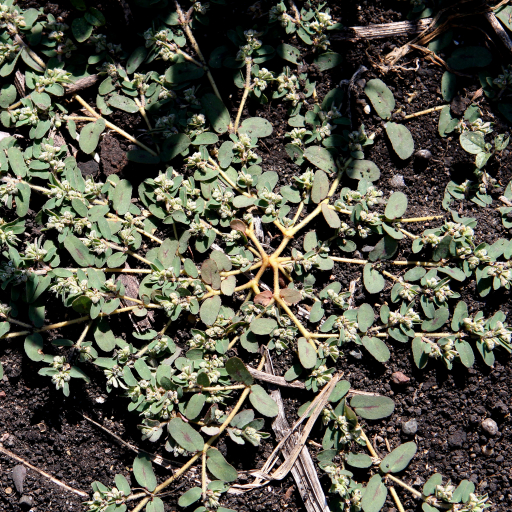
Often referred to as the Spotted Spurge or Milk-purslane, this low-growing groundcover is the ultimate opportunist of the plant world. While many gardeners view it as a persistent weed, it’s actually a fascinating member of the massive Euphorbia family, known for its "latex" sap and unique "cyathia" flowers. It has a remarkable ability to thrive in the hottest, driest cracks of a sidewalk where other plants would wither in minutes.
🔍 How to Identify
- 🌿 The "Beauty Mark": The most distinct feature is a small, dark reddish-purple spot right in the center of each tiny, oval leaf.
- 🛤️ Prostrate Growth: It grows in flat, circular mats that hug the ground, with stems radiating outward from a central taproot like the spokes of a wheel.
- 💧 The Milky Tell: If you break a stem, it will immediately leak a thick, white, milky sap. This is a classic hallmark of the Spurge family.
- 🌸 Microscopic Blooms: The flowers are so small they are often overlooked, appearing as tiny white or pinkish cups tucked in the leaf axils.
🏡 In Your Garden
- 🌱 The Opportunist: Spotted Spurge loves "disturbed" soil. If you have a gap in your mulch or a crack in your driveway, it will find it. It thrives in full sun and can handle intense heat that would kill most ornamental plants.
- ⚓ Taproot Strength: It develops a surprisingly deep, tough taproot very quickly. This makes it drought-resistant but also difficult to pull out entirely once it's established; if the root snaps, it can often regenerate.
- 📦 Seed Explosion: A single plant can produce thousands of seeds in one season. These seeds are sticky when wet, allowing them to hitch a ride on lawnmowers, garden tools, or the bottom of your shoes to reach new areas.
⚠️ Safety & Toxicity
- 🚫 Irritant Status: The white milky sap contains latex and organic acids that can cause "phytophotodermatitis"—a painful skin rash or blistering, especially when exposed to sunlight.
- 🐾 Pet Warning: It is considered toxic to dogs, cats, and horses. If ingested, the sap causes irritation to the mouth and stomach, often leading to vomiting or drooling.
- 🧤 Hand Safety: Always wear gloves when weeding this plant to avoid getting the sap on your skin or, more importantly, in your eyes.
✨ Fun Fact
The seeds of the Spotted Spurge are master survivors; they have been known to remain viable in the soil for over 50 years, waiting for the perfect moment of sunlight and moisture to finally sprout!

Detailed Care Instructions
To grow Euphorbia maculata, also known as spotted spurge, you can follow these steps:
- Location: Choose a sunny spot in your garden or outdoor area for planting the Euphorbia maculata. It prefers full sun to partial shade.
- Soil: The plant prefers well-draining soil that is slightly acidic to neutral. Prepare the soil by loosening it with a garden fork or tiller to ensure good drainage.
- Watering: Water the plant regularly, especially during dry periods. Spotted spurge is drought-tolerant, but it will thrive with regular watering.
- Planting: Dig a small hole in the prepared soil, ensuring that it is large enough to accommodate the roots of the Euphorbia maculata. Place the plant in the hole and backfill it with soil. Firm the soil gently around the base of the plant.
- Mulching: Apply a layer of mulch around the base of the plant to retain moisture in the soil and suppress weed growth. Avoid placing mulch directly against the stem to prevent stem rot.
- Pruning: Euphorbia maculata generally doesn't require much pruning. However, if the plant becomes overgrown or untidy, you can trim it back to maintain a neater appearance. Wear gloves while pruning as the sap can be toxic and irritate the skin.
- Pest and disease control: Spotted spurge is relatively resistant to pests and diseases. However, you may occasionally encounter issues with aphids or other common garden pests. Monitor your plants regularly and take appropriate measures if necessary, using organic insecticides or neem oil.
Remember that Euphorbia maculata can be invasive in some regions, so be mindful of its spreading tendencies. Regular monitoring and maintenance will help keep it under control.

Place in a bright room that is sun drenched almost all day. Or directly in a south-facing window.

Euphorbia Maculata plant requires regular watering to maintain its health and growth. The best way to water this plant is to do it deeply and infrequently. You should water the plant when the soil dries out completely. You can check this by inserting your finger into the soil up to the first knuckle. If it feels dry, then it's time to water the plant.
When watering, you should pour water slowly and evenly around the base of the plant, making sure to wet the entire root ball. Avoid getting water on the leaves and stem of the plant as this can cause rot or fungal issues. You should also avoid overwatering or letting the plant sit in water, as this can lead to root rot.
During the summer months, the plant may need to be watered more frequently than in the winter. You should also adjust your watering schedule based on the humidity and temperature of your climate. If the air is drier or the temperature is higher, the plant may need more frequent watering to prevent stressing out.
In general, it's better to underwater Euphorbia Maculata plant than overwater them. This plant can tolerate some drought, but it cannot survive if the roots are constantly soaking in water.
Overall, watering Euphorbia Maculata plant is a simple process that requires you to check the soil's moisture level regularly and adjust the watering schedule accordingly. With proper watering, this plant can grow healthily and thrive in your garden or home.
To ensure optimal growth and health for your Euphorbia Maculata plant, follow these fertilizing instructions:
- Use a balanced, water-soluble fertilizer: Choose a fertilizer with equal parts nitrogen (N), phosphorus (P), and potassium (K), as indicated by the NPK ratio on the product label.
- Dilute the fertilizer: Mix the fertilizer according to the instructions provided on the packaging. Generally, a dilution ratio of 1 tablespoon of fertilizer per gallon (4 liters) of water is recommended.
- Apply the fertilizer during the active growing season: Begin fertilizing in spring or early summer when the plant begins its active growth period and continues throughout the growing season until late summer or early fall.
- Apply the fertilizer monthly or as directed: Depending on the specific product instructions, fertilize your Euphorbia Maculata plant once a month or as recommended by the fertilizer manufacturer.
- Carefully apply the fertilizer solution: Slowly pour the diluted fertilizer solution over the soil around the base of the plant. Avoid direct contact with the foliage, as this may cause damage.
- Water after fertilization: After applying the fertilizer, water the plant thoroughly. This helps to dissolve the fertilizer and ensures it reaches the root zone.
- Monitor the plant's response: Observe your Euphorbia Maculata plant for any signs of overfertilization, such as yellowing leaves or wilting. If you notice these signs, reduce the frequency or strength of the fertilizer application.
Remember to always follow the specific fertilizer's instructions, as different brands may have variations in application rates and frequency. Regular fertilization combined with proper watering and lighting conditions will help your Euphorbia Maculata plant thrive.
The best type of soil to use with this plant is a well-draining soil that is not too rich in nutrients. It should be a sandy or loamy soil that allows excess water to drain away easily to prevent the roots from rotting. The pH of the soil should be slightly acidic, between 6.0 and 6.5. It is important to avoid using heavy or clay soils as they tend to hold too much moisture and can cause root rot. A soil mixture of sand, peat moss, and perlite can be used as a suitable growing medium. It is also important to ensure that the soil is well-aerated and provides good drainage to create optimal growing conditions for this plant.
Propagation of Euphorbia maculata can be achieved through various methods such as division, stem cuttings, or growing from seeds.
- Division: This method is typically used for mature plants that have multiple stems or branches. Start by carefully removing the plant from its container or digging it up from the garden. Gently separate the plant into smaller sections, ensuring that each section has enough roots attached. Replant the divided sections in separate pots or desired locations in the garden, being careful not to bury the stem too deep.
- Stem Cuttings: Select a healthy stem or branch from the parent plant, preferably one that is not actively flowering. Using a sterilized knife or shears, make a clean cut just below a node (the point where leaves emerge from the stem). Remove any lower leaves, leaving only a few leaves at the top. Allow the cutting to dry and callus for a few days. Plant the cutting in a well-draining potting mix, ensuring that the cutting is inserted deep enough for stability. Keep the soil slightly moist and provide indirect light until roots develop.
- Growing from Seeds: Collect fresh seeds from the parent plant, usually found in small capsules or pods. Sow the seeds in a well-draining soil mix or seed-starting mix. Press the seeds into the soil but do not cover them, as they require light to germinate. Mist the soil lightly with water and cover the container with plastic wrap to create a humid environment. Place the container in a warm location, such as near a window, and keep the soil consistently moist until germination occurs. Once the seedlings develop a few sets of true leaves, they can be transplanted into individual pots.
Regardless of the propagation method chosen, it is important to provide the newly propagated plants with appropriate care. Euphorbia maculata plants prefer bright indirect light, well-draining soil, and moderate watering. Avoid overwatering to prevent root rot. Once the new plants establish roots and show signs of growth, they can be treated similarly to mature plants. However, it's worth noting that euphorbias contain a milky sap that can be irritating to skin and eyes, so exercise caution when handling the plant.








