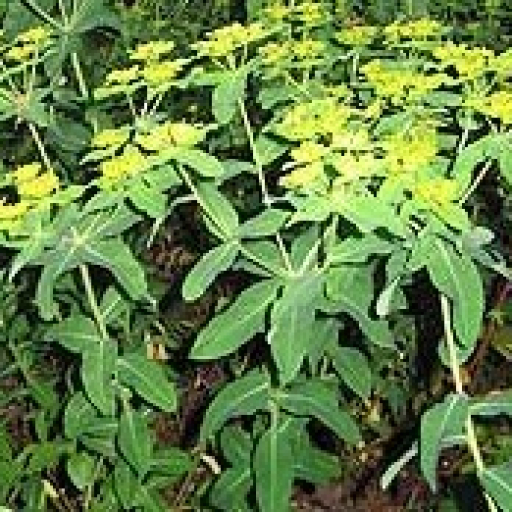
Plant Overview
Known for its electric, lime-yellow glow, Euphorbia oblongata—commonly called the Balkan Spurge—is a Mediterranean native that brings a burst of "neon" energy to the landscape. While it looks like it is covered in bright flowers, it is actually a master of disguise, using colorful leaves to mimic blossoms. It is a favorite for gardeners seeking a structural, hardy perennial that thrives where others might wilt.
🔍 How to Identify
- 🍃 The Foliage: As the name suggests, the leaves are "oblong" or lance-shaped. They are a deep, matte green with a prominent pale central vein, often turning a beautiful bronze-red in the cooler months.
- ☀️ Luminous Bracts: The "flowers" are actually chartreuse-colored bracts (modified leaves). These flat, bright yellow-green discs sit at the tips of the stems, creating a glowing canopy over the plant.
- 💧 The Milky Sap: Like all members of the Spurge family, cutting the stem reveals a thick, white, sticky latex sap that resembles Elmer's glue.
🏡 In Your Garden
- 🧱 Structure and Mounding: This plant grows in a tidy, upright mound, making it an excellent "filler" for the middle of a garden border. It provides architectural interest even when it isn't in peak "bloom."
- 🌱 Self-Seeding Nature: Be mindful that this plant is a vigorous spreader. It produces seed pods that "pop" when ripe, flinging seeds across the garden. In some regions, it is considered a "weed of concern" because it can easily escape garden beds and move into local wildlands.
⚠️ Safety & Toxicity
- 🚫 Dermal Irritant: Caution is required. The milky sap is highly caustic. If it touches your skin, it can cause redness, itching, or even painful blisters. Always wear gloves and long sleeves when pruning.
- 🐾 Pet & Child Hazard: Every part of the plant is toxic if swallowed. It can cause severe irritation to the mouth and stomach in dogs, cats, and humans. Keep it away from areas where pets or toddlers might be tempted to nibble.
✨ Fun Fact
- 💣 Ballistic Dispersal: The Balkan Spurge doesn't rely on the wind to move its seeds. It uses "ballochory"—a fancy word for explosive discharge. When the seed capsules dry out, they build up tension and eventually burst, launching seeds like tiny projectiles several feet away from the parent plant!

Detailed Care Instructions
To grow Euphorbia Oblongata successfully, follow these steps:
- Choose a well-draining pot or location in the garden with full sun to partial shade.
- Fill the pot with a well-draining soil mix, such as cactus or succulent potting mix.
- Water the plant thoroughly after planting, then allow the soil to dry out slightly before watering again. Euphorbia Oblongata is drought-tolerant and does not like to sit in soggy soil.
- Fertilize the plant lightly with a balanced fertilizer once a month during the growing season (spring and summer).
- Prune back any leggy or overgrown growth to encourage bushier growth and shape the plant.
- Keep an eye out for pests, such as spider mites or mealybugs, and treat promptly if necessary.
- Euphorbia Oblongata can be propagated from stem cuttings taken in the spring or summer. Allow the cuttings to dry for a few days before planting in well-draining soil.
By following these steps, you should be able to successfully grow Euphorbia Oblongata in your garden or container.

Place in a bright room that is sun drenched almost all day. Or directly in a south-facing window.

Euphorbia Oblongata plant should be watered deeply but infrequently. It is important to allow the soil to dry out completely before watering again. The plant is sensitive to overwatering and can easily develop root rot if the soil is too moist for long periods of time. When watering, it is recommended to water at the base of the plant and avoid getting water on the leaves as it can cause damage. During the growing season, the plant may require more frequent watering, but it is still important to allow the soil to dry out between watering. In the winter months, the plant will require less water as it enters a period of dormancy. Overall, it is important to monitor the soil moisture and adjust watering accordingly.
To fertilize Euphorbia oblongata, mix a balanced fertilizer that is low in nitrogen with water according to the manufacturer's instructions. Fertilize the plant once every 2-3 weeks during the growing season, which is typically in the spring and summer. Avoid fertilizing during the fall and winter months. Be sure to water the plant thoroughly after applying fertilizer to help prevent burning the roots. If the plant shows signs of nutrient deficiency, such as yellowing leaves, you may need to increase the frequency of fertilization. Always follow the instructions on the fertilizer package and adjust as needed based on the needs of the plant.
When planting Euphorbia Oblongata, it is important to use a well-draining soil that is not too rich in nutrients. A soil mixture that is composed of equal parts of perlite, sand, and loam would be suitable for this plant. It is also important to ensure that the soil has a pH level between 6.0 and 7.0, and to avoid using a soil that has high levels of organic matter or clay, which can lead to waterlogging and root rot. Additionally, adding a layer of gravel or coarse sand to the bottom of the planting container can help to enhance drainage and prevent excess moisture from accumulating around the roots.
To propagate Euphorbia oblongata, you can use stem cuttings. Here is a step-by-step guide on how to do this:
- Start by selecting a healthy and mature stem from the plant. Make sure the stem is at least a few inches long and has a few sets of leaves.
- Using a sharp pair of pruning shears, cut the stem at a 45-degree angle just below a leaf node. This will help the cutting root more easily.
- Remove the lower sets of leaves from the cutting, leaving only a few sets of leaves at the top of the stem.
- Allow the cut end of the stem to dry and callous over for a few days. This will help prevent rotting when you plant the cutting.
- Fill a small pot with well-draining potting mix, such as a succulent or cactus mix.
- Make a small hole in the soil and gently insert the cutting into the hole. Firmly press the soil around the stem to secure it in place.
- Water the cutting lightly, being careful not to overwater. Place the pot in a warm, bright location with indirect sunlight.
- Keep the soil consistently moist but not soggy, and mist the cutting occasionally to provide humidity.
- Within a few weeks, the cutting should start to develop roots. You can gently tug on the stem to check for resistance, which indicates that roots have formed.
- Once the cutting has established roots, you can transplant it into a larger pot or into the garden, if desired.
By following these steps, you can successfully propagate Euphorbia oblongata and increase your plant collection.








