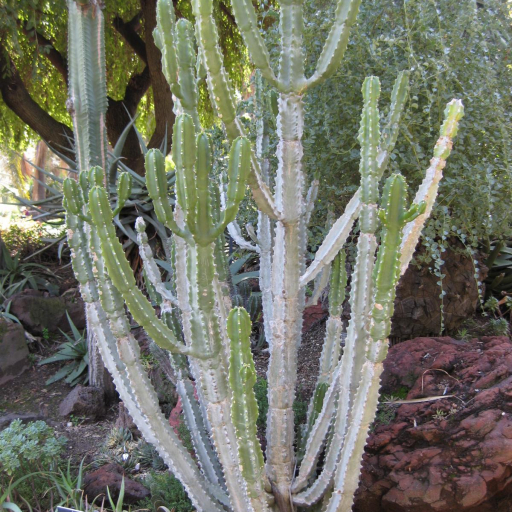
Plant Overview
Known as the Sullu Spurge or the Himalayan Candelabra, this striking succulent is a master of disguise. While it looks remarkably like a desert cactus, it actually hails from the rocky slopes of the Himalayas. In its native habitat, it grows into a massive, multi-branched tree, often used by local farmers as a "living fence" to keep livestock at bay thanks to its formidable spines and protective sap.
🔍 How to Identify
- 🌵 The Stems: Thick, fleshy, and segments into 5 to 7 distinct vertical ribs or "angles." The stems are a vibrant light green, turning woodier and greyish as the plant ages.
- ⚔️ The Spines: Small, dark brown pairs of thorns sit along the ridges of the stems. Unlike many cacti, these spines are relatively short but very sharp.
- 🍃 The Leaves: Unlike true cacti, it produces fleshy, spoon-shaped leaves near the tips of new growth. However, it is "deciduous-succulent," meaning it drops these leaves during dry or cold periods to conserve water.
🏡 In Your Garden
- ⛰️ Rocky Roots: Because it originates from mountain scree, this plant demands exceptional drainage. It prefers a "neglect-based" watering schedule; if the soil stays damp for more than a day or two, the roots are likely to protest and rot.
- ☀️ Sun Seeker: It thrives in intense light. If grown indoors, it needs your brightest south-facing window. Without enough light, the new growth will become thin, pale, and "stretched" (etiolated), losing its iconic candelabra shape.
⚠️ Safety & Toxicity
- 🚫 High Risk: Like all members of the Euphorbia family, this plant contains a thick, milky white latex (sap) that is highly caustic.
- 🧪 Skin & Eye Irritant: Contact with the sap can cause severe skin blistering and painful inflammation. If the sap gets into the eyes, it can cause temporary blindness. Always wear gloves and eye protection when pruning.
- 🐾 Pet Safety: Highly toxic to cats, dogs, and horses if ingested. Keep it out of reach of curious nibblers.
✨ Fun Fact
In the foothills of the Himalayas, Euphorbia royleana is considered a "pioneer species." It is one of the few plants tough enough to grow on barren, landslide-prone slopes, eventually stabilizing the soil so that other plants can move in and grow!

Detailed Care Instructions
To grow Euphorbia Royleana, also known as the snowflake euphorbia, you can follow these steps:
- Climate and Location: Euphorbia Royleana is native to arid regions, so it prefers full sun and a warm climate. Ensure your planting location receives at least 6-8 hours of direct sunlight each day. If you live in a colder region, consider growing it indoors near a sunny window.
- Soil: Euphorbia Royleana requires well-draining soil. Use a cactus or succulent potting mix, or create your own by combining regular potting soil with perlite or sand to increase drainage.
- Planting: Select a well-draining container or planting area. Gently remove the Euphorbia Royleana plant from its nursery pot and plant it at the same depth in the new container or ground. Backfill the soil around the plant, ensuring it is snug but not tightly packed.
- Watering: During its active growth period (spring to fall), water the plant when the top inch of soil feels dry. Allow excess water to drain away, as waterlogged soil can lead to root rot. In winter, water sparingly, only when the soil has dried out significantly.
- Fertilizing: Euphorbia Royleana doesn't require frequent fertilization. Apply a balanced, slow-release fertilizer once or twice during the growing season. Be sure to follow the package instructions for the correct dosage.
- Pruning: Regular pruning is not necessary for Euphorbia Royleana, but if it becomes leggy or unruly, you can trim it back lightly in spring to promote bushier growth. Always wear gloves and protect your skin from the plant's milky sap, which can be irritating.
- Pests and Diseases: Euphorbias are generally resistant to pests and diseases. However, keep an eye out for common houseplant pests such as mealybugs. If you notice an infestation, remove them manually or use a suitable insecticidal soap.
- Propagation: Euphorbia Royleana can be propagated through stem cuttings. Take a 4-6 inch stem cut from a healthy, established plant and allow it to dry for a few days. Then, plant the cutting in a well-draining potting mix, keeping it lightly moist until roots develop.
Remember, Euphorbia Royleana produces a milky sap that can irritate the skin and be toxic if ingested, so handle the plant with care and keep it away from children and pets.

Place in a bright room that is sun drenched almost all day. Or directly in a south-facing window.

To properly water this type of plant, you should first check the soil moisture level by inserting your finger about an inch into the soil. If the soil feels dry to the touch, it is time to water the plant. Use a watering can or hose to slowly water the soil around the base of the plant until it is thoroughly moistened. Avoid getting water on the leaves or stems of the plant as this can lead to fungal growth or damage. It is also important not to overwater the plant as this can cause root rot. Allow the soil to dry out slightly between watering sessions.
To fertilize this plant, it is recommended to use a balanced fertilizer with a ratio of 10-10-10 or 20-20-20. This fertilizer should be applied every two weeks during the growing season, which is usually from spring to fall. Be sure to water the plant before applying fertilizer to avoid burning the roots. Additionally, be careful not to over-fertilize as this can lead to excessive growth and legginess. Always follow the instructions on the fertilizer packaging for proper application rates.
The ideal soil for Euphorbia Royleana should have good drainage and be well-aerated. It should also have a neutral to slightly alkaline pH level. The soil should be rich in nutrients, but not too heavy in organic matter. It's important to avoid using soils that hold too much moisture, as this can lead to root rot and other plant diseases. Instead, a sandy or loamy soil mix with good drainage properties is recommended. Composting soil mixes can also be used, but ensure they are not too heavy and have good drainage. Adding perlite, grit, or sand to soil mixtures can often improve drainage and improve soil qualities for successful cultivation of Euphorbia Royleana.
Propagation of this plant can be done through various methods such as stem cuttings and division of root system. For stem cuttings, select healthy shoots and cut a stem roughly 4-6 inches long. Remove any leaves from the bottom of the stem and let the cuttings dry for a few hours. Then dip the cuttings in rooting hormone and plant them in well-draining soil. Keep the soil moist and place the cutting in a bright but indirect light.
For division, carefully remove the plant from its pot and gently separate the root system into smaller clumps. Plant these clumps in their own pots with fresh soil, keeping the soil moist and in a bright but indirect light. It's important to note that this plant contains a toxic sap, so use gloves and take precautions when handling it.
Common pests of the sullu spurge include Scale insect, mealybugs, spider mites. Make a habit of checking your sullu spurge frequently for pests so that any infestations can be caught and managed early.








