Plant Overview
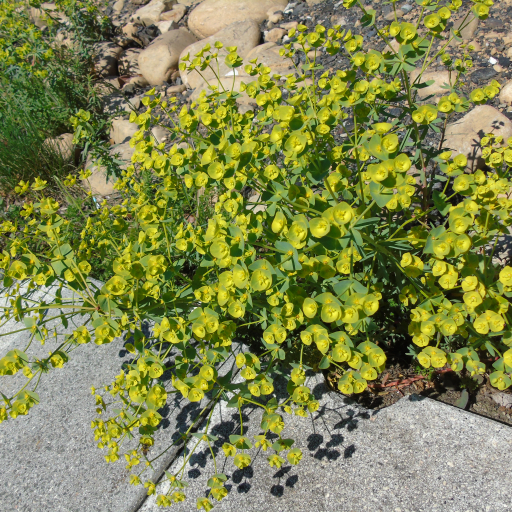
Often called the Pine Spurge or Field Spurge, this Mediterranean native is a master of minimalist beauty. It earned its nickname from its narrow, needle-like leaves that mimic a tiny pine tree before bursting into a cloud of chartreuse blooms. Historically found wandering through European grain fields, it is a resilient "pioneer plant" that brings a touch of wild, sun-drenched hillsides to any landscape.
🔍 How to Identify
- 🌿 The Foliage: Look for slender, linear leaves that are a distinct glaucous (blue-green) color. They are crowded along the stem, giving it a soft, feathery appearance.
- 🌼 The "Flowers": Like other spurges, what look like petals are actually specialized leaves called bracts. These are heart-shaped and turn a vibrant lime-yellow in late spring.
- 📏 Growth Habit: It typically grows in upright, multi-stemmed clumps, reaching about 12 to 18 inches in height. The stems may take on a reddish tint near the base as they mature.
🏡 In Your Garden
- ☀️ Sun Seeker: This plant is a true child of the sun. It thrives in bright, open spots and will become "leggy" or floppy if tucked away in the shade.
- 🏜️ Drainage is Key: Coming from rocky Mediterranean soils, it hates "wet feet." It is best suited for rock gardens, xeriscaping, or sandy borders where water moves away from the roots quickly.
- ✂️ Self-Seeding Nature: Be aware that it is a prolific self-sower. If you don't want a colony of Pine Spurge, be sure to prune the flower heads back once they begin to fade.
⚠️ Safety & Toxicity
- 🚫 Toxic Milky Sap: Like all members of the Euphorbia family, this plant contains a thick, white latex sap that is highly irritating.
- 👁️ Skin and Eye Irritant: Contact with the sap can cause redness, itching, or even blistering. Always wear gloves when pruning, and never touch your eyes after handling the plant.
- 🐾 Pet Warning: Keep this plant away from curious cats and dogs. If ingested, the sap can cause severe mouth irritation and digestive upset.
✨ Fun Fact
The species name segetalis comes from the Latin word segetum, meaning "of the cornfields." This is a nod to its ancient history of growing as a common weed among cereal crops like wheat and barley throughout the Roman Empire.

Detailed Care Instructions
To grow a Euphorbia Segetalis plant, also known as the Cornfield Euphorbia, you can follow these steps:
- Obtain the seeds: Purchase Euphorbia Segetalis seeds from a reputable supplier or collect them from mature plants if you have access to them.
- Choose the right location: Euphorbia Segetalis prefers full sun but can also tolerate partial shade. Ensure the area you select has well-draining soil.
- Prepare the soil: Loosen the soil and remove any weeds or debris. Euphorbia Segetalis tends to survive in a range of soil types but prefers light, fertile soil. If the soil is heavy or clay-like, amend it with organic matter like compost to improve drainage.
- Sow the seeds: Sprinkle the seeds directly on the soil surface in the desired location. Gently press them into the soil, ensuring good seed-to-soil contact. Space the seeds around 12-15 inches apart to provide enough room for growth.
- Watering: After sowing the seeds, water the area thoroughly to ensure moisture penetrates the soil. Keep the soil consistently moist but not waterlogged. Check the moisture level every few days and adjust watering accordingly.
- Provide care: Euphorbia Segetalis is a relatively low-maintenance plant. However, keep an eye out for any competing weeds and remove them as needed. Additionally, it is generally not necessary to fertilize Euphorbia Segetalis, as they can thrive in average soil conditions.
- Harvesting: Euphorbia Segetalis typically blooms in early summer and produces seed pods. After the flowers have faded and the seed pods have dried, you can collect the seeds for future propagation.
- Winter protection: If you live in an area with frost or cold winters, Euphorbia Segetalis may not be reliably frost-hardy. Consider providing winter protection by mulching the area around the plant or covering it with a breathable fabric or blanket.
Remember, always consult local gardening resources and follow any specific instructions or guidelines regarding the cultivation of Euphorbia Segetalis in your region.

Place in a bright room that is sun drenched almost all day. Or directly in a south-facing window.

To water this plant, it is important to first check the soil moisture level by pressing your finger about an inch into the soil. If it feels dry, it is time to water. Use a watering can with a narrow spout to water directly at the base of the plant, avoiding getting water on the leaves. Water thoroughly until water begins to drain out of the bottom of the pot or onto the soil. Allow the soil to drain completely before returning the plant to its location. Avoid overwatering as this can lead to root rot. It is best to water this plant when the top inch of soil feels dry to the touch.
- Use a balanced fertilizer with an NPK ratio of 10-10-10 or 20-20-20.
- Apply the fertilizer once every two to three weeks during the growing season.
- Water the plant thoroughly before applying the fertilizer to avoid root burn.
- Follow the instructions on the fertilizer package for the recommended dosage and application method.
- Avoid getting fertilizer on the plant's leaves or stem as it can cause damage.
- Do not fertilize the plant during the dormant season or in the winter months.
- Monitor the plant's growth and adjust the fertilizer application accordingly.
The best type of soil to use with this plant is well-draining and sandy, with a pH level between 6 and 7. It should also have a high percentage of organic matter, such as compost or peat moss. The soil should be kept moist but not waterlogged, as this can lead to root rot. It is important to avoid using heavy clay soils or soils that are prone to waterlogging, as these can cause the plant to wilt or even die. Finally, it is recommended to use a good quality potting mix and to fertilize the plant regularly during its growing season.
To propagate this plant, start by selecting a healthy and mature stem. Make a clean cut at the base of the stem, using a sharp and clean knife. Next, remove the lower leaves and make sure to leave at least two leaf nodes on the stem.
Apply rooting hormone powder on the cut end of the stem and plant it in a pot with a well-draining soil mix. Water the soil to moisten it, and cover the pot with a plastic bag or a clear plastic wrap to create a humid environment that will help the cutting develop roots.
Place the pot in a bright, indirect light location and keep the soil consistently moist while the plant establishes roots. After a few weeks, check for root development by gently tugging on the stem. If you feel resistance, the cutting has likely developed roots and can be gradually acclimated to normal conditions.
Once the plant has rooted, remove the plastic cover and gradually expose it to more light and air flow. As the plant matures, transplant it into a larger pot or to an outdoor location where it can grow to its full size.








