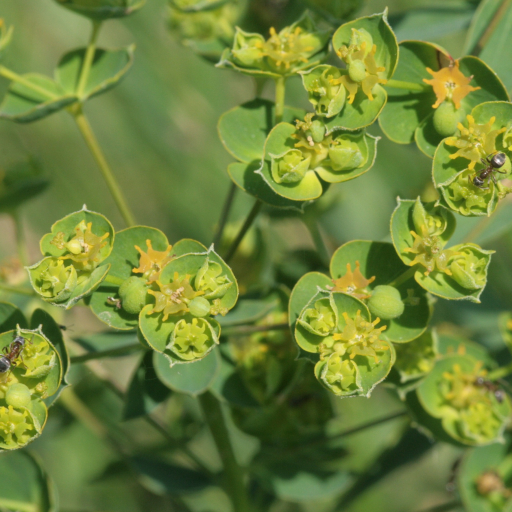
Plant Overview
Known as the Leafy Spurge, Euphorbia virgata is a plant of dual identities. To some, it is a bright, airy wildflower that coats fields in a golden-green mist; to gardeners and ecologists, it is a formidable "super-weed" that can outlast almost any drought or removal attempt. Its ability to colonize entire landscapes has earned it a reputation as a beautiful but stubborn invader.
🔍 How to Identify
- 🍃 Lush Foliage: The stems are densely packed with narrow, lance-shaped leaves that are a soft bluish-green, giving the plant a brush-like, "virgate" (wand-like) appearance.
- 💛 Heart-Shaped Bracts: What look like yellow flowers are actually specialized leaves called bracts. These chartreuse, heart-shaped structures cradle the tiny, true flowers and provide the plant's signature golden glow.
- 🥛 The Milky Tell: If a stem or leaf is broken, it immediately oozes a thick, white, sticky latex. This "milk" is a primary identification feature for the Euphorbia family.
🏡 In Your Garden
- 🌱 The Root of the Problem: This plant is legendary for its root system, which can reach depths of nearly 30 feet. If you find it in your yard, pulling it by hand often fails because the smallest root fragment left behind will quickly regenerate into a new plant.
- ☀️ Sun-Loving Opportunist: It thrives in sunny, open spaces and disturbed soil. While its architectural look is tempting for "wild" aesthetics, it is highly aggressive and will likely outcompete your favorite perennials if not strictly contained.
⚠️ Safety & Toxicity
- 🚫 Skin Irritant: The milky sap contains caustic compounds that can cause redness, swelling, and even painful blisters on contact with skin. Always wear gloves and eye protection when weeding or pruning.
- 🐾 Pet & Livestock Warning: It is toxic to cattle and horses, causing mouth irritation and severe digestive distress. Fortunately, most grazing animals naturally avoid it due to its bitter, burning taste.
✨ Fun Fact
💥 Ballistic Botany: Euphorbia virgata doesn’t just drop its seeds; it launches them! When the seed pods dry out, they explode with enough force to fling seeds up to 15 feet away from the parent plant, helping it "walk" across a field over time.

Detailed Care Instructions
Euphorbia virgata, also known as the Virginia spurge or the smooth spurge, is a perennial plant that can be a great addition to gardens. Here are some tips to help you grow Euphorbia virgata successfully:
1. Site Selection
- Sunlight: Euphorbia virgata prefers full sun to partial shade. Aim for at least 6 hours of sunlight each day.
- Soil: It thrives in well-draining soil. Sandy or loamy soils with good drainage are ideal. You can also amend heavy clay soils with organic matter.
2. Planting
- Timing: The best time to plant is in the spring or fall.
- Spacing: When planting, allow enough space between plants (about 12-18 inches) to ensure good air circulation and growth.
3. Watering
- Euphorbia virgata is drought-tolerant once established. Water the plants regularly during the first few weeks after planting, and then reduce watering as they mature. Overwatering can lead to root rot.
4. Fertilizing
- Generally, Euphorbia virgata doesn’t require heavy fertilization. If your soil is poor, you can use a balanced, slow-release fertilizer in the spring to promote growth.
5. Pruning and Maintenance
- Deadheading: Remove spent flowers to encourage more blooms and a tidy appearance.
- Pruning: Trim back any dead or damaged stems in early spring to promote new growth.
6. Pest and Disease Management
- Euphorbia virgata is relatively pest-resistant. However, keep an eye out for common garden pests. If desired, you can treat infestations with insecticidal soap or neem oil.
- Ensure good air circulation and avoid overhead watering to minimize the risk of fungal diseases.
7. Propagation
- Euphorbia virgata can be propagated by dividing established plants in the spring or by seed. If collecting seeds, allow the seed heads to dry on the plant before harvesting.
8. Winter Care
- In areas with cold winters, Euphorbia virgata typically comes back each spring. You may choose to mulch around the base to protect the roots during extreme temperatures.
Conclusion
With proper care, Euphorbia virgata can thrive in your garden, providing beautiful foliage and unique flowers. Always be cautious when handling this plant, as the milky sap can be irritating to the skin and eyes. Enjoy your gardening!
Watering the Euphorbia virgata plant requires careful consideration to ensure its health and vitality. Here are detailed steps for effectively watering this species:
- Soil Type: Ensure that the plant is in well-draining soil. A sandy or gritty mix is preferable as it prevents water retention that can lead to root rot.
- Watering Frequency: Watering frequency should be adjusted based on the season. During the growing season (spring and summer), the plant may require more frequent watering. In contrast, the dormant season (fall and winter) typically requires less frequent watering.
- Moisture Level: Check the moisture level of the soil before watering. Allow the top inch or two of soil to dry out completely before the next watering. This can be monitored with your fingers or a moisture meter.
- Watering Method: When you water, do so thoroughly. This means allowing water to penetrate down to the root zone. Use a watering can with a pour spout or a hose with a gentle spray to ensure even distribution.
- Avoid Overhead Watering: Try to water at the base of the plant rather than from above. Water on the foliage can promote fungal issues and is generally avoided with succulents and drought-tolerant species.
- Water Quality: Use room temperature, clean water. Rainwater or distilled water is preferred, especially if you are in an area with hard water, as high mineral content can be detrimental over time.
- Containers and Drainage: If the plant is in a container, ensure that there are drainage holes at the bottom. This allows excess water to escape and prevents the roots from sitting in water.
- Signs of Underwatering or Overwatering: Learn to identify signs of stress. Underwatered plants may exhibit wilting or shriveling, while overwatered plants may have yellowing leaves or a mushy stem.
- Environmental Factors: Take into account environmental factors such as humidity, temperature, and light exposure. High temperatures and bright light may require more frequent watering, while cooler climates with lower light levels might necessitate less frequent watering.
- Adjust as Needed: Each plant can have different needs based on environmental conditions and growth stages, so it’s important to observe and adjust the watering schedule as necessary.
By following these guidelines, you will be able to maintain proper hydration levels for your Euphorbia virgata plant, promoting its health and growth.
Fertilizing Euphorbia virgata can help support its growth and overall health. Here are some instructions for fertilizing this plant:
- Fertilizer Choice: Use a balanced, water-soluble fertilizer with an N-P-K ratio of around 10-10-10 or 20-20-20. Alternatively, you can opt for a fertilizer formulated specifically for succulents or cacti.
- Dilution: Always dilute the fertilizer to half the recommended strength to prevent any potential damage to the plant's roots.
- Timing: Fertilize during the growing season, which is typically from spring to early autumn. Avoid fertilizing during the winter months when the plant is dormant.
- Frequency: Apply fertilizer every 4-6 weeks during the growing season.
- Watering: Ensure the soil is moist before applying the fertilizer to help it penetrate the soil and prevent root burn.
- Soil Condition: Make sure the potting mix is well-draining, as this plant does not tolerate waterlogged conditions.
- Observation: Monitor the plant for signs of over-fertilization, such as leaf burn or yellowing, and adjust the frequency or concentration of fertilizer as needed.
By following these guidelines, you can help ensure your plant receives the nutrients it needs for healthy growth.
Euphorbia virgata thrives best in well-draining soil that offers a balance between moisture retention and drainage. A suitable soil mix would typically include:
- Cactus Mix: A commercial cactus or succulent mix can be an excellent choice due to its lightweight texture and good drainage properties.
- Additives: You can enhance the standard cactus mix by incorporating additional components like coarse sand, perlite, or pumice. This will improve aeration and drainage, which is essential for preventing root rot.
- Organic Matter: Including some organic matter, such as shredded coconut coir or well-rotted compost, can help retain some moisture while still allowing excess water to drain away.
- pH Level: A slightly acidic to neutral pH (around 6.0 to 7.0) is ideal for this species. You may want to test the soil pH and adjust it if necessary.
- Mulch: While not part of the soil mix, a thin layer of gravel or small stones on top can help retain soil moisture while discouraging fungal growth and preventing pests.
It's essential to ensure that the pot or planting area has adequate drainage holes to facilitate the outflow of excess water, as this plant prefers dryer conditions. Over-watering can lead to root rot, so allowing the soil to dry out between watering is crucial for healthy growth.
Euphorbia virgata, commonly referred to as a type of spurge, can be propagated through several methods. Here are the steps for two main techniques: seed propagation and vegetative propagation through cuttings.
Seed Propagation
- Collect Seeds:
- Wait until the seed capsules mature; they will turn brown and dry.
- Carefully collect the seeds, taking care to avoid damage.
- Wait until the seed capsules mature; they will turn brown and dry.
- Prepare the Soil:
- Use a well-draining potting mix. A blend of perlite, sand, and peat can work well.
- Ensure the pots or trays have drainage holes.
- Use a well-draining potting mix. A blend of perlite, sand, and peat can work well.
- Sow the Seeds:
- Scatter the seeds on the surface of the prepared soil.
- Lightly press them into the soil without covering them, as some light is necessary for germination.
- Scatter the seeds on the surface of the prepared soil.
- Watering:
- Mist the soil lightly to moisten it without soaking it.
- Use a spray bottle to avoid displacing the seeds.
- Mist the soil lightly to moisten it without soaking it.
- Provide Warmth and Light:
- Place the pots in a warm area with indirect sunlight.
- Maintain a temperature around 20-25°C (68-77°F).
- Place the pots in a warm area with indirect sunlight.
- Germination:
- Seeds should germinate within 2-4 weeks.
- Keep the soil moist but not waterlogged during this period.
- Seeds should germinate within 2-4 weeks.
- Transplanting:
- Once seedlings develop a few sets of true leaves and are large enough to handle, transplant them into larger pots.
- Use the same well-draining potting mix.
Vegetative Propagation (Cuttings)
- Once seedlings develop a few sets of true leaves and are large enough to handle, transplant them into larger pots.
- Select a Healthy Plant:
- Choose a healthy, mature plant with strong stems for cuttings.
- Choose a healthy, mature plant with strong stems for cuttings.
- Take Cuttings:
- Using sharp, sterilized tools, take stem cuttings of about 4-6 inches in length. Make the cut just below a leaf node.
- Wear gloves, as the milky latex sap can irritate the skin.
- Using sharp, sterilized tools, take stem cuttings of about 4-6 inches in length. Make the cut just below a leaf node.
- Prepare the Cuttings:
- Remove the lower leaves from each cutting, leaving a couple at the top.
- Allow the cut ends to callous over for a few hours or overnight to reduce the risk of rot.
- Remove the lower leaves from each cutting, leaving a couple at the top.
- Plant the Cuttings:
- Insert the cuttings into a well-draining potting mix, burying them about an inch deep.
- Space the cuttings apart to allow airflow.
- Insert the cuttings into a well-draining potting mix, burying them about an inch deep.
- Watering:
- Lightly water the soil around the cuttings to settle them in place.
- Avoid overwatering, as the cuttings can rot.
- Lightly water the soil around the cuttings to settle them in place.
- Create a Humid Environment:
- Optionally, cover the pot with a clear plastic bag or dome to maintain humidity. Make sure to ventilate occasionally to prevent mold.
- Optionally, cover the pot with a clear plastic bag or dome to maintain humidity. Make sure to ventilate occasionally to prevent mold.
- Light and Temperature:
- Place the cuttings in a warm area with bright, indirect light.
- Maintain a temperature around 20-25°C (68-77°F).
- Place the cuttings in a warm area with bright, indirect light.
- Rooting:
- Roots should develop in 4-6 weeks. You can check for resistance when gently tugging the cutting to see if roots have formed.
- Roots should develop in 4-6 weeks. You can check for resistance when gently tugging the cutting to see if roots have formed.
- Transplanting:
- Once the cuttings are well-rooted and show new growth, transplant them into their own pots with the same well-draining mix.
General Care Post-Propagation
- Once the cuttings are well-rooted and show new growth, transplant them into their own pots with the same well-draining mix.
- Watering: Allow the soil to dry slightly between waterings to prevent overwatering.
- Light: Once established, provide plenty of bright, indirect light. Direct sunlight may cause leaf scorch.
- Fertilizing: Feed with a diluted, balanced fertilizer during the growing season (spring and summer).
By following these methods, you can successfully propagate this plant.








