Plant Overview
Often called the Northern Eyebright, Euphrasia micrantha is a charming but clever little opportunist found in the damp heaths and moors of Northern Europe. Despite its delicate, innocent appearance, it is a "hemiparasite," meaning it lives a double life: it photosynthesizes like a normal plant while simultaneously stealing water and minerals from the roots of neighboring grasses. Its name comes from the Greek word Euphrosyne (gladness), reflecting the joy it was said to bring to those whose eyesight it "restored."
🔍 How to Identify
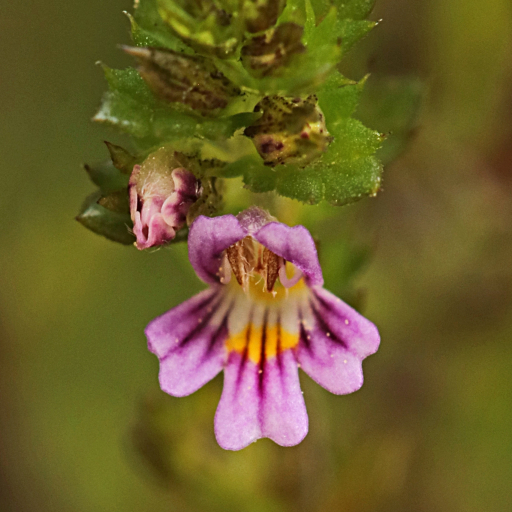
- 🌸 Petite Blooms: The flowers are exceptionally tiny—even for an Eyebright—usually white or pale lilac with delicate purple veins and a distinct yellow "landing strip" on the lower lip to guide pollinators.
- 🍃 Toothed Foliage: Its leaves are small, dark green, and oval-shaped with sharp, serrated edges (teeth) that grow in opposite pairs along a slender, often reddish stem.
- 📏 Diminutive Stature: This is a true "belly plant"—you have to get low to see it. It rarely grows taller than 10–15 centimeters, often hiding amongst the heather or grasses it relies on for nutrients.
🏡 In Your Garden & Habitat
- 🤝 The Root Thief: If you find this in the wild, notice how it always grows closely packed with other plants. It uses specialized roots called "haustoria" to tap into the root systems of nearby grasses, helping it survive in nutrient-poor soil.
- ⛰️ Upland Specialist: Unlike some of its cousins, the Northern Eyebright thrives in acidic, peaty soils. You’ll most likely spot this species in windswept moorlands, damp mountain slopes, or coastal heaths where larger plants struggle to dominate.
⚠️ Safety & Toxicity
- ✅ Non-Toxic: Euphrasia micrantha is not known to be poisonous to humans, cats, or dogs.
- 👁️ Traditional Warning: While its common name suggests it's good for the eyes, you should never apply home-made infusions or extracts of this plant directly to your eyes. Modern herbalists use it cautiously, as non-sterile preparations can lead to severe ocular infections.
✨ Fun Fact
In medieval times, Eyebright was a key component of "The Doctrine of Signatures." Because the flower’s petals resemble a bloodshot human eye, herbalists believed nature was giving a visual "clue" that the plant was intended to cure eye ailments and "clear the sight of the elderly."

Detailed Care Instructions
Euphrasia Micrantha, commonly known as Eyebright, is a small perennial herbaceous plant that is well-suited to growing in a garden or outdoor container. Here are some tips on how to grow Euphrasia Micrantha plant:
- Choose a location: Eyebright plants prefer a sunny or partially shaded spot with well-draining soil. Make sure to provide good air circulation to prevent mildew and rot.
- Planting: Plant the Eyebright seeds or seedlings in the spring or early summer. Dig a small hole in the soil, place the plant in the hole, and cover with soil. Space the plants about 6 inches apart.
- Watering: Water the plants regularly, especially during dry periods. Make sure the soil is evenly moist but not waterlogged.
- Fertilizing: Eyebright plants typically do not require much fertilization. You can add a small amount of balanced fertilizer in the spring if needed.
- Pruning: Trim the plant regularly to promote bushier growth and encourage more flowering. Remove any dead or diseased growth as needed.
- Mulching: Mulch around the base of the plant to help retain moisture and suppress weeds.
- Pest and disease control: Eyebright plants are generally resistant to pests and diseases, but keep an eye out for any problems and treat them promptly if necessary.
- Harvesting: You can harvest the flowers and leaves of the Eyebright plant for medicinal use. Cut the stems just after the plant starts to bloom.
By following these tips, you can successfully grow Euphrasia Micrantha and enjoy its beautiful flowers and potential health benefits.
Euphrasia Micrantha plants should be watered regularly to keep the soil consistently moist, but not waterlogged. It is important to water the plant at the base to avoid getting the foliage wet, as this can lead to disease issues. Use room temperature water and ensure that any excess water can drain away easily from the pot. Monitor the plant regularly to determine when it needs watering, as environmental factors such as temperature and humidity can affect the plant's water requirements. Adjust your watering schedule accordingly to ensure the plant stays healthy and hydrated.
To fertilize Euphrasia micrantha plants, use a balanced, water-soluble fertilizer with equal amounts of nitrogen, phosphorus, and potassium. Apply the fertilizer according to the instructions on the packaging, typically every 4-6 weeks during the plant's active growing season. Be sure to water the plants thoroughly after fertilizing to help the nutrients penetrate the soil and be taken up by the roots. Avoid over-fertilizing, as this can harm the plant.
Euphrasia Micrantha plants prefer well-draining, loamy soil with a slightly acidic pH level. A suitable soil mixture for this plant may include a blend of peat moss, perlite, and organic compost. This type of soil provides good aeration and drainage for the plant's roots, which helps prevent waterlogging and root rot. Additionally, incorporating a small amount of sand into the soil mix can improve drainage further. It is essential to keep the soil consistently moist but not waterlogged to support the healthy growth of the Euphrasia Micrantha plant. Regularly monitoring the moisture level and adjusting watering frequency accordingly is important to ensure the plant thrives in its soil environment.
Euphrasia Micrantha can be propagated through division or seeds. To propagate through division, carefully separate the plant at the root ball and replant in a new location. For propagation through seeds, collect mature seeds and sow them in well-draining soil. Keep the soil consistently moist and place the container in a warm, bright location. Germination can take several weeks to months. Keep the seedlings well-watered and transplant them into individual pots once they have grown large enough.








