Plant Overview
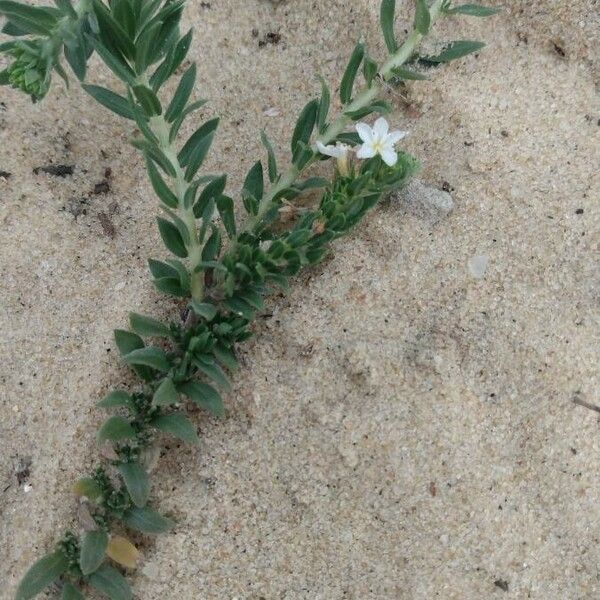
Known as the Pineland Heliotrope, this resilient native of the Florida coast and the Caribbean is a true coastal gem. It forms a low-growing, shimmering carpet of silver-green foliage topped with tiny, star-like flowers that look like miniature sunny-side-up eggs scattered across the sand. It is a favorite for butterfly enthusiasts looking to add a touch of wild, "old Florida" charm to their landscape.
🔍 How to Identify
- 🌼 "Fried Egg" Flowers: Look for tiny, five-lobed white blossoms with a distinct, bright yellow "eye" or throat at the center.
- 🌿 Dense Foliage: As the name polyphylla (meaning "many leaves") suggests, the plant is crowded with small, narrow, lance-shaped leaves that grow upward along the stems.
- 🌫️ Bristly Texture: The entire plant is covered in fine, stiff hairs (strigose), giving the green leaves a slightly silvery or greyish cast, especially under bright sunlight.
🏡 In Your Garden
- 🏖️ Sand & Salt Specialist: This plant thrives in "poor" conditions. It specifically loves limestone, rocky pine lands, and sandy soils where other plants might wither, making it a champion for coastal xeriscaping.
- 🦋 Butterfly Buffet: It is a vital nectar source for small butterflies and bees. In its native habitat, it is a frequent pit-stop for the Queen butterfly and various hairstreaks.
- ☀️ Heat Warrior: Once established, it is incredibly drought-tolerant. It prefers a "tough love" approach—too much fertilizer or water can actually cause the plant to become leggy and lose its compact, attractive shape.
⚠️ Safety & Toxicity
- 🚫 Ingestion Warning: Potentially toxic if consumed.
- 🐾 Liver Irritant: Like many members of the Heliotrope family, it contains pyrrolizidine alkaloids. These can cause liver distress in dogs, cats, and horses if eaten in significant quantities. It is best enjoyed as a visual treat rather than a garden snack.
✨ Fun Fact
The genus name Euploca comes from the Greek words for "well" and "braid." This refers to the characteristic way the flower spikes are tightly coiled like a scorpion's tail or a braid before they slowly unfurl to reveal their blooms!

Detailed Care Instructions
To grow Euploca polyphylla plant, you can follow these steps:
- Choose the right location: Euploca polyphylla prefers full sun to partial shade. Select a spot in your garden that receives at least 6 hours of direct sunlight per day.
- Prepare the soil: Euploca polyphylla prefers well-draining soil. Loosen the soil with a garden fork or tiller to a depth of 8-10 inches. Remove any weeds or rocks in the area.
- Planting: Dig a hole that is slightly larger than the root ball of the plant. Place the plant in the hole, making sure it is upright and at the same depth it was in the container. Fill the hole with soil, gently firming it around the roots.
- Watering: After planting, water the plant thoroughly to settle the soil and help the roots establish. Water regularly, keeping the soil evenly moist but not waterlogged. Avoid overwatering as it can lead to root rot.
- Mulching: Apply a layer of organic mulch, such as wood chips or compost, around the base of the plant. This will help retain moisture, suppress weeds, and regulate the soil temperature.
- Fertilizing: Euploca polyphylla typically does not require much fertilizer. However, you can apply a balanced slow-release fertilizer once in early spring to promote healthy growth.
- Pruning: As the plant grows, you may need to prune dead or damaged branches. Additionally, if the plant becomes too dense, you can selectively prune to maintain its desired shape or size.
- Pests and diseases: Euploca polyphylla is generally resistant to pests and diseases. However, you should keep an eye out for common garden pests like aphids or spider mites, and treat them accordingly if detected.
Remember to check the specific requirements of Euploca polyphylla in your region as conditions may vary. Regularly monitor the plant's growth, provide adequate care, and your Euploca polyphylla plant should thrive.

Place in a bright room that is sun drenched almost all day. Or directly in a south-facing window.

To water this plant, you should monitor the soil moisture levels and only water when the top inch of soil feels dry to the touch. When watering, pour water at the base of the plant, avoiding the leaves and stems. Use a watering can or a gentle stream of water to prevent soil erosion. Ensure that there is proper drainage, as this plant does not tolerate standing water. In areas with high humidity, you may need to reduce the frequency of watering to prevent root rot.
To fertilize this plant, apply a balanced fertilizer with equal amounts of nitrogen, phosphorus, and potassium. Dilute the fertilizer to half strength and apply every two weeks during the growing season. Avoid fertilizing during the dormant season or in extreme temperatures. Water the plant well before and after fertilizing to prevent root burn.
When planting Euploca Polyphylla, it is important to use soil that is well-draining and has good aeration. The soil should also have a slightly acidic to neutral pH level. A mix of organic matter and sand can be added to heavy clay soils to improve drainage. The soil should be moist but not waterlogged, and should not dry out completely between waterings. Mulching can help regulate soil moisture. Avoid using soil that is nutrient-poor or contains high levels of salts. In general, a balanced, all-purpose potting soil will work well for Euploca Polyphylla.
- Choose a healthy Euploca Polyphylla plant with mature stems and leaves to use for propagation.
- Cut several stem cuttings, each with at least two nodes. Nodes are the points on the stem where leaves emerge.
- Remove the leaves from the bottom half of each cutting, leaving only a few on the upper half.
- Dip the cut ends of the stem cuttings into rooting hormone powder. This will help stimulate root growth.
- Plant each cutting in a small pot filled with a well-draining soil mixture.
- Cover the pot with a plastic bag to create a mini greenhouse and keep the soil moist but not soggy.
- After a few weeks, check for the development of roots by gently tugging on the stem. If there is resistance, roots have developed and the plant can be moved to a larger, permanent pot.
- Provide the new plant with bright, indirect light and keep the soil evenly moist.
- Gradually acclimate the plant to regular room temperature and humidity.
- Enjoy watching your newly propagated Euploca Polyphylla plant grow!








