Plant Overview
Known as the Bolwarra or Native Guava, Eupomatia laurina is a "living fossil" that has survived virtually unchanged for millions of years. This primitive rainforest shrub is prized by collectors for its glossy, copper-toned foliage and its unique, petal-less flowers that fill the air with a heavy, fruity perfume. Often found tucked away in the shaded gullies of Eastern Australia, it brings a prehistoric elegance and a taste of ancient "bush tucker" to the modern garden.
🔍 How to Identify
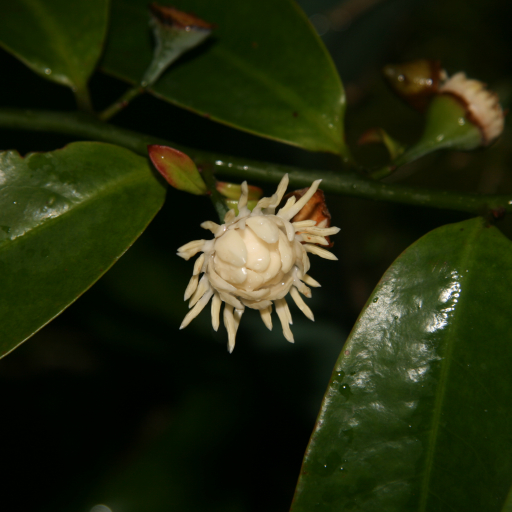
- 🍃 Lustrous Foliage: The leaves are dark green, glossy, and oblong. They often turn a striking copper or deep bronze color during the winter months or when new growth emerges.
- 🌼 Petal-less Blooms: The flowers are truly bizarre; they lack traditional petals and sepals. Instead, they look like creamy, fluffy puffballs made entirely of "staminodes" (sterile stamens).
- 🏺 Urn-Shaped Fruit: After flowering, the plant produces green, urn-shaped berries about 2-3cm wide. As they ripen, they soften and turn a translucent brownish-grey.
🏡 In Your Garden
- 🌥️ The Understory Specialist: Because it originated in dense rainforests, this plant is an expert at handling low-light conditions. It is perfect for those "problem" shady corners where other flowering plants might struggle.
- 🪲 A Beetle’s Best Friend: The Bolwarra has a highly specialized relationship with a specific genus of tiny beetles (Elleschodes). The flowers actually provide a "nursery" and food for these beetles, which are the plant’s only pollinators.
- 💧 Thirsty Roots: It prefers consistently moist, rich soil. It lacks a deep taproot, making it sensitive to drying out, so a thick layer of organic mulch is essential to keep its "feet" cool and damp.
⚠️ Safety & Toxicity
- 🍴 Edible Fruit: The fruit is safe for human consumption and is highly regarded in Australian native cuisine. The pulp is creamy and filled with small seeds, often described as having a spicy, guava-like flavor.
- 🐾 Pet Safety: There are no recorded toxicities for cats or dogs regarding this plant, making it a safe choice for pet-friendly landscapes. However, as with any exotic fruit, ingestion should be kept in check to avoid digestive upset.
✨ Fun Fact
🕰️ Pre-Date the Bees: Eupomatia laurina belongs to one of the most ancient lineages of flowering plants. It evolved millions of years before bees even existed, which is why its flowers are specifically designed to be crawled over by beetles rather than visited by flying nectar-seekers!

Detailed Care Instructions
To grow Eupomatia Laurina, also known as Bolwarra, you can follow these steps:
- Planting Location: Choose a suitable location for planting the Eupomatia Laurina plant. It prefers a shaded or partially shaded area with well-draining soil.
- Soil Preparation: Prepare the soil by loosening it and removing any weeds or grass. Bolwarra plants prefer rich, fertile soil, so you may consider adding organic matter such as compost or well-rotted manure to improve the soil quality.
- Planting: Dig a hole that is slightly larger than the root ball of the Eupomatia Laurina plant. Carefully place the plant in the hole and ensure it is at the same soil level as it was in the nursery container. Backfill the hole with soil, gently firming it around the plant's base.
- Watering: After planting, water the Eupomatia Laurina thoroughly to ensure the root system is properly hydrated. Provide regular watering during the establishment phase, particularly during dry periods.
- Mulching: Apply a layer of organic mulch around the base of the plant to help retain moisture and suppress weed growth. Leave some space around the stem to prevent rotting.
- Pruning: Bolwarra plants generally do not require extensive pruning. However, you can remove any dead, damaged, or overcrowded branches to promote healthy growth. Prune it after flowering, if needed.
- Fertilizing: Eupomatia Laurina plants benefit from regular fertilization to encourage growth and flowering. Use a balanced slow-release fertilizer according to the manufacturer's instructions. Apply it during the spring to early summer.
- Pests and Diseases: Keep an eye out for common pests and diseases that may affect the Eupomatia Laurina, such as scale insects or fungal diseases. If necessary, treat them accordingly using organic or chemical solutions.
- Propagation: Eupomatia Laurina can be propagated through seeds or cuttings. Collect ripe seeds and plant them in a well-draining potting mix. Treat the seeds with smoke water or soak them in hot water to improve germination. For cuttings, take semi-hardwood cuttings in the early summer and root them in a propagating mix.
- Maintenance: Regularly monitor the plant for any issues and address them promptly. Provide occasional deep watering during prolonged dry periods and keep the area around the plant free of weeds.
By following these steps, you can successfully grow and maintain Eupomatia Laurina in your garden or landscape.

Place in a bright room that is sun drenched almost all day. Or directly in a south-facing window.

Eupomatia Laurina is a unique plant that requires special attention when it comes to watering. To provide adequate hydration, it's important to use clean, room temperature water and avoid overwatering. Keep the soil consistently moist but not waterlogged, and make sure that excess water can drain away from the roots. It's best to water early in the day or in the evening when the temperatures are cooler. Additionally, avoid getting water on the leaves or flowers, as this can lead to fungal diseases. Instead, water around the base of the plant, allowing the water to soak into the soil. Always monitor the moisture level of the soil and adjust your watering regimen as necessary to prevent under or overwatering.
To fertilize this plant, use a balanced fertilizer with equal parts nitrogen, phosphorus and potassium. Apply the fertilizer in early spring, just before the start of the growing season. Make sure to dilute the fertilizer according to instructions and avoid over-fertilization, as this can damage the plant. Apply the fertilizer around the base of the plant and water it in thoroughly. Repeat the application every 4-6 weeks during the growing season.
The best soil to use for this particular plant would have a well-draining texture, allowing adequate water absorption while avoiding waterlogging. It requires a rich soil, high in nutrients and organic matter, that is slightly acidic with a pH of around 5.5 to 6.5. It is recommended to mix soil with perlite, vermiculite, or sand to improve soil structure and drainage. The soil should also provide good aeration to the roots and support vigorous growth of the plant. A growing medium with good water retention capacity is necessary to ensure regular water supply to the plant. Additionally, it is recommended to avoid using soil that is compacted and heavy as it could possibly lead to root rot and stunted growth.
The propagation of Eupomatia Laurina can be done through seeds, cuttings, division, and layering.
Seeds:
The most common method of propagation is through seeds. Collect seeds from mature fruits when they are ripe and sow them in seed-raising mix in a propagator or in a warm, sheltered location. Water regularly and when the seedlings have developed strong roots, transplant them to individual pots or into the ground.
Cuttings:
Take softwood cuttings in spring and early summer when the plant is growing actively, about 10cm in length. Dip the cut end in rooting hormone powder and insert it in potting mix. Water regularly and when the plant has developed roots, transplant it to a larger pot or in the ground.
Division:
Divide the plant in spring or autumn by carefully lifting the plant and dividing it into smaller sections, each with a good root system. Replant the sections into individual pots or into the ground.
Layering:
Layering can be done in early spring or late summer. Select a low, spreading branch and peg it down onto the soil, using a U-shaped wire or bendy stick. Bury the stem under a small mound of soil and water regularly. When the plant develops roots, cut the rooted stem and transplant it to a larger pot or in the ground.
Ensure that all propagated plants are kept in a warm, sheltered location and watered regularly until they have become established.








