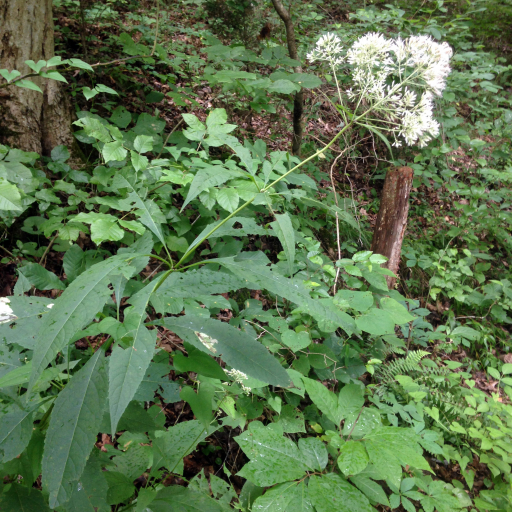
Plant Overview
Commonly known as Sweet Joe-Pye Weed, this towering native of Eastern North America is a true monarch of the summer meadow. Legend has it that the plant was named after a Native American healer, Joe Pye, who used the roots to treat fevers and typhus in early colonial times. Today, it is a favorite for "wildlife gardens" due to its impressive height and ability to attract every butterfly in the neighborhood.
🔍 How to Identify
- 🌸 The Bloom: Clusters of tiny, fuzzy, tubular flowers range from dusty pink to pale mauve. Unlike some of its flatter cousins, this species has distinctly rounded, dome-shaped flower heads.
- 🍃 The Leaves: Look for large, serrated, lance-shaped leaves arranged in "whorls" (circular patterns) of three to five around the stem. If you crush them, they often release a faint, sweet vanilla scent.
- 🏗️ Growth Habit: It is a vertical giant, often reaching 5 to 7 feet tall. The stems are typically green with purple color concentrated only at the "nodes" (where the leaves join the stem), which distinguishes it from the solid-purple stems of Spotted Joe-Pye Weed.
🏡 In Your Garden
- 🦋 The Ultimate Host: This plant is a cornerstone for pollinators. It provides a massive landing pad for Swallowtails, Monarchs, and silver-spotted skippers, making it an essential pick for any conservation-minded gardener.
- 💧 Soil & Shade Nuance: While many Joe-Pye varieties demand boggy, soaking wet soil, Eutrochium purpureum is more adaptable. It actually prefers the dappled light of woodland edges and can handle drier soil better than its relatives, though it still hates a complete drought.
- 📏 Placement Strategy: Because of its massive stature, place it at the very back of your garden beds. It serves as a living "green screen" that provides a backdrop for shorter, brighter perennials.
⚠️ Safety & Toxicity
- 🐾 Status: Generally considered non-toxic to touch, but it contains small amounts of pyrrolizidine alkaloids.
- 🐈 Details: While not as dangerous as lilies or hemlock, it can cause liver issues in livestock or pets if consumed in very large quantities over time. It is best kept as an ornamental rather than a dietary supplement for your furry friends.
✨ Fun Fact
The "Sweet" in its common name refers to the faint scent of vanilla and hay that the flowers and crushed leaves emit, which becomes especially noticeable on warm, humid summer afternoons.

Detailed Care Instructions
To grow Eutrochium purpureum plant or Joe-Pye weed, follow these steps:
- Choose a suitable location: Joe-Pye weed prefers full sun but can tolerate partial shade. Ensure that the location gets at least 6 hours of direct sunlight each day.
- Prepare the soil: Joe-Pye weed thrives in moist, fertile soil. If your soil is clayey or sandy, amend it with well-rotted compost or organic matter to improve drainage and nutrient content.
- Planting: Dig a hole as deep as the root ball and twice as wide. Place the plant in the hole, ensuring that the crown (where the stem meets the roots) sits slightly above ground level. Backfill the hole with soil and gently tamp down to remove air pockets. Water thoroughly after planting.
- Watering: Keep the soil moist but not waterlogged, especially during the plant's establishment phase. Water deeply once or twice a week, depending on the rainfall and temperature.
- Mulching: Apply a layer of organic mulch around the base of the plant, such as wood chips or straw, to help retain moisture, suppress weeds, and moderate soil temperature.
- Fertilization: Joe-Pye weed does not require heavy feeding. However, you can apply a balanced, slow-release fertilizer in early spring or use compost or organic fertilizers annually to promote healthy growth.
- Pruning: In late fall or early spring, cut back the plant to about 6-8 inches above ground level to promote new growth and prevent flopping.
- Dividing: Joe-Pye weed can be divided every 3-4 years to maintain vigorous growth. Dig up the plant and carefully separate the root clumps using a sharp knife or shovel. Replant the divided clumps in prepared soil.
- Pests and diseases: Joe-Pye weed is relatively pest and disease resistant. However, keep an eye out for aphids, spider mites, or powdery mildew. If necessary, treat with organic insecticides or fungicides.
- Propagation: Joe-Pye weed can be propagated by seeds, division, or stem cuttings. If collecting seeds, wait until the seedheads turn brown, then break them open and collect the seeds. Sow them in a seed-starting mix and keep the soil evenly moist until germination.
By following these steps, you can successfully grow Eutrochium purpureum and enjoy its beautiful pink-purple flowers in your garden.

Place in a bright room that is sun drenched almost all day. Or directly in a south-facing window.

To water this plant, you should always check the soil moisture level to avoid overwatering. Stick your finger about an inch into the soil and if it feels moist, wait to water until it's dry to the touch. When watering, make sure to give the soil a thorough soaking, but avoid letting water pool on top of the soil. It's best to water at the base of the plant rather than pouring water over its leaves. In particularly hot and dry conditions, you may need to water more frequently to keep the soil moist.
For best results, apply a balanced fertilizer in early spring before new growth appears. Use a slow-release granular fertilizer and sprinkle it around the base of the plant, avoiding getting it on the foliage. Water thoroughly after fertilizing. Repeat this process in mid-summer if desired. Be sure to follow the package instructions for the specific fertilizer being used.
Eutrochium Purpureum plant grows best in a well-draining soil that is rich in organic matter. The soil should have a pH level of between 5.0 and 7.0 and should be moderately moist. A soil with a high clay content should be avoided as it may not drain well, which can cause the roots to suffocate. Additionally, it is important to avoid soils that are heavily compacted or have a high sand content, as these soils do not retain enough moisture and nutrients for the plant to thrive. A recommended soil mix for Eutrochium Purpureum is one that is made up of 50% garden soil, 25% compost, and 25% perlite or vermiculite. This combination provides the right balance of drainage, moisture retention, and nutrient availability that this plant needs to thrive.
Eutrochium purpureum plant, also known as Joe Pye Weed, can be propagated by division and stem cuttings.
Propagation by Division:
- Wait until the plant is mature enough to be divided, generally after the third year.
- Dig up the entire plant and carefully separate the roots into individual sections.
- Replant the divided sections with enough space between them to allow for growth.
Propagation by Stem Cuttings: - Select healthy stems from the plant and cut them to a length of approximately 6 inches.
- Remove the lower leaves from the stem, leaving only two or three at the top.
- Dip the cut end of the stem into rooting hormone.
- Place the stem in a pot filled with well-draining soil.
- Keep the soil moist and the plant in a warm, bright location.
- Once the cutting has developed roots and new growth, it can be transplanted to its final location.
It is important to note that Eutrochium purpureum is a native plant and should only be propagated from plants grown from seed or from areas that have been designated for plant removal.
Common pests of the sweet joe-pye weed include Spider mites, aphids. Make a habit of checking your sweet joe-pye weed frequently for pests so that any infestations can be caught and managed early.








