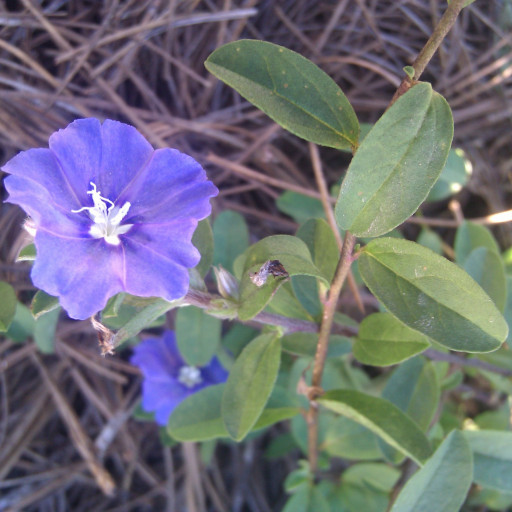
Plant Overview
Commonly known as "Blue Daze," this charming groundcover is the rebel of the morning glory family. Unlike its cousins that aggressively climb fences and trees, Evolvulus glomeratus is content to hug the earth, creating a low-growing carpet of mesmerizing sky-blue. Native to the sun-drenched landscapes of Brazil and Paraguay, it is a favorite for gardeners seeking "true blue" flowers—a color that is famously difficult to find in the natural world.
🔍 How to Identify
- 💎 The Blooms: Small, funnel-shaped flowers in a brilliant, electric blue with a tiny, contrasting white "eye" at the center.
- ☁️ Foliage Texture: Small, oval-shaped leaves that are covered in fine, silvery-gray hairs, giving the entire plant a soft, velvety appearance and a slightly frosted sheen.
- 🌊 Growth Habit: A prostrate, spreading plant that typically stays under 12 inches in height but can sprawl outwards to form a dense, colorful mat.
🏡 In Your Garden
- ☀️ Sun Worshiper: This plant is a literal "morning" glory; the flowers typically open with the first light of day and close by the afternoon or on cloudy days. To get the best bloom, it needs a spot with maximum solar exposure.
- 🚿 Drought Resilience: The silvery hairs on the leaves aren't just for looks—they help the plant retain moisture. It hates "wet feet," so it is essential to plant it in well-draining soil to prevent root rot.
- 🏖️ Coastal Champion: It is exceptionally salt-tolerant, making it one of the few flowering plants that can thrive in seaside gardens where salt spray might wither more delicate species.
⚠️ Safety & Toxicity
- ✅ Status: Generally considered non-toxic and safe for home environments.
- 🐾 Details: It is not known to be poisonous to cats, dogs, or horses. However, the fuzzy texture of the leaves can sometimes cause mild mechanical irritation if a curious pet decides to chew on them in large quantities.
✨ Fun Fact
The genus name Evolvulus comes from the Latin word meaning "to unroll." This is a playful botanical joke: while most plants in the Convolvulaceae family (like Morning Glories) are famous for "twining" or rolling around poles to climb, this species specifically does not twine, having "unrolled" itself to live life on the ground!

Detailed Care Instructions
When planted in a sunny spot, this low-growing, spreading plant will create a sea of ocean-blue flowers atop green foliage with hints of a silvery sheen. This plant will flourish when planted in a garden bed as a low-growing ground cover plant as well as cascading in a container or over retaining walls.
Is dwarf morning glory toxic?
The plant is not know to be toxic.
Are there other species of Evolvulus to consider as garden plants?
Yes. Evolvulus arizonicus (Arizona blue eyes) is a 1-foot tall mounding plant that is excellent for low-moisture gardens. It is hardy in zones 7 to 10. And Evolvulus nuttallianus (shaggy morning glory) thrives in moist soil and is hardy in zones 4 to 10.
| Lighting | Full Sun |
| Hardiness Zones | 8A - 11 |
To grow Evolvulus glomeratus, also known as blue daze or dwarf morning glory, follow these steps:
- Location: Choose a sunny, well-draining spot for your plant. Evolvulus glomeratus prefers full sun but can tolerate some light shade in hotter climates.
- Soil: Prepare a well-draining soil mix by combining equal parts of garden soil, organic compost, and sand or perlite. This will ensure good drainage as excessive moisture can cause root rot.
- Planting: Dig a hole slightly larger than the root ball of the plant. Place the plant gently in the hole, making sure the root ball is level with or slightly above the soil surface. Backfill the hole with the soil mix and pat it down gently around the plant.
- Watering: Keep the soil lightly moist after planting to help the plant establish its roots. Once established, Evolvulus glomeratus is drought-tolerant and only requires watering when the top inch of soil feels dry. Avoid overwatering as it can lead to root rot.
- Fertilizing: Feed the plant with a balanced, water-soluble fertilizer once a month during the growing season. Follow the instructions on the fertilizer package for the correct dosage. Avoid over-fertilizing, as it may result in excessive foliage growth with fewer flowers.
- Pruning: Prune the plant regularly to maintain its compact shape and encourage bushier growth. Trim back any leggy or overgrown stems to promote branching and more flowers. You can also pinch off faded flowers to encourage continuous blooming.
- Pests and Diseases: Keep an eye out for common garden pests like aphids, whiteflies, or spider mites. Treat any infestations promptly with organic insecticides or homemade remedies like neem oil or soapy water. Evolvulus glomeratus is generally disease-resistant but may occasionally face issues like root rot in overly moist soil.
- Propagation: You can propagate Evolvulus glomeratus through tip cuttings. Take 4-6 inch stem cuttings and remove the lower leaves. Dip the cut end in a rooting hormone powder and plant it in a well-draining potting mix. Keep the potting mix slightly moist and place the cutting in a warm, bright location. It should root within a few weeks.
By following these steps, you can successfully grow and enjoy the beautiful blooms of Evolvulus glomeratus plant.

Place in a bright room that is sun drenched almost all day. Or directly in a south-facing window.

Evolvulus Glomeratus is a flowering plant that requires proper watering to thrive. To water the plant, start by checking the soil moisture level. Insert a finger into the soil to a depth of two inches and feel for moisture. If the soil feels dry, it is time to water the plant.
When watering, use a watering can or hose with a gentle spray attachment to avoid damaging the plant. Water the soil around the base of the plant, making sure to soak the roots thoroughly. Avoid getting water on the leaves, as this can cause fungal infections.
In general, Evolvulus Glomeratus prefers moist soil but is susceptible to root rot if the soil becomes waterlogged. Therefore, it is essential to water the plant deeply but infrequently. Allow the soil to dry out slightly between watering sessions, as this will prevent overwatering and promote healthy root growth.
In addition to watering, Evolvulus Glomeratus requires regular fertilization and pruning to maintain its shape and encourage flowering. With proper care, this plant can bloom all season long, adding color and beauty to any garden or landscape.
To fertilize this plant, use a fertilizer with balanced N-P-K (nitrogen, phosphorus, and potassium) ratios, ideally with a 10-10-10 or a similar formula. Apply the fertilizer every two weeks during the growing season, and reduce the frequency to once a month during the dormancy period. Make sure to follow the manufacturer's instructions for application rates. Avoid over-fertilizing as it may damage the plant.
Evolvulus Glomeratus plant prefers well-drained soil with a slightly acidic pH of around 5.5-6.5. The ideal soil type for this plant is sandy loam with good fertility and organic matter content. It is important to ensure that the soil is not waterlogged as this can lead to root rot. Adding perlite or sand to the soil mix can improve drainage. A balanced fertilizer can be applied every two weeks during the growing season to encourage healthy growth and flowering.
Evolvulus glomeratus is a plant species that can be propagated through stem cuttings. To do this, take a healthy stem from the parent plant and cut it at a 45-degree angle using a sharp, sterilized knife or pruning shears. The cutting should be about four inches long and include at least two nodes.
Remove the lower leaves of the stem cutting to reduce water loss and dip the cut end in rooting hormone powder. Place the stem cutting in a pot filled with well-draining soil or vermiculite, and keep it moist by misting it with water regularly.
Cover the pot with a plastic bag to maintain humidity and create a mini greenhouse environment. Place the pot in a warm, bright spot but out of direct sunlight.
Roots should start to form within two to four weeks. When roots have formed, remove the plastic bag and transplant the new plant into a larger pot or the garden. Make sure to keep the soil moist and continue to provide adequate light and warmth for optimal growth and health.








