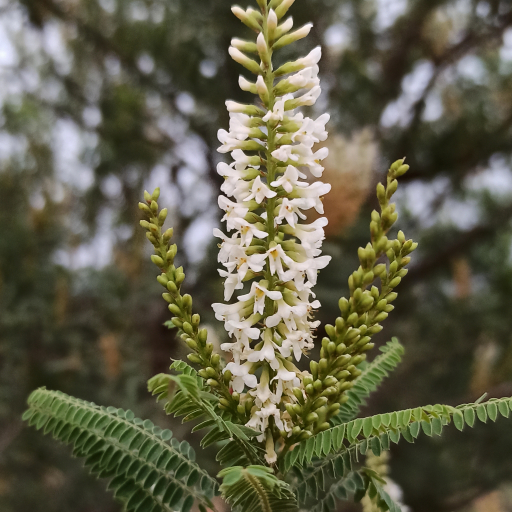
Plant Overview
Often called "Palo Azul" (Blue Wood) or Kidneywood, this fascinating Mexican native is more than just a hardy desert shrub. It has been a cornerstone of traditional herbalism for centuries and holds a secret scientific marvel that once captivated the world’s greatest physicists.
🔍 How to Identify
- 🌿 Feathery Foliage: It features delicate, compound leaves with many tiny leaflets, giving the canopy a light, airy, and textured appearance.
- 🍦 Floral Spikes: During the blooming season, it produces dense, upright spikes (racemes) of small, fragrant white flowers that stand out against the green leaves.
- 🪵 The Magic Wood: The most distinct feature isn't visible until you soak the wood; the heartwood contains unique compounds that turn water a mesmerizing, fluorescent blue when viewed in the light.
🏡 In Your Garden
- ☀️ Sun & Aridity: As a native of dry, rocky regions, it thrives in full sun and is exceptionally drought-tolerant. It is an ideal choice for low-water "xeriscape" landscapes.
- 🪨 Drainage is Key: This plant hates "wet feet." It prefers well-draining, limestone-rich, or sandy soils. If your garden has heavy clay, consider planting it in a raised bed or a sloped area.
- 🦋 Wildlife Hub: Beyond its beauty, it is a high-value habitat plant. The nectar-rich flowers are a magnet for bees, butterflies, and other beneficial pollinators.
⚠️ Safety & Toxicity
- ✅ General Status: Palo Azul is considered non-toxic to humans and is generally safe for pets and livestock.
- 🍵 Medicinal Context: While the wood is widely used to make "blue tea" for kidney health in traditional medicine, always consult with a healthcare provider before using it as a remedy, especially during pregnancy.
✨ Fun Fact
🧪 Newton’s Blue: In the 1600s, the famous scientist Isaac Newton was fascinated by this plant! He used the fluorescent properties of Palo Azul water to study the nature of light and color, long before modern chemistry could explain why it glows.

Detailed Care Instructions
To grow Eysenhardtia Polystachya, also known as the Kidneywood tree, you can follow these steps:
- Obtain seeds or nursery-grown seedlings of Eysenhardtia Polystachya from a local nursery or reputable online source.
- Choose a sunny location in your garden or landscape with well-draining soil. This tree requires full sun exposure to thrive.
- Prepare the planting area by loosening the soil and removing any weeds or grass.
- Dig a hole slightly wider and deeper than the seedling's root ball, making sure to maintain the same depth as it was in the nursery container.
- Place the seedling in the hole and backfill with soil, gently firming it around the base of the plant.
- Water the plant thoroughly after planting and add a layer of mulch around the base to help retain moisture and suppress weed growth.
- Water regularly, especially during dry periods, to keep the soil evenly moist. However, ensure the soil has good drainage to prevent waterlogging.
- Protect the young seedling from harsh winds and extreme temperatures until it becomes established. Consider using stakes or a protective cover if necessary.
- Prune the tree only as needed to maintain a desired shape or remove any damaged or dead branches. Eysenhardtia Polystachya has a naturally attractive form and does not require heavy pruning.
- Fertilize the tree sparingly, once or twice a year, using a balanced slow-release fertilizer according to the package instructions.
- Monitor the plant for signs of pests or diseases and take appropriate measures if necessary, such as using organic pest control methods or consulting a local extension office for advice.
- Be patient, as Eysenhardtia Polystachya may take several years to reach its full size and develop its characteristic blooms.
Remember to research and adhere to any specific care guidelines for your region and seek advice from local gardening or horticultural experts for the best practices for cultivating Eysenhardtia Polystachya in your area.

Place in a bright room that is sun drenched almost all day. Or directly in a south-facing window.

To water the Eysenhardtia Polystachya plant, it is important to follow a few specific guidelines to ensure its optimal growth and health:
1. Assess moisture levels: Before watering the plant, check the soil to determine its moisture content. Insert your finger about an inch deep into the soil, and if it feels dry at this depth, it is an indication that watering is needed.
2. Choose a suitable watering container: Use a watering can or a hose with a gentle spray nozzle to provide a controlled amount of water.
3. Watering frequency: The Eysenhardtia Polystachya plant benefits from a regular watering routine. Depending on the environmental conditions, such as temperature and humidity, it is generally recommended to water the plant every 1-2 weeks during the growing season (spring and summer) and reduce the frequency in colder months (fall and winter).
4. Water quantity: When watering, aim to moisten the soil thoroughly, allowing the excess water to drain away. It is crucial to ensure that the water reaches the roots to provide nourishment to the plant. However, avoid overwatering, which can lead to root rot or other water-related issues. A good practice is to water until you see it coming out of the drainage holes at the bottom of the pot.
5. Watering technique: Pour water evenly over the soil surface, avoiding the leaves and foliage as much as possible. Wetting the foliage excessively can promote the growth of fungal or bacterial diseases.
6. Soil type: Eysenhardtia Polystachya plants prefer a well-draining soil mixture. This allows excess water to escape easily and prevents waterlogging, which can be detrimental to the plant's health. Aerated, sandy, or loamy soil with good drainage properties is ideal.
7. Environmental considerations: Take into account the local climate and weather conditions when determining the watering routine. Higher temperatures, extended dry periods, or windy conditions may necessitate more frequent watering, while rainy or humid environments may require less frequent watering.
8. Monitor plant response: Make a habit of observing the plant's response to watering. Signs of underwatering include wilting, drooping leaves, and dry soil. Conversely, overwatering may cause the plant to turn yellow, develop root rot, or display other visible signs of stress. Adjust the watering schedule accordingly based on the plant's condition and needs.
Remember, each Eysenhardtia Polystachya plant has unique requirements, so it is crucial to monitor its specific needs and make adjustments accordingly. Your observations and regular care will ensure the optimal hydration and growth of your Eysenhardtia Polystachya plant.
To fertilize the Eysenhardtia Polystachya plant, you can follow these instructions:
- Choose a balanced fertilizer: Select a balanced fertilizer with equal ratios of nitrogen (N), phosphorus (P), and potassium (K). This will ensure that the plant receives all the necessary nutrients.
- Dilute the fertilizer: Follow the recommended dosage on the fertilizer packaging and dilute it in water. This will prevent any potential burning of the plant's roots.
- Apply during the growing season: Fertilize the Eysenhardtia Polystachya plant during the active growing season, typically in spring and summer. This period provides the plant with the essential nutrients to support growth and development.
- Apply evenly: Pour the diluted fertilizer around the base of the plant, ensuring it is evenly distributed. Avoid directly applying it to the foliage as this can cause damage.
- Water thoroughly: After applying the fertilizer, water the plant thoroughly to help the nutrients seep into the soil and reach the plant's roots.
- Monitor plant response: Monitor the plant's response to the fertilizer. If you notice any signs of nutrient deficiencies, such as yellowing leaves or stunted growth, adjust the fertilizer dosage accordingly.
- Follow a regular fertilizing schedule: To maintain a healthy Eysenhardtia Polystachya plant, fertilize it regularly according to the specific fertilizer's instructions. This will provide a consistent supply of nutrients to sustain its growth and overall health.
It is advised to research and seek specific guidance on the fertilization requirements of the Eysenhardtia Polystachya plant for the best results.
When considering the appropriate soil for Eysenhardtia Polystachya, it is essential to provide a growing medium that suits the plant's natural habitat and requirements. This plant thrives best in well-draining soil that offers a balanced combination of moisture retention and aeration.
The ideal soil composition for Eysenhardtia Polystachya consists of a mix of organic matter, such as compost or well-rotted manure, combined with sandy or loamy soil. This type of soil ensures good drainage while retaining enough moisture to support the plant's growth.
While the plant prefers slightly acidic to neutral pH levels, a pH range of 6.0 to 7.5 is generally suitable for Eysenhardtia Polystachya. It is important to note that the plant may not tolerate excessively alkaline soils.
Additionally, ensuring adequate soil fertility is crucial for the optimal growth of Eysenhardtia Polystachya. Fertilizing the soil with a slow-release, balanced fertilizer can provide the necessary nutrients for healthy growth. However, it is important to avoid over-fertilizing, as this can lead to nutrient imbalances and negatively affect the plant's health.
Lastly, considering the plant's natural habitat can help guide soil selection. Eysenhardtia Polystachya is native to certain regions with particular soil characteristics, such as sandy soils in arid or semi-arid environments. Trying to replicate these conditions as closely as possible can contribute to the plant's successful cultivation.
Remember to periodically check the moisture levels of the soil and adjust watering accordingly to avoid waterlogging or excessive dryness. Overall, providing a well-draining, nutrient-rich soil that mimics the plant's natural habitat is key to promoting healthy growth and development for Eysenhardtia Polystachya.
Propagation of Eysenhardtia polystachya can be achieved through various methods, such as seed propagation, root cuttings, or stem cuttings. Here's a detailed explanation of each method:
- Seed propagation: Collect ripe seeds from the plant during the flowering season. Remove any pulp or debris from the seeds by washing them in clean water. Soak the seeds in warm water for 24 hours to promote germination. Prepare a well-draining potting mix by combining equal parts of sand and peat moss. Fill a seed tray or small pots with the potting mix. Sow the seeds about 1/4 inch deep in the soil, and lightly cover them. Water the soil gently and place the tray or pots in a warm location with indirect sunlight. Keep the soil moist but not overly wet. Germination may take a few weeks to a couple of months. Once the seedlings have grown a few inches tall, they can be transplanted into individual pots until they are large enough to be planted in their permanent location.
- Root cuttings: During the dormant season, when the plant has shed its leaves, dig around the base of Eysenhardtia polystachya to expose its roots. Select healthy, mature roots and cut them into sections that are about 2-4 inches long. Make sure each cutting has at least one bud. Dust the cut ends with a rooting hormone powder to promote root development. Fill a container with a well-draining potting mix and create a hole in the soil with a pencil or your finger. Insert the cuttings into the holes and gently firm the soil around them. Water the soil thoroughly, and place a clear plastic bag over the container to create a greenhouse-like environment. Keep the soil evenly moist and the container in a warm, bright location, out of direct sunlight. After a few weeks, new shoots should emerge from the cuttings, indicating successful root formation. Once the new plants have well-established roots, they can be potted individually or transplanted outdoors.
- Stem cuttings: Select a healthy stem from the Eysenhardtia polystachya plant that is actively growing and free from any diseases or damage. Using a sharp, sterilized knife or bypass pruners, cut a stem that is about 4-6 inches long, just below a leaf node. Remove any leaves from the lower third of the stem. Dip the cut end of the stem in a rooting hormone powder to enhance root formation. Prepare a container or pots with well-draining potting mix. Make holes in the soil using a pencil or your finger, and insert the cuttings into the holes. Firm the soil gently around the stem. Water the soil thoroughly so it settles around the cuttings. Place the container in a warm, bright area with indirect sunlight. Maintain a consistent moisture level in the soil, ensuring it doesn't dry out or become waterlogged. After a few weeks, roots should develop, and new leaves will appear. Once the cuttings have adequately rooted, they can be transplanted into individual pots or planted outdoors.








