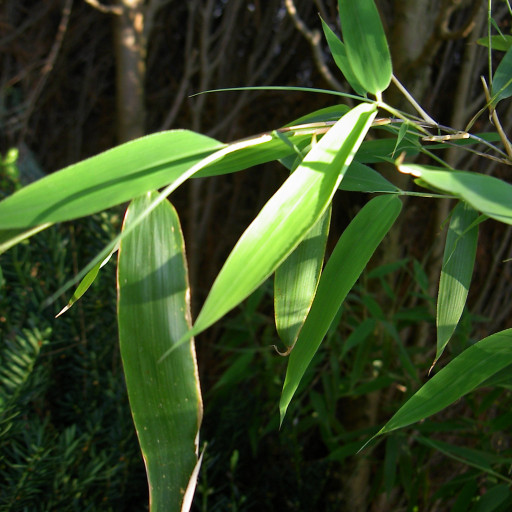
Plant Overview
Known as the "Umbrella Bamboo," this elegant species is a favorite for those who want the lush look of bamboo without the fear of it taking over the entire neighborhood. Originally hailing from the misty, high-altitude mountains of China, it was famously named after the daughter of the botanist Ernest Wilson, who first introduced it to the West. Its fountain-like growth creates a soft, rustling screen that adds instant Zen to any garden space.
🔍 How to Identify
- 🍃 The Foliage: Delicate, narrow, lance-shaped leaves that grow in dense, airy clusters, creating a cloud-like texture that catches the wind.
- 🎋 The Culms (Stems): Slender canes that start as a soft, powdery green and transition into a warm, yellowish-tan as they mature.
- ☂️ The Silhouette: Unlike upright bamboos, the tops of the canes gracefully weep downward, giving the entire plant its signature "umbrella" or fountain shape.
🏡 In Your Garden
- 🌱 The Clumping Advantage: This is a "pachymorph" or clumping bamboo, meaning its roots grow in tight circles rather than spreading via underground runners. You can plant it near a patio or fence without worrying about it popping up in your neighbor's yard.
- ☁️ Cool & Shady Preferences: Because it evolved in cool mountain forests, it is sensitive to intense heat. In hot climates, it needs a spot with dappled shade; if it gets too much direct sun or becomes thirsty, its leaves will curl up into tiny needles to protect itself.
⚠️ Safety & Toxicity
- ✅ Pet & Child Friendly: Fargesia murielae is considered non-toxic to dogs, cats, and humans. It is one of the safest choices for a living privacy screen in a family garden.
- 🐾 Soft Texture: Unlike some grasses or desert plants, its leaves are relatively soft and do not have sharp, serrated edges that could cause "paper cuts" to curious pets or toddlers.
✨ Fun Fact
🌸 The Centennial Bloom: Umbrella Bamboos follow a biological clock known as "gregarious flowering." Roughly every 80 to 100 years, every Fargesia murielae on the planet—regardless of where it is planted—will bloom at the exact same time, produce seeds, and then unfortunately die. The last massive flowering event occurred in the late 1990s!

Detailed Care Instructions
| Humidity | Normal |
| Lighting | Full Sun |
| Difficulty | Easy |
| Hibernation | Cold Period |
| Hardiness Zones | 5 - 9 |
To grow Fargesia murielae plant, also known as umbrella bamboo, you can follow these steps:
- Site selection: Choose a location that receives partial shade to full sun. The soil should be well-draining and rich in organic matter.
- Planting: Dig a hole that is twice as wide and slightly deeper than the plant's root ball. Place the bamboo in the hole, ensuring that the top of the root ball is level with or slightly above the ground. Backfill the hole with soil, firming it gently around the roots.
- Watering: Ensure that the plant receives regular watering, especially during the dry months. Water deeply, allowing the soil to become saturated but not waterlogged. Mulching around the plant can help retain moisture.
- Fertilization: Apply a balanced, slow-release fertilizer in spring to provide the necessary nutrients. Follow the instructions on the fertilizer packaging for the appropriate application rate.
- Pruning: Bamboo requires minimal pruning, but you can remove any dead, damaged, or overgrown canes to maintain a tidy appearance. Cutting back old canes near the ground encourages new growth.
- Division: Fargesia murielae can be divided to propagate new plants. Dig up the entire clump and use a sharp shovel or spade to divide it into smaller sections, ensuring each section has a healthy root system. Replant the sections and water them well.
- Winter protection: Fargesia murielae is relatively cold hardy but may benefit from protection during severe winters. Mulch around the base of the plant with a thick layer of organic material to insulate the roots from freezing temperatures.
By following these steps and providing proper care, your Fargesia murielae plant should thrive and grow well.

Place in a window with dappled sun or a spot in the middle of a room. Or directly in a window facing west or east.

To water this particular plant, you should first check the soil moisture by sticking your finger about an inch into the soil. If it feels dry, you can water it. However, avoid overwatering as this can lead to root rot. Water deeply but infrequently, allowing the soil to dry out partially before watering again. It's important to keep the leaves dry, so water at the base of the plant. Use room temperature water and avoid using hard water or water with high levels of chlorine. It's best to water in the morning or evening, avoiding midday when the sun is hottest.
To fertilize the plant, use a slow-release fertilizer in the early spring before new growth appears. Use a balanced fertilizer, such as a 10-10-10, and apply according to the package instructions. Avoid over-fertilizing the plant, which can lead to excessive growth and weak stems. Water the plant thoroughly after fertilizing to help the nutrients penetrate the soil and reach the roots.
The ideal soil for the plant in question is a mix of organic matter and well-draining soil. It should have a slightly acidic pH level and be able to retain moisture without becoming waterlogged. A good mixture might include compost, peat moss, and sand. It is important to avoid using soil that is too heavy and compacted, as this can lead to root rot and other issues. Additionally, the plant requires a lot of nitrogen, so it may be helpful to use a nitrogen-rich fertilizer or compost. Overall, the soil should be able to support healthy root growth and provide the necessary nutrients for the plant to thrive.
To propagate this type of plant, you will need to locate a mature plant that has healthy growth and can provide suitable cuttings. It is best to wait until early spring when the plant is starting to exhibit new growth. Select healthy, green stems that are about six inches long and cut them at an angle right below a node.
Next, you should strip the foliage from the lower part of the cutting. This is necessary because it will force the plant to focus on the growth of new roots rather than supporting the leaves. Dip the cut end of the stem into rooting hormone powder, which will help stimulate the growth of new roots. Then, place the stem into a container filled with moistened potting soil, and cover the container with plastic wrap to create a greenhouse-like environment.
Place the container in a well-lit area, avoiding direct sunlight, and keep the soil moist. Within a few weeks, new roots should appear. When roots are visible, you can remove the plastic wrap and continue to care for the new plant as you would the original. Wait until the plant grows to the desired size before planting it in its permanent location.
Common pests of the umbrella bamboo include Thrips. Make a habit of checking your umbrella bamboo frequently for pests so that any infestations can be caught and managed early.








