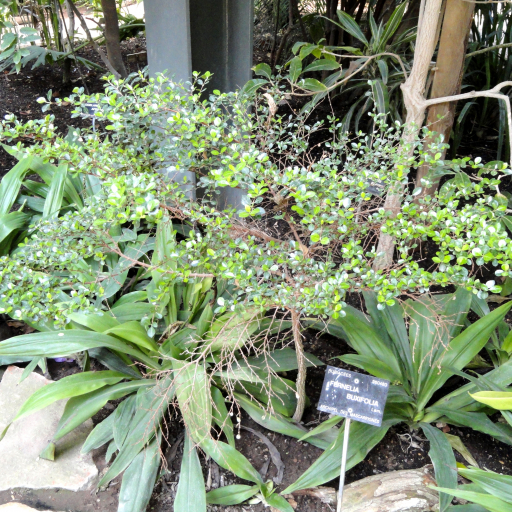
Plant Overview
The Fernelia buxifolia, affectionately known as "Bois de Buis" (Boxwood Wood), is a resilient miniature masterpiece native to the Mascarene Islands. This slow-growing evergreen is the Indian Ocean’s answer to the classic European Boxwood, prized for its dense, glossy foliage and its ability to withstand the harshest coastal winds. It is a "silent survivor" that has played a vital role in the island ecosystems of Mauritius and Réunion for centuries.
🔍 How to Identify
- 🍃 Box-like Leaves: The foliage is exceptionally small, oval, and glossy, growing in a tight, opposite pattern that gives the plant a manicured look even without pruning.
- 🌸 Starry Blooms: It produces tiny, solitary white flowers that emerge from the leaf axils, adding a subtle fragrance to the air.
- 🔴 Vibrant Berries: Once pollinated, the plant develops small, fleshy berries that transition from green to a striking, polished red as they ripen.
🏡 In Your Garden
- 🏝️ Coastal Resilience: This plant is an evolutionarily hardened "coastal warrior." It thrives in salty air and rocky, well-draining soil, making it an excellent choice for seaside landscaping where other plants might struggle with salt spray.
- ✂️ Slow & Steady Growth: Because of its slow growth rate and tiny leaves, it is a top-tier candidate for bonsai enthusiasts or those seeking a "living fence" that requires very little trimming to maintain its shape.
⚠️ Safety & Toxicity
- 🛡️ Low Risk: Fernelia buxifolia is not generally considered toxic to humans or common household pets. It lacks the aggressive alkaloids found in some of its relatives.
- 🐾 Choking Hazard: While not poisonous, the small red berries can be tempting to curious toddlers or pets; they should be kept out of reach to avoid any potential choking risks or mild digestive upset from eating unripe fruit.
✨ Fun Fact
In its native Mauritius, the Bois de Buis is a superstar of ecological restoration. Conservationists plant it specifically to "pioneer" degraded landscapes, as its sturdy root system helps stabilize the soil and creates a protected micro-habitat for rarer, more delicate island species to return.

Detailed Care Instructions
Fernelia Buxifolia plant requires regular watering to keep the soil moist but not waterlogged. You can check the soil moisture by touching the top layer of the soil with your finger. If it feels dry to the touch, then it's time to water the plant.
You should water the plant deeply to encourage strong root growth. Ensure that the water penetrates the soil to a depth of at least 6 inches. You can achieve this by watering the plant slowly and allowing the water to soak in.
It's better to water the plant early in the morning or late in the evening, as this will allow the roots to absorb the water before the heat of the day.
Avoid getting the plant's foliage or flowers wet when watering. This can cause fungal diseases and damage the plant's delicate flowers.
During the winter months, the plant may require less water as it enters a dormant state. Adjust your watering schedule accordingly.
Fernelia Buxifolia plant prefers a soil that is well-draining, slightly acidic, and rich in organic matter. It thrives in a soil that is loamy, sandy, or rocky with good drainage. The pH of the soil should be between 5.5 to 7.5.
To prepare the soil for planting, loosen the topsoil and mix in compost or well-rotted manure. This will improve the soil's fertility and water-holding capacity.
When planting, ensure that the soil is neither too wet nor too dry. Water the plant deeply immediately after planting and keep the soil consistently moist but not soggy. Mulching around the plant can help maintain soil moisture and regulate soil temperature.
Avoid using heavy clay soils or soils with poor drainage as this may cause root rot. Also, acidic soils with a pH of below 5.5 may hinder the plant's growth and development.








