Plant Overview
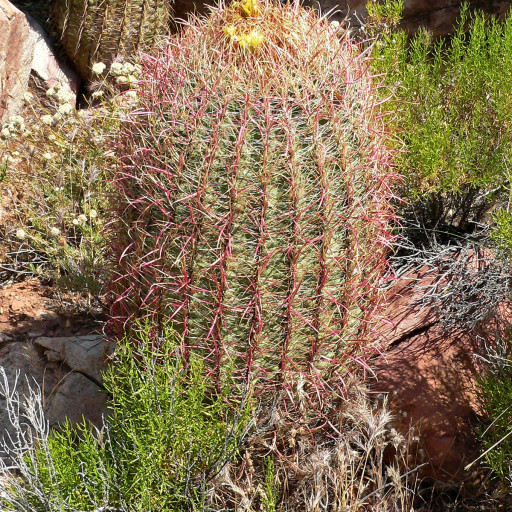
Known as the California Barrel Cactus, this desert titan is a living fortress of the American Southwest. Often called the "Compass Cactus," it famously serves as a natural guide for travelers by naturally leaning toward the south to protect its growing tip from the harsh sun. With its vibrant, hooked spines and crown of golden flowers, it brings a dramatic, architectural presence to any arid landscape.
🔍 How to Identify
- 🌵 Body Shape: It begins its life as a ribbed globe but matures into a massive, heavy cylinder that can eventually reach over 8 feet in height.
- 🎨 Spine Texture: The plant is covered in dense, overlapping spines that range from deep crimson and bright yellow to a weathered grey, often featuring a distinct cross-ribbed texture.
- 🌼 The Crown: In spring, it produces a beautiful ring of yellow or orange bell-shaped flowers exclusively at the very top of the barrel.
🏡 In Your Garden
- ☀️ Sun Worshipper: This cactus requires intense, direct sunlight to maintain its health and vibrant spine color; it is generally unhappy in low-light indoor environments.
- 🏜️ Drainage is Vital: Evolved for rocky desert washes, its roots will rot rapidly in standard potting soil. It requires a gritty, mineral-heavy mix with very little organic matter.
- 🏺 Set it and Forget it: Because of its heavy weight and sensitive root system, it hates being transplanted. It is best to choose a permanent, sunny "forever home" right from the start.
⚠️ Safety & Toxicity
- ⚔️ Physical Hazard: While not chemically toxic if nibbled, the spines are incredibly sharp, rigid, and often hooked like a fishbone, making them a significant puncture risk.
- 🐾 Pet & Child Safety: Due to the "mechanical" danger of the spines, it should be kept away from play areas or walkways where a child or pet might accidentally stumble into it.
✨ Fun Fact
The California Barrel Cactus is a master of patience; it grows so slowly that a specimen the size of a basketball might already be 30 to 50 years old!

Detailed Care Instructions
| Humidity | Dry |
| Lighting | Full Sun |
| Difficulty | Medium |
| Hardiness Zones | 10 - 11 |
To grow Ferocactus cylindraceus, also known as California barrel cactus, you can follow these steps:
- Choose a suitable location: Ferocactus cylindraceus prefers full sun, so choose a location that receives at least 6-8 hours of direct sunlight per day. Ensure that the soil is well-draining to prevent root rot.
- Prepare the soil: Use a well-draining cactus or succulent potting mix, or create your own by mixing equal parts of sand, loam, and perlite. Make sure the soil is slightly alkaline with a pH level of around 6.5-7.
- Planting: Dig a hole in the prepared soil that is slightly wider and deeper than the current container of the cactus. Gently remove the cactus from its container and place it in the hole. Backfill the hole with the prepared soil, pressing it gently around the roots to secure the plant.
- Watering: After planting, water the cactus thoroughly to settle the soil. However, once established, Ferocactus cylindraceus is very drought-tolerant and prefers infrequent watering. Water deeply but allow the soil to dry out completely between waterings. During hot summer months, you may water once every 2-3 weeks.
- Fertilizing: Ferocactus cylindraceus does not require regular fertilization. However, you can provide a balanced, low-nitrogen cactus fertilizer once or twice during the growing season to promote healthy growth. Follow the package instructions for application rates.
- Pruning: Pruning is generally not necessary for Ferocactus cylindraceus. However, if you notice any dead or diseased portions, you can use clean, sterile pruning shears to remove them.
- Protection: Protect the cactus from extreme cold temperatures. If you live in a region with cold winters, provide some shelter or move the potted cactus indoors to avoid frost damage.
- Propagation: Ferocactus cylindraceus can be propagated through seeds or offsets (pups). Seeds can be sown in a well-draining soil mix in spring or early summer. Pups can be separated from the mother plant once they are a decent size and have their own roots. Allow the cut edges to dry for a few days before planting them in well-draining soil.
Remember to always handle cacti with care, as they have spines that can cause injury.

Place in a bright room that is sun drenched almost all day. Or directly in a south-facing window.

To water Ferocactus Cylindraceus plants, follow these guidelines:
1. Assess the soil moisture: Before watering, check the moisture level of the soil around the plant. Insert your finger about 2-3 inches into the soil near the base of the plant. If it feels dry, it's time to water. If the soil is still slightly moist, wait a few more days before watering.
2. Choose the right container: Ensure the pot or container you use has drainage holes at the bottom. This will prevent water from sitting in the base and causing root rot.
3. Watering technique: Slowly pour water onto the soil around the base of the plant, avoiding direct contact with the thorny stem. Water the soil evenly until you see it starting to drain out from the bottom of the container.
4. Frequency of watering: Ferocactus Cylindraceus plants are drought-tolerant, so it's important not to overwater them. Typically, these plants require watering every 2-3 weeks during the growing season (spring and summer). However, adjust the frequency based on your local climate and environmental conditions.
5. Water quality: Use room temperature tap water or collected rainwater for watering. Avoid using cold water, as it may shock the plant's roots.
6. Avoid waterlogging: Never allow the plant to sit in water for an extended period. Ensure proper drainage and remove any excess water from the saucer or tray beneath the pot after watering.
7. Seasonal adjustments: It's essential to adjust the watering frequency during the winter months when Ferocactus Cylindraceus plants go into dormancy. Reduce watering to once every 4-6 weeks, as they require less water during this period.
Remember, every plant may have its specific water requirements, so it's crucial to observe the plant and make any necessary adjustments to provide optimal care.
When fertilizing the Ferocactus Cylindraceus plant, it is important to follow these instructions:
- Choose a balanced liquid fertilizer specifically formulated for cacti or succulents. Verify that the fertilizer's nitrogen (N), phosphorus (P), and potassium (K) ratio is suitable for cacti.
- Dilute the fertilizer according to the instructions provided on the packaging. Usually, a dilution ratio of 50% to 75% is recommended to avoid over-fertilization.
- Apply the fertilizer solution to the soil surrounding the Ferocactus Cylindraceus plant. Take care to avoid direct contact with the plant's sensitive parts, such as the spines and stem.
- Follow a regular fertilizing schedule during the plant's active growing season, which is typically spring and summer. Apply the fertilizer every two to four weeks, or as recommended by the specific fertilizer's instructions.
- During the plant's dormant period, generally in fall and winter, it is best to withhold fertilization as the plant's growth slows down. This dormant period allows the plant to rest and prepare for the upcoming active season.
- Strongly avoid over-fertilizing, as it can lead to fertilizer burn and damage the roots of the Ferocactus Cylindraceus plant. Always stick to the recommended dosage and frequency mentioned on the fertilizer's packaging.
Remember, it is crucial to monitor the plant's overall health and adjust the fertilization routine accordingly. Observe if the plant shows signs of nutrient deficiencies or excesses, such as yellowing or browning of the leaves, stunted growth, or unusual discolorations. Adjust the fertilizer application accordingly, and consult a plant expert if needed.
Ferocactus Cylindraceus plant requires a well-draining soil that allows for good air circulation and moisture retention. The soil should be slightly acidic and rich in nutrients. A mix of coarse sand, gravel, and perlite can be added to a standard cactus soil mix to enhance drainage. The soil should also be free of any pathogens or pests that may harm the plant. It is important to avoid overwatering as the plant is susceptible to root rot.
To propagate Ferocactus cylindraceus, you can follow these steps:
- Start by preparing a healthy parent plant. Ensure that the parent plant is mature and disease-free to increase the chances of successful propagation.
- Choose a suitable cutting for propagation. Ferocactus cylindraceus can be propagated by stem cuttings. Select a mature stem that is at least 4-6 inches long for best results.
- Use a sharp, sterilized knife or shears to make a clean cut at the base of the chosen stem. It's important to sterilize the cutting instruments to prevent the spread of diseases or infections.
- Allow the cut end of the stem to dry for a few days. This step helps to prevent rotting while the new roots are developing.
- Prepare a well-draining potting mix. A mixture of equal parts cactus potting soil and perlite or coarse sand works well for Ferocactus cylindraceus. Fill a small pot with this mixture.
- Create a hole in the potting mix and carefully place the cut end of the stem into the hole. Ensure that at least one-third of the stem is buried in the soil to promote root development.
- Gently press the potting mix around the stem to provide stability and good contact between the stem and soil. Avoid pushing the stem too firmly, as this can damage the cutting.
- Place the pot in a warm and bright location, preferably with indirect sunlight. Avoid direct sunlight, as it can scorch the cutting. Maintain a temperature around 70-80°F (21-27°C) for optimal growth.
- Water the cutting sparingly, allowing the soil to dry out slightly between waterings. Overwatering can lead to root rot, so it's crucial to strike a balance. Aim to keep the soil lightly moist but not soggy.
- After a few weeks, you should start noticing new root development from the buried portion of the stem. At this point, you can gradually increase the watering frequency.
- Once the new roots have established, which can take several months, you can transplant the newly propagated Ferocactus cylindraceus into a larger container or directly into the garden if the conditions are suitable.
Remember, propagation can be a slow process, and not all cuttings may successfully root. It's normal for some cuttings to fail. Patience and proper care are key to increasing your chances of success when propagating Ferocactus cylindraceus.
Common pests of the le conte barrel cactus include Scale insect, mealybugs, spider mites. Make a habit of checking your le conte barrel cactus frequently for pests so that any infestations can be caught and managed early.








