Plant Overview
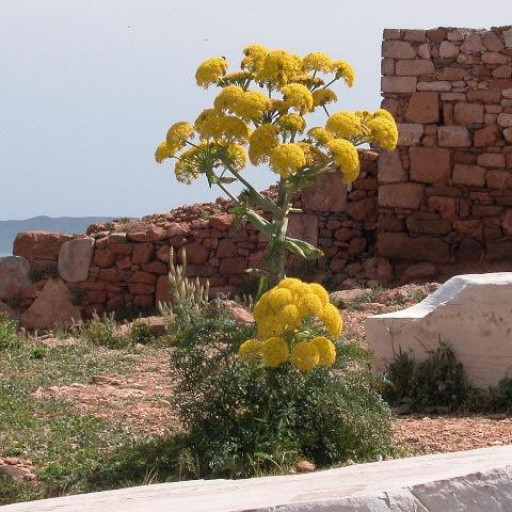
Known as the Giant Fennel, Ferula communis is a Mediterranean titan that commands attention with its towering height and golden umbrella-like flowers. While it shares a name and a feathery appearance with the common kitchen herb, this plant is a wild, ornamental giant that prefers rocky hillsides over herb gardens. In ancient times, its sturdy stalks were so valued that they were used as walking sticks and even natural torches.
🔍 How to Identify
- ☀️ Towering Stature: This plant is impossible to miss, often reaching heights of 8 to 15 feet (2.5 to 4.5 meters) when in full bloom.
- 🌿 Feathery Foliage: The base features a dense mound of soft, bright green leaves that are finely divided into thread-like segments, looking almost like a giant cloud of lace.
- 🟡 Golden Umbels: The flowers are spectacular yellow spheres (umbels) that sit atop thick, architectural stems, blooming in late spring to early summer.
🏡 In Your Garden
- 🏗️ The Taproot Rule: This plant develops a massive, deep taproot to survive dry Mediterranean summers. Because of this, it is notoriously difficult to transplant. You must choose its permanent spot carefully, as it will likely not survive being moved once established.
- ⏳ Patience is Required: Ferula communis often takes several years of leafy growth to build up enough energy to produce its famous flower spike. After the dramatic flowering event, the plant may go dormant or, in some cases, reach the end of its life cycle, though it often self-seeds to keep the legacy going.
⚠️ Safety & Toxicity
- 🚫 Toxic to Livestock: This is not the edible fennel used in cooking. It contains anticoagulant compounds (coumarins) that can cause a serious bleeding disorder known as "Ferulism" in sheep, cattle, and horses.
- 🐾 Pet & Child Safety: While not typically skin-irritant like its cousin, Giant Hogweed, it is toxic if ingested. Ensure children and pets do not mistake its feathery leaves for the edible herb.
✨ Fun Fact
In Greek mythology, the Giant Fennel played a pivotal role in human history! It is said that Prometheus stole fire from the gods by hiding a glowing coal inside the pithy, hollow stalk of a Ferula communis to bring it down to Earth.

Detailed Care Instructions
| Color | Dark Green Stem And Leaves With Golden Yellow Blooms |
| Soil Ph | Mildly Acidic, Neutral, And Mildly Alkaline |
| Humidity | Normal |
| Lighting | Full Sun |
| Soil Type | Well-Draining, Chalky, Loamy, Sandy |
| Bloom Time | Summer |
| Difficulty | Medium |
| Plant Type | Herbaceous Perennial |
| Hibernation | Cold Period |
| Mature Size | Up To 8 Feet Tall And 3 Feet Spread |
| Native Area | Europe, Mediterranean |
| Sun Exposure | Full Sun |
| Hardiness Zones | 7-10 |
To grow Ferula Communis, also known as Giant Fennel or Commone Ferula, follow these steps:
- Select a suitable planting location: Ferula Communis grows best in dry and sunny areas with well-drained soil. Choose a spot in your garden that receives full sun for at least 6-8 hours a day.
- Prepare the soil: Since Ferula Communis prefers well-drained soil, prepare the planting area by loosening the soil and removing any weeds or grass. You can add compost or well-rotted manure to improve the soil's fertility.
- Sowing the seeds: Sow the seeds directly in the prepared soil after the danger of frost has passed in spring, typically around March or April, depending on your region. Plant the seeds around 1/4 inch deep, spacing them 12-18 inches apart.
- Watering: After sowing the seeds, water the area gently but thoroughly to ensure the soil is evenly moist. Avoid overwatering, as excessive moisture can rot the seeds or damage the seedlings.
- Thinning: Once the seedlings emerge, thin them to maintain proper spacing. Remove the weakest or overcrowded seedlings, leaving the healthiest ones with enough space for growth.
- Maintenance: Regularly check for weeds and remove them to reduce competition for nutrients and water. Ferula Communis doesn't require excessive watering, as it is a Mediterranean plant adapted to dry conditions. However, during prolonged dry spells, provide water as needed to keep the soil evenly moist.
- Harvesting: Ferula Communis is typically harvested for its resin, which is used in traditional medicine and as a flavoring agent. Harvest the resin from the plant's roots in the second or third year of growth. Cut the stem close to the ground, as the plant will not regrow from the same stem.
- Pests and diseases: Ferula Communis is relatively resistant to pests and diseases. However, keep an eye out for aphids, snails, or slugs, which can occasionally damage the plant. In case of infestation, use organic insecticides or physical barriers to control them.
Remember to research and follow any specific care instructions or regional recommendations for growing Ferula Communis in your area.

Place in a bright room that is sun drenched almost all day. Or directly in a south-facing window.

To water this plant, you should first check the soil's moisture level by sticking your finger about an inch into the soil. If it feels dry, you can go ahead and water the plant. Make sure to water at the base of the plant, avoiding getting the leaves wet. Water deeply and allow any excess water to drain out of the bottom of the pot. Avoid overwatering, as this can lead to root rot and other issues. It is important to allow the soil to dry out slightly between waterings. The frequency of watering will depend on the climate and amount of sunlight the plant receives.
To provide optimal nutrition for this particular plant, it is recommended to fertilize it once a month during its growing season, which typically lasts from early spring to late summer. Choose a balanced fertilizer with an N-P-K ratio of 10-10-10 or 12-12-12, and dilute it according to the packaging instructions. Spread the fertilizer evenly around the base of the plant, being careful not to let it touch the stem or leaves. Water the plant immediately after fertilizing to help the nutrients soak into the soil. Avoid fertilizing during the dormant season or during periods of drought or extreme heat, as this can damage the plant.
The Ferula Communis plant prefers well-draining soils that are rich in organic matter. It's best to use a mix of sandy loam soil with compost, peat moss, or aged manure. The soil pH should be slightly acidic to neutral (between 6.0 to 7.0). When planting the Ferula Communis plant, ensure that the soil is adequately moist but not water-logged. In addition, it's always recommended to periodically check the soil and add nutrients as needed, such as bone meal, rock phosphate, or nitrogen-rich fertilizers.
To propagate this plant, you will need to take a cutting from an established plant. Choose a healthy stem that is at least 4-6 inches long and has several leaves. Using a sharp, clean pair of scissors or pruning shears, cut the stem at a slight angle just below a node or leaf joint.
Remove the lower leaves from the stem, leaving only the topmost leaves intact. Dip the cut end of the stem in rooting hormone powder to encourage root development.
Fill a pot with well-draining potting soil and make a hole in the center using a pencil or your finger. Insert the cut end of the stem into the hole and gently press the soil around it to secure it in place.
Water the cutting thoroughly and place it in a warm, bright location where it will receive indirect sunlight. Keep the soil moist but not waterlogged, and mist the leaves with water to help prevent them from drying out.
After a few weeks, the cutting should begin to grow roots and new leaves. Once it has established a strong root system, it can be transplanted into its own pot or into the garden.








