Plant Overview
Known as the Giant Tangier Fennel, this statuesque Mediterranean beauty looks like a common garden herb on steroids. Towering up to eight feet tall, it is a botanical masterpiece often linked to the legendary, lost "Silphium" plant of antiquity—a herb so valuable to the Romans that it was once worth its weight in silver.
🔍 How to Identify
- 🌿 The Foliage: Delicate, fern-like, and bright green. The leaves are finely divided into thread-like segments, giving the base of the plant a soft, frothy appearance.
- 📏 The Stature: It produces a massive, thick, and hollow flowering stalk that can reach heights of 2–3 meters, standing like a golden sentinel in the landscape.
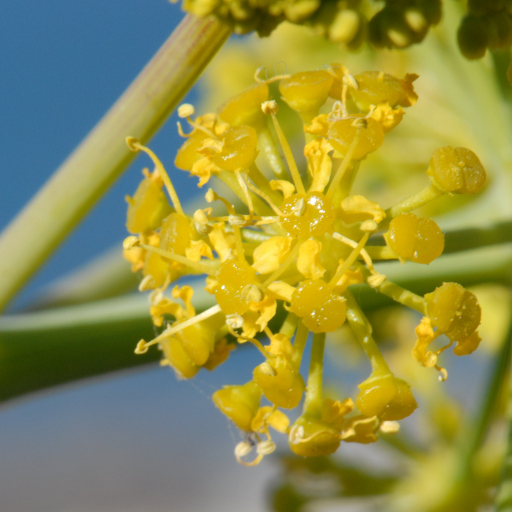
- ☀️ The Bloom: At the summit, it explodes into vibrant, mustard-yellow "umbels"—flat-topped clusters of tiny flowers that resemble giant golden umbrellas.
🏡 In Your Garden
- ⚓ The Deep Taproot: This plant develops a massive, deep root system early in its life. While this makes it incredibly drought-tolerant and hardy, it means the plant hates being moved. Choose its "forever home" carefully!
- 💤 Summer Dormancy: In its native Mediterranean climate, it often goes dormant after its spectacular spring show. If the foliage turns brown and disappears in late summer, don't worry—it’s just sleeping to survive the heat.
- 🏗️ Architectural Impact: Because of its height and dramatic silhouette, it is best used as a "back-of-the-border" plant or a standalone specimen where its skeletal beauty can be appreciated even after the flowers fade.
⚠️ Safety & Toxicity
- 🚫 Toxic Ingestion: Unlike common culinary fennel, Ferula tingitana is not edible. It contains compounds (coumarins) that can be toxic to humans and livestock if consumed in significant quantities.
- ☀️ Skin Sensitivity: The sap of many Ferula species can cause "phytophototoxicity." This means if the sap gets on your skin and is then exposed to sunlight, it can cause a blistering rash. Always wear gloves when pruning.
✨ Fun Fact
The genus name Ferula comes from the Latin word for "cane" or "rod." In ancient times, the light but sturdy dried stalks were used as walking sticks and even as schoolteachers' rods for discipline!

Detailed Care Instructions
| Humidity | Dry |
| Difficulty | Medium |
| Hibernation | Cold Period |
| Hardiness Zones | Min 8 |
To grow Ferula tingitana, also known as Moroccan giant fennel or Tangier fennel, you can follow these steps:
- Climate and Soil Requirements: Ferula tingitana is native to North Africa and is adapted to arid and semi-arid conditions. It thrives in full sun and well-draining sandy or loamy soil. Ensure the soil has a pH level between 7.0 and 8.0.
- Seeds: Obtain Ferula tingitana seeds from a reputable source. It's best to sow the seeds in early spring after the last frost.
- Scarification: To enhance seed germination, it helps to scarify the seeds. Take a file or sandpaper and gently rub the seed coat to scratch the surface before planting. This can improve water absorption and hasten the germination process.
- Preparing the Planting Area: Remove any weeds, rocks, or debris from the planting area. If needed, amend the soil with compost or well-rotted manure to improve its fertility.
- Planting: Sow the scarified seeds directly in the prepared soil. Ideally, plant the seeds about 1/4 inch deep and space them about 12 inches apart. Cover the seeds with soil and firm the soil gently.
- Watering: Provide enough water to keep the seeds moist until germination occurs. After germination, water the plants moderately, allowing the soil to dry out partially between watering sessions. Overwatering can cause root rot.
- Maintenance: As the Ferula tingitana plants grow, it is essential to weed regularly to prevent competition for nutrients and water. Applying a layer of organic mulch around the plants can help suppress weed growth and conserve soil moisture.
- Pruning: Once the plants reach a height of about 12 to 18 inches, consider pruning the lower leaves to improve air circulation and reduce the risk of diseases.
- Harvesting: Ferula tingitana is typically harvested for its resin. The resin can be collected by making incisions in the stems and collecting the sap. However, this process can be complex and is usually done on a commercial scale.
- Overwintering: In colder regions, Ferula tingitana may die back during winter. If this occurs, protect the roots with a thick layer of mulch to increase their chance of survival. Alternatively, you can grow the plant in containers and bring them indoors during winter.
Remember to check local regulations regarding Ferula tingitana cultivation, as it may be invasive in some areas.

Place in a window with dappled sun or a spot in the middle of a room. Or directly in a window facing west or east.
The Ferula Tingitana plant requires a well-regulated watering routine to thrive in its natural habitat. Here are some guidelines to help you provide the optimal watering conditions for this plant:
- Consider the plant's natural habitat: The Ferula Tingitana plant is native to arid regions with low rainfall. Therefore, it is adapted to surviving in dry conditions. Keep this in mind when developing a watering routine.
- Observe the soil moisture: Before watering, assess the moisture content of the soil. Stick your finger about an inch deep into the soil near the base of the plant. If the soil feels dry at this depth, it is an indication that watering is required.
- Water sparingly: The Ferula Tingitana plant prefers infrequent but deep watering sessions. Instead of watering lightly every day, aim to thoroughly saturate the soil less frequently. This helps promote deep root growth and ensures that excess water drains away.
- Consider the pot and drainage: If your Ferula Tingitana is potted, make sure the container has drainage holes to prevent waterlogged soil. Excess water can cause root rot and lead to the plant's decline. Adequate drainage ensures that water flows through the soil, preventing waterlogging.
- Watering frequency and duration: As a general guideline, deeply water the Ferula Tingitana plant every two to three weeks during the growing season. Adjust the frequency based on the environmental conditions and the moisture retention capacity of the soil. Monitor the soil condition regularly to prevent underwatering or overwatering.
- Time watering sessions appropriately: To avoid evaporation and ensure optimal water absorption, water the Ferula Tingitana plant during the early morning or late evening hours. This allows the plant to absorb moisture before the heat of the day. Avoid watering during the peak heat of the day, as this can lead to water loss and stress the plant.
- Consider environmental factors: Environmental conditions like temperature, humidity, and light intensity affect the water requirements of the Ferula Tingitana plant. Higher temperatures and increased sunlight exposure may necessitate more frequent watering, while cooler temperatures and reduced sunlight will require less water.
Remember, it is crucial to tailor your watering routine to the specific needs of your individual Ferula Tingitana plant. Observe any signs of stress or excessive moisture, such as wilting or yellowing leaves, and adjust your watering practices accordingly.
To effectively fertilize the Ferula Tingitana plant, you can follow these instructions:
- Choose a balanced, slow-release fertilizer with an NPK ratio of around 10-10-10 or 14-14-14. This will provide a good mix of essential nutrients for the plant's growth.
- Apply the fertilizer in early spring or late winter, just before the plant enters its active growth phase. This will ensure the plant receives the necessary nutrients when it needs them the most.
- Sprinkle the fertilizer evenly around the base of the Ferula Tingitana plant, avoiding direct contact with the stems or leaves. If it accidentally falls on the foliage, gently brush it off to prevent any potential damage.
- Water the plant thoroughly after fertilization. This will help dissolve the nutrients and allow them to penetrate into the soil, reaching the plant's roots.
- Monitor the plant's response to the fertilizer. If you notice any negative effects, such as burnt or yellowing leaves, reduce the amount of fertilizer used in the future. It's essential to find the right balance for your specific plant.
- Repeat the fertilization process once or twice a year, depending on the plant's growth rate and overall health. Avoid excessive fertilization, as it can lead to nutrient imbalances or damage the plant.
Remember, regularly monitoring the plant's overall health, following the recommended dosage, and adjusting as needed is crucial for successful fertilization.
Ferula tingitana is a type of plant that requires specific soil conditions in order to grow successfully. The ideal soil for Ferula tingitana is well-draining and sandy or loamy in texture. It should have a pH level ranging from slightly acidic to slightly alkaline, ideally around neutral (pH 6.5-7.5).
The soil should be rich in organic matter, which helps in retaining moisture and providing necessary nutrients to the plant. Adding well-rotted compost or aged manure to the soil before planting can greatly improve its fertility.
Ferula tingitana prefers a soil that is loose and airy, allowing for good root development and preventing waterlogging. It is important to ensure that the soil is not compacted, as this can hinder the plant's growth and health.
In terms of moisture requirements, Ferula tingitana prefers a soil that is moderately moist but well-drained. Overly wet soil can lead to root rot and other fungal diseases, while excessively dry soil can cause stress to the plant. Regular watering is required to keep the soil consistently moist, but not waterlogged.
It is worth noting that Ferula tingitana is native to arid and semi-arid regions, so it has adapted well to tolerate drought conditions. However, providing adequate moisture is still necessary for its healthy growth and development.
In summary, the ideal soil for Ferula tingitana is sandy or loamy, well-draining, with a pH around neutral, and rich in organic matter. It should be loose and airy, allowing for good root development, and kept moderately moist but not waterlogged.
Ferula tingitana is a perennial herbaceous plant that can be propagated through various methods. Here is a detailed guide on how to propagate Ferula tingitana:
- Seed propagation: Collect seeds from the mature plant or purchase them from a reputable seed supplier. Sow the seeds in well-draining potting soil or seed-starting mix. Lightly cover the seeds with a thin layer of soil and water gently. Maintain a consistently moist environment by covering the container with plastic wrap or using a propagator. Place the container in a warm area receiving indirect sunlight. Germination may take anywhere from a few weeks to a few months. Once the young seedlings have developed a few true leaves, they can be transplanted into individual pots or directly into the garden.
- Division: Mature Ferula tingitana plants can be propagated through division. Start by carefully digging up the plant's root ball during the dormant season (typically in spring or fall). Gently separate the roots into smaller clumps using a sharp sterile knife or pruning shears, ensuring that each division has its own portion of healthy roots and shoots. Replant the divisions in well-prepared soil, making sure to provide adequate spacing between each plant. Water thoroughly after division and continue to provide regular care to help the divisions establish themselves successfully.
- Root cuttings: In late winter or early spring, take 6-8 inch (15-20 cm) long root cuttings from healthy, established Ferula tingitana plants. Choose thick, fleshy roots for better success rates. Trim off any side roots and cut the selected root into smaller sections, each about 2-3 inches (5-8 cm) long. Plant the root sections vertically or on a slight angle in a moist, well-draining potting mix or directly in the ground. Cover the cuttings with a thin layer of soil and water gently. Place the container or garden bed in a protected area with indirect light and maintain consistent moisture levels. The root cuttings should develop new shoots and establish themselves within a few months.
- Stem cuttings: Take stem cuttings from young, healthy shoots of Ferula tingitana in late spring or early summer. Make clean, diagonal cuts just below a node using sterile pruning shears or a knife. Remove any lower leaves, leaving only a few at the top. Dip the cut end in a rooting hormone to encourage faster root development, although this step is optional. Plant the cuttings in a well-draining potting mix or a mixture of perlite and peat moss. Water thoroughly and place the container in a warm, partially shaded location. Mist the cuttings regularly to maintain a humid environment and prevent excessive moisture loss. With proper care, the cuttings should develop roots within a month or two.
Propagation success rates may vary depending on the propagation method, so it is advisable to try multiple techniques to increase your chances of success. Patience and proper care are crucial during the propagation process for healthy and thriving Ferula tingitana plants.








