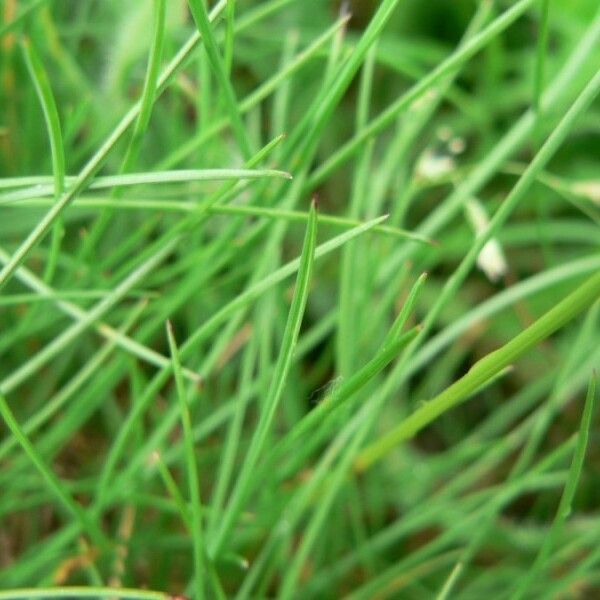
Plant Overview
Often called "Chewings Fescue," Festuca nigrescens is the elegant, fine-textured secret of many high-end golf greens and shaded backyard retreats. This grass is prized for its "aristocratic" look, forming dense, velvet-like carpets that remain emerald green even when other grasses struggle. Whether it’s tucked under the shade of an old oak or lining a garden path, it brings a touch of classic woodland charm to any landscape.
🔍 How to Identify
- 🌿 Leaf Texture: It features incredibly narrow, hair-like leaves that feel soft to the touch, unlike the broad, coarse blades of standard lawn grass.
- 🎨 Deep Pigmentation: The foliage is a rich, dark green, but the species gets its name (nigrescens) from the dark, purplish-black tint found on its flower spikelets during the blooming season.
- 🌱 Tufted Habit: This is a "bunchgrass," meaning it grows in tight, upright clumps rather than spreading via long, aggressive runners.
🏡 In Your Garden
- ☁️ The Shade Solution: While most grasses crave full sun, this fescue is a champion of the shadows. It is one of the best choices for areas under tree canopies where sunlight is filtered or limited.
- 📉 Low Maintenance Needs: Because it is a slow grower and naturally clump-forming, it requires less frequent mowing and can even be left "unshorn" to create a whimsical, wavy meadow look.
- 🏜️ Drought Resilience: Once established, its deep root system helps it survive dry spells without turning brown, making it an eco-friendly choice for water-conscious gardeners.
⚠️ Safety & Toxicity
- 🟢 Safe for All: Festuca nigrescens is non-toxic and generally safe for humans, cats, and dogs.
- 🌾 Pollen Note: Like all grasses, it produces wind-borne pollen during its flowering phase (usually late spring), which may trigger hay fever for those with seasonal allergies.
✨ Fun Fact
The common name "Chewings Fescue" has nothing to do with cows or chewing! It was named after George Chewings, a man who first commercialized the seeds in New Zealand in the late 1800s. Since then, it has become a staple in "no-mow" seed mixes worldwide.

Detailed Care Instructions
To grow Festuca Nigrescens, also known as black fescue or black tussock grass, you can follow these steps:
- Choose the right location: Festuca Nigrescens prefers full sun to partial shade and well-draining soil. Ensure the soil has good drainage to prevent waterlogging.
- Prepare the soil: Before planting, prepare the soil by loosening it with a garden fork or tiller. This will help improve drainage and provide a better environment for the roots to establish. Remove any weeds or stones from the area.
- Sow seeds or plant young plants: You can either sow seeds directly into the prepared soil or plant young Festuca Nigrescens plants. If sowing seeds, scatter them thinly and lightly cover them with a thin layer of soil. For young plants, dig planting holes slightly wider and deeper than the root ball and gently place the plants into the holes.
- Water regularly: Water the newly planted grass regularly to keep the soil consistently moist until it is established. After establishment, Festuca Nigrescens is drought-tolerant and doesn't require regular watering.
- Mulch the soil: Apply a layer of mulch around the plants to help retain moisture, suppress weed growth, and enhance the appearance.
- Prune as needed: Festuca Nigrescens doesn't require much pruning. However, you can trim back the plant in spring to remove any dead or damaged foliage.
- Fertilize sparingly: Black fescue doesn't need heavy fertilization. However, you can apply a slow-release, low-nitrogen fertilizer in early spring or use compost as a natural and gentle source of nutrients.
- Divide the plant if necessary: Over time, Festuca Nigrescens may become crowded. If this happens, you can divide the clumps in early spring or fall to create multiple plants.
Remember to check your local climate and growing conditions, as they may affect the specific care requirements for Festuca Nigrescens in your area.
To water this particular plant, you should first ensure that the soil is slightly moist before watering it again. It is recommended to water the plant regularly but not excessively, allowing the top inch of soil to dry out before watering again. When watering, you should avoid getting water on the leaves of the plant, as this can lead to fungal diseases. Instead, place the watering can or hose at the base of the plant and water gently until the soil is moistened. It is also important to avoid letting the plant sit in standing water, as this can exacerbate root rot. Finally, be sure to adjust your watering schedule as needed based on changes in temperature and humidity levels.
To fertilize this plant, use a balanced fertilizer with equal amounts of nitrogen, phosphorus, and potassium. Apply the fertilizer in early spring and again in midsummer. Spread the fertilizer evenly over the soil around the base of the plant. Water the plant thoroughly after fertilizing. Avoid over-fertilizing, as this can burn the plant and damage its roots.
Festuca Nigrescens plants thrive in well-draining soil that is on the sandy side of the pH scale. It does not prefer heavy clay soil and does not tolerate waterlogging. Ideally, the soil should be enriched with organic matter such as compost or well-decomposed manure to provide nutrients for optimal growth. The soil should also be kept consistently moist but not waterlogged, as this can lead to root rot and other fungal diseases. A layer of mulch can help retain moisture, but care should be taken to avoid piling it up against the stem, as this can attract pests and promote fungal growth. Overall, a light, well-draining soil that is enriched with organic matter and kept consistently moist is ideal for Festuca Nigrescens plants.
There are several methods of propagating this plant. One method is through division, which involves separating the plant into smaller sections and replanting them. This should be done in the spring or fall when the plant is not actively growing. Another method is through seed propagation, which involves collecting the seeds when the plant has produced them and sowing them in a pot or directly in the soil. The seeds should be sown in the fall or winter and will germinate in the spring. It is important to keep the soil moist and to protect the young plants from frost and excess heat. Finally, this plant can also be propagated through root cuttings. This involves taking a small section of the plant's root system and planting it in soil or a pot until it develops new growth. It is important to keep the soil moist and to protect the new plant from excessive heat or cold.








