Plant Overview
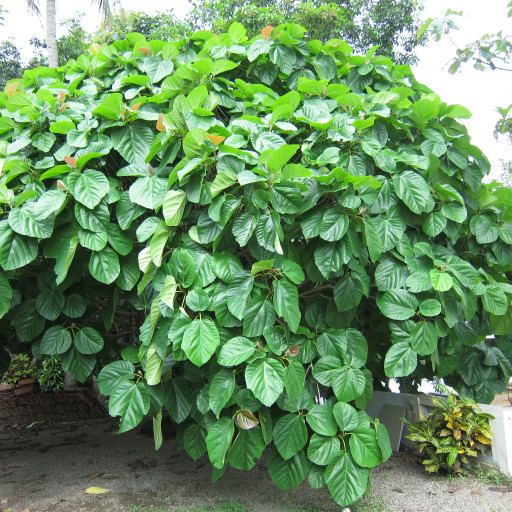
Known affectionately as the "Elephant Ear Fig," Ficus auriculata is a dramatic masterpiece of the subtropical world. Native to the lowlands of the Himalayas and Southeast Asia, it is famous for its massive, plate-sized leaves that look like they belong in a prehistoric jungle. Unlike most trees, it bears its fruit in thick, grape-like clusters directly on its trunk, a rare botanical trait that never fails to spark conversation.
🔍 How to Identify
- 🍃 Enormous Foliage: The leaves are heart-shaped and can grow up to 20 inches wide, possessing a soft, slightly fuzzy texture on the underside.
- 🎨 Changing Colors: New leaves emerge in a striking copper or burgundy-red hue, slowly transitioning into a deep, leathery green as they mature.
- 🍒 Trunk-Borne Fruit: It exhibits "cauliflory," meaning the flattened, brownish-red figs grow in dense bundles directly from the main trunk and older branches.
🏡 In Your Garden
- 🌳 Space Requirements: This isn't a plant for a tight corner; its spreading canopy needs significant room to breathe, making it an ideal centerpiece for a large patio or a tropical landscape.
- 💧 Consistency is Key: While it loves moisture, it hates "wet feet." Use a well-draining potting mix or loamy soil to prevent root rot while maintaining high humidity for those giant leaves.
- 🌡️ Frost Sensitivity: This is a warmth-loving species. If you live in a cooler climate, it must be kept in a large container and moved indoors before the first frost, as cold winds can cause it to drop its leaves overnight.
⚠️ Safety & Toxicity
- 🐾 Pet Warning: Like most Ficus species, this plant produces a milky white sap (latex) that contains ficin. It is mildly toxic to cats and dogs, potentially causing skin irritation or gastrointestinal distress if chewed.
- 🧤 Skin Irritation: When pruning, wear gloves. The sticky sap can cause "phytophototoxicity" in some people—a skin rash that reacts to sunlight.
✨ Fun Fact
In its native regions, the massive leaves of the Elephant Ear Fig aren't just for show—they are traditionally used as biodegradable plates for serving food and as organic fodder for livestock!

Detailed Care Instructions
To grow a Ficus Auriculata plant, also known as the Roxburgh fig, you can follow these steps:
- Choose the right location: Ficus Auriculata prefers a bright spot with indirect sunlight. It can tolerate shade but will not thrive in low light conditions. Ensure the temperature is between 60-80°F (15-27°C).
- Select a suitable pot: Get a well-draining pot that is slightly larger than the current size of the plant. A pot with drainage holes is necessary to prevent waterlogging.
- Potting mix: Use a well-draining potting mix that retains some moisture, like a mix of peat moss, perlite, and compost or any commercially available houseplant potting mix.
- Planting: Place some stones or broken clay pot pieces at the bottom of the pot to aid in drainage. Fill the pot with potting mix, leaving enough space for the plant's root system. Gently remove the plant from its current container and place it in the new pot. Fill in the remaining space with potting mix, ensuring the plant is at the same level as before.
- Watering: Water the plant thoroughly but avoid over-watering. Keep the soil consistently moist but not soggy. Allow the top inch of soil to dry out before watering again. Adjust watering frequency based on the plant's moisture needs and the surrounding temperature.
- Fertilization: Ficus Auriculata benefits from regular fertilization during the growing season (spring and summer). Use a balanced, water-soluble fertilizer formulated for houseplants, diluted to half the recommended strength. Apply every two weeks or as instructed on the product label. Avoid fertilizing during winter.
- Humidity: Ficus Auriculata prefers higher humidity levels. You can increase humidity by misting the plant with water or placing a humidifier nearby. Grouping plants together can also create a microclimate of higher humidity.
- Pruning: Regular pruning helps to maintain the shape and size of the plant. Remove any dead or damaged branches. You can also prune to control the plant's height or shape. Prune during the early spring or late fall.
- Pests and diseases: Watch out for common pests like aphids, mealybugs, and scale insects. Inspect the plant regularly and take appropriate measures if any infestation occurs. Also, avoid overwatering to prevent root rot.
- Repotting: Ficus Auriculata typically requires repotting every 2-3 years or when the roots outgrow the current pot. Spring is usually the best time for repotting.
Remember, each plant may have its specific care requirements, so it's always helpful to research further or consult with local garden experts for specific tips on growing Ficus Auriculata in your area.

Place in a window with dappled sun or a spot in the middle of a room. Or directly in a window facing west or east.

To water the plant, first check the soil moisture level by sticking your finger about an inch into the soil. If the soil feels dry, it is time to water. Use room temperature water and pour it slowly into the soil around the base of the plant, taking care not to get water on the leaves or stem. Allow the water to soak into the soil until it drips out of the bottom of the pot. Do not let the plant sit in standing water as this can lead to root rot. Water the plant every 7-10 days or when the soil feels dry to the touch. During the winter months, when the plant is not actively growing, reduce watering frequency to once every two weeks.
To fertilize this plant, use a balanced liquid fertilizer with equal amounts of nitrogen, phosphorus, and potassium. Apply the fertilizer every two weeks during the growing season, which is usually from spring to early fall. Dilute the fertilizer to half strength and apply it directly to the soil around the base of the plant, making sure not to get any on the leaves or stem. Water the plant thoroughly after fertilizing to help the nutrients penetrate the roots. Avoid fertilizing during the winter months when the plant is dormant.
Ficus Auriculata is best grown in well-draining soil that is rich in organic matter. It requires soil that retains moisture but does not become waterlogged or overly saturated. The ideal pH for the soil should be slightly acidic to neutral, ranging from 5.5 to 7.5. It is important to avoid using heavy soils that will make it difficult for the plant to spread its roots and take in nutrients. In addition, the soil should be loose and friable to support proper aeration of the root system. Ficus Auriculata prefers soil that is fertile and nutrient-rich, so it is recommended to add fertilizers or compost to the soil to provide these necessary elements. Finally, it is important to ensure that the soil is free from pests and disease-causing agents, as they can severely affect the growth and development of Ficus Auriculata.
Propagation of this plant can be done through stem cuttings. Take a healthy stem cutting, about 6 inches long, from the parent plant and remove any leaves from the bottom 2 inches. Dip the cut end in rooting hormone and plant it in a pot filled with well-draining soil. Keep the soil moist and place the pot in a bright but indirect light location. After a few weeks, new roots should start to grow and the cutting can be transplanted to a larger pot or planted in the ground.
Common pests of the roxburgh fig include Scale insect, mealybugs, spider mites, thrips. Make a habit of checking your roxburgh fig frequently for pests so that any infestations can be caught and managed early.








