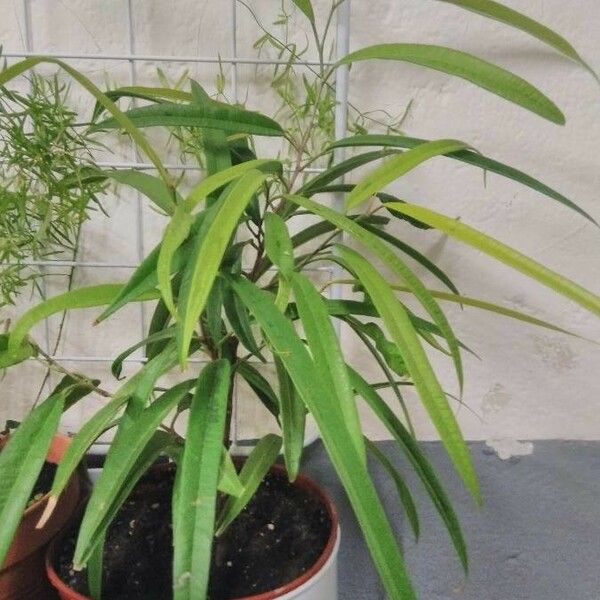
Plant Overview
Often called the Alii Fig or Banana-Leaf Fig, this elegant indoor tree hails from the tropical forests of Southeast Asia. Unlike its notoriously finicky cousin, the Fiddle Leaf Fig, it is prized by hobbyists for being far more resilient and forgiving of fluctuating indoor conditions. Its long, willow-like foliage creates a graceful, weeping silhouette that adds an instant touch of architectural class to any living space.
🔍 How to Identify
- 🍃 Slender Foliage: The leaves are remarkably long, narrow, and taper to a point, often reaching 6 to 10 inches in length, resembling green chili peppers or small bananas.
- 🌿 Graceful Arch: The branches have a natural downward curve, giving the plant a relaxed, "weeping" appearance as it matures into a tree form.
- 🪵 Smooth Grey Bark: Older specimens develop a smooth, light-grey bark on their trunks, which is often seen in nurseries as a single "standard" trunk or braided for a decorative look.
🏡 In Your Garden
- 🌤️ Moving Anxiety: This Ficus is famous for its "relocation stress." If you move it to a new room or a spot with different light levels, it may shed several leaves in protest while it acclimates to the new environment.
- 💧 Root Resilience: While it loves humidity, it hates "wet feet." It is best to wait until the top inch of soil is dry before watering, as its roots are susceptible to rot if kept in soggy conditions for too long.
⚠️ Safety & Toxicity
- 🐾 Toxic to Pets: Like most members of the Ficus family, this plant contains a milky white sap (latex) that can cause vomiting and drooling in cats and dogs if ingested.
- 🧤 Skin Irritation: The sap can be a skin irritant for humans. It is wise to wear gloves when pruning to avoid "Ficus dermatitis," a localized rash caused by the sticky white liquid.
✨ Fun Fact
👑 The nickname "Alii" is actually the Hawaiian word for "royalty." Although the plant is native to Asia, it was popularized by commercial growers in Hawaii, who marketed its regal, durable nature to the rest of the world.

Detailed Care Instructions
| Humidity | High |
| Lighting | Part Sun |
| Toxicity | Poisonous |
| Difficulty | Easy |
| Hibernation | Cold Period |
| Temperature | 14°C - 21°C |
| Hardiness Zones | 9 - 11 |
To grow a Ficus Binnendijkii plant, also known as the Ficus Moclame or Alii Fig, you can follow these steps:
- Select a suitable location: Ficus Binnendijkii plants prefer bright, indirect light. Find a spot in your home that receives moderate to bright light throughout the day. Keep in mind that they do not tolerate direct sunlight.
- Choose a well-draining pot: Select a pot with drainage holes to prevent water from pooling at the bottom. Use a pot with a diameter slightly larger than the root ball of the plant.
- Use a well-draining potting mix: Ficus Binnendijkii plants prefer a well-draining soil mix. You can use a mix of regular potting soil and perlite or vermiculite to provide good drainage.
- Water properly: Water the plant thoroughly, allowing the water to drain out through the bottom of the pot. Allow the soil to dry out partially between waterings, as overwatering can lead to root rot.
- Maintain humidity: Ficus Binnendijkii plants prefer higher humidity levels. Increase humidity by misting the plant with water or placing a humidifier nearby. Alternatively, you can place the pot on a tray filled with water and pebbles to create a humid microclimate.
- Fertilize regularly: Provide a balanced houseplant fertilizer once a month during the growing season (spring and summer). Follow the instructions on the fertilizer package for the recommended dosage.
- Prune as needed: Pruning can help shape the plant and encourage bushy growth. Trim long or leggy branches to maintain a compact appearance. Additionally, remove any dead or yellowing leaves.
- Repot occasionally: Ficus Binnendijkii plants may require repotting every 2-3 years or when the roots have filled the current pot. Choose a slightly larger pot and fresh potting soil during repotting.
- Keep pests under control: Monitor your plant for common pests like spider mites or mealybugs. If you notice any infestation, treat it promptly with an organic insecticide or by gently wiping the leaves with a soapy water solution.
By following these steps and providing suitable care, you can help your Ficus Binnendijkii plant to thrive and grow.

Place in a window with dappled sun or a spot in the middle of a room. Or directly in a window facing west or east.

To water this plant, you should first check the soil moisture levels by sticking your finger about an inch deep into the soil. If the soil feels dry at this depth, it is time to water. Make sure to water the plant slowly and evenly, avoiding overly saturating the soil or causing water to pool on the surface. It is best to water the plant thoroughly, allowing excess water to drain out of the bottom of the container or pot. You should also ensure that the plant receives adequate drainage by ensuring there are holes at the bottom of the container or pot, and that it is not sitting in any standing water. Watering should be done on a regular schedule, ideally once a week, but this can vary depending on the plant's environment and other factors.
To fertilize the plant, use a balanced liquid fertilizer with equal parts nitrogen, phosphorus, and potassium. Dilute the fertilizer to half strength and apply it to the soil during the growing season, typically from spring to summer. Avoid fertilizing during the winter months as the plant goes into dormancy and does not require as much nutrients. Be sure to follow the package instructions carefully and do not over-fertilize as this can harm the plant.
When it comes to growing the plant with the scientific name Ficus Binnendijkii, the best soil to use is one that is rich and well-draining. This will help prevent water from becoming trapped around the plant's roots and causing them to rot. A good soil mix for this plant should be composed of a blend of organic matter such as peat moss or compost, and a coarse substance such as sand or perlite that allows water to flow easily through the soil. A pH level of 6 to 7 is ideal for this plant, so a soil mixture that is slightly acidic is preferred. It is important to avoid using heavy clay soils or soils that are prone to compaction as they can suffocate the roots and restrict growth. It is also recommended to provide a layer of mulch around the base of the plant to help retain moisture in the soil and regulate temperatures.
To propagate this plant, you will need to take a stem cutting from a healthy mature plant. The stem cutting should be between 4-6 inches long and have at least two healthy leaves. Remove the bottom leaves from the stem cutting and dip the cut end in rooting hormone powder. Plant the stem cutting in a mixture of equal parts peat moss and perlite in a pot with drainage holes. Water the cutting well and cover it with a plastic bag to create a humid environment. Place the pot in bright, indirect light and keep the soil moist but not overly wet. After about 3-4 weeks, the stem cutting should have developed roots and can be transplanted into a larger pot with well-draining soil.
Common pests of the alii ficus include Scale insect, mealybugs, spider mites, thrips. Make a habit of checking your alii ficus frequently for pests so that any infestations can be caught and managed early.








