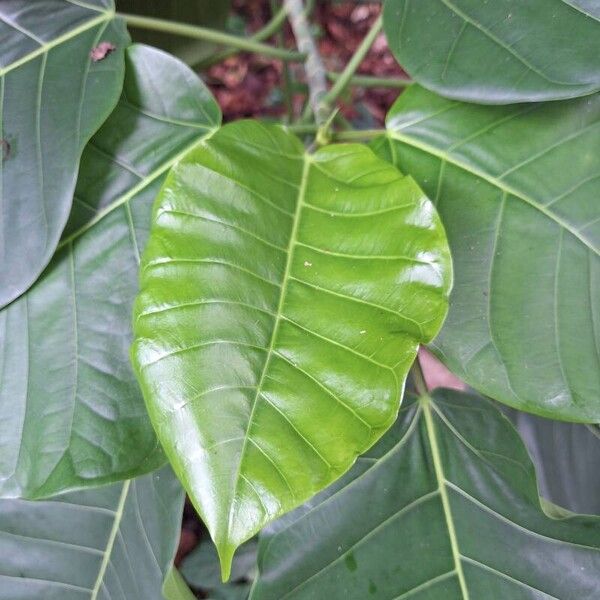
Plant Overview
Known as the "Giant African Fig," the Ficus Bubu is a rising star in the world of interior design. Often called the "cool cousin" of the Fiddle Leaf Fig, it brings an air of modern, architectural elegance to any room. Its massive, rounded leaves look almost like they belong in a prehistoric jungle, making it a dramatic focal point for plant collectors looking for something more unique than the common Rubber Tree.
🔍 How to Identify
- 🍃 Broad Paddle Leaves: Unlike its lobed relatives, the Bubu features massive, rounded, or oval leaves that can grow to the size of a dinner plate.
- 🥈 Satin Finish: The foliage has a unique, slightly matte or silvery-green sheen that reflects light softly, differing from the high-gloss shine of the Ficus elastica.
- 🪵 Architectural Trunk: It develops a thick, pale grey woody trunk quickly, giving it a miniature tree appearance even when it is relatively young.
🏡 In Your Garden
- 🌤️ Light Sensitivity: While it loves bright spaces, the Bubu is prone to leaf scorch. If you see brown, crispy patches in the center of the leaf, it is likely getting too much direct afternoon sun.
- 🛁 Humidity Needs: Originating from tropical West Africa, this plant thrives when the air is moist. It appreciates being grouped with other plants or placed near a humidifier to prevent the edges of those giant leaves from turning brittle.
- 🧘 The "Stay Put" Rule: Like most members of the Fig family, the Bubu is a homebody. Moving it frequently from room to room can cause a dramatic "leaf drop" as it reacts to changes in light and air currents.
⚠️ Safety & Toxicity
- 🐾 Toxic to Pets: Like all Ficus species, the Bubu contains a milky white sap (latex) that is toxic if ingested by cats or dogs, leading to drooling or vomiting.
- 🧤 Skin Irritant: The sap can cause mild skin irritation or "phytophototoxicity" in humans. It is best to wear gloves when pruning or cleaning up broken stems.
✨ Fun Fact
In its native African habitats, the wild relatives of the Ficus Bubu are often referred to as "shady giants." They grow so large and dense that they are frequently used as traditional meeting places for village elders to escape the heat of the midday sun!

Detailed Care Instructions







