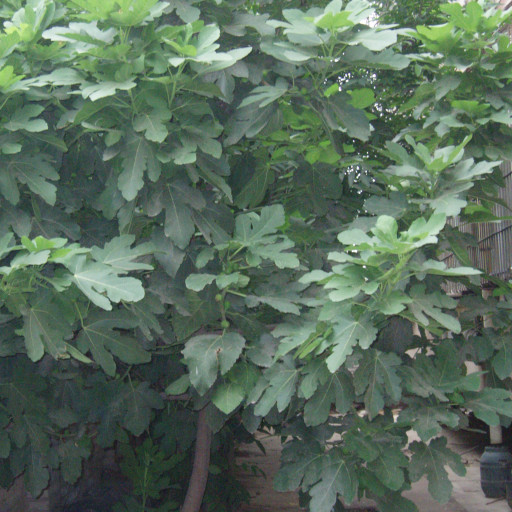
Plant Overview
The Ficus carica, known globally as the Common Fig, is one of the oldest cultivated fruit trees in human history. Often called the "Fruit of the Gods," it features prominently in ancient myths and religious texts, from the sun-drenched gardens of the Mediterranean to the pages of the Bible. Beyond its delicious, honey-sweet fruit, it is prized by gardeners for its architectural beauty and lush, sculptural foliage.
🔍 How to Identify
- 🍃 Lobed Foliage: Look for large, deeply lobed leaves (usually 3 to 5 lobes) that feel slightly rough or "sandpapery" on the top and soft or fuzzy underneath.
- 🪵 Smooth Grey Bark: As the tree matures, the trunk develops a beautiful, smooth, silver-grey bark that provides a striking winter contrast against the sky.
- 🍐 The Hidden "Flower": The fig fruit is actually an inverted flower (syconium); the tiny blossoms grow entirely inside the fleshy structure, which matures into the soft fruit we recognize.
🏡 In Your Garden
- 🏺 Root Restriction: Unlike many plants, figs often perform better when their roots are slightly restricted. Planting them in large pots or near a wall can trick the tree into producing more fruit rather than just growing massive branches.
- ☀️ The Sweetness of Heat: To produce sweet, ripe figs, the tree requires intense sunlight. If you live in a cooler climate, planting it against a south-facing brick wall helps trap the "thermal mass" needed to ripen the late-summer crop.
- 💧 Drought Resilience: Once established, the Common Fig is remarkably drought-tolerant. However, inconsistent watering during the fruiting season can cause the fruit to split or drop prematurely.
⚠️ Safety & Toxicity
- 🥛 Milky Latex: The stems and leaves contain a thick, white sap. This latex can be a significant skin irritant for many people, especially when the sap is exposed to sunlight (phytophotodermatitis).
- 🐾 Pet Safety: Figs are considered toxic to dogs, cats, and horses. Ingestion of the leaves or sap can lead to drooling, vomiting, or skin inflammation. Always wear gloves when pruning to avoid "fig itch."
✨ Fun Fact
Most garden-variety figs are "parthenocarpic," meaning they produce fruit without pollination. However, wild figs have a famous "secret partner": a tiny, specialized wasp that enters the fruit to pollinate it. The tree actually produces an enzyme called ficin that completely breaks down the wasp, turning it into protein before we ever take a bite!

Detailed Care Instructions
| Humidity | Normal |
| Lighting | Full Sun |
| Toxicity | Poisonous |
| Soil Type | Well-Drained |
| Difficulty | Medium |
| Plant Type | Deciduous Tree Or Large Shrub |
| Mature Size | 10 Feet To 30 Feet |
| Native Area | Western Asia |
| Temperature | 18°C - 25°C |
| Sun Exposure | Full Sun |
| Hardiness Zones | 8 To 10; Depending On The Cultivar, You May Be Able To Grow These Down To Zone 5 |
To grow a Ficus Carica plant, also known as the common fig, follow these steps:
- Choose a suitable location: Ficus Carica plants prefer a warm and sunny spot. Select a location where they can receive at least 6-8 hours of direct sunlight daily.
- Soil preparation: The soil should be well-draining and fertile. Amend the soil with compost or well-rotted manure to improve its fertility and drainage.
- Planting: Dig a hole twice the width of the root ball of the plant. Place the plant in the hole, ensuring the top of the root ball is level with the soil surface. Backfill the hole with soil and gently firm it around the plant.
- Watering: Water the plant thoroughly after planting and provide regular watering to keep the soil consistently moist but not waterlogged. Figs are drought-tolerant but benefit from regular watering, especially during dry periods.
- Pruning: Prune your Ficus Carica plant during the dormant season, typically in late winter or early spring. Pruning helps maintain the shape and size of the plant, as well as removes any dead or diseased branches.
- Fertilization: Apply a balanced fertilizer, such as a 10-10-10 or 14-14-14, in early spring and late summer. Follow the package instructions for application rates.
- Pest and disease control: Keep an eye out for pests such as aphids, mealybugs, and scale insects. Use organic insecticides or insecticidal soaps if necessary. Prune away any diseased or dead parts of the plant to prevent the spread of diseases.
- Mulching: Apply a layer of organic mulch, such as wood chips or straw, around the base of the plant to help retain moisture, suppress weed growth, and regulate soil temperature.
- Harvesting: Ficus Carica plants produce fruits called figs. Harvest the figs when they are fully ripe and have softened. They may have a purple or greenish color, depending on the variety.
By following these steps, you can successfully grow Ficus Carica plants and enjoy their delicious fruits.

Place in a bright room that is sun drenched almost all day. Or directly in a south-facing window.

Watering this plant involves consistently ensuring that its soil remains moist. The plant should be watered once or twice a week, depending on the humidity and temperature of the environment. Before watering, feel the soil with your fingers to confirm that it has dried out to a depth of at least an inch or two. When watering, ensure that you give the plant enough water to saturate the soil, but avoid overwatering, as this can lead to root rot. Additionally, ensure that the plant is growing in a well-draining soil mix and that its pot has drainage holes to prevent water from accumulating at the bottom of the container. Finally, consider misting the plant occasionally to increase humidity around its leaves.
To fertilize this plant, use a balanced fertilizer with equal amounts of nitrogen, phosphorus, and potassium. Apply the fertilizer every four weeks during the growing season. Be sure to water the plant thoroughly before adding the fertilizer and avoid getting the fertilizer on the plant leaves. In the winter, reduce fertilizing to every two months, as the plant will be in a dormant period.
The soil that is recommended for planting Ficus Carica should be well-draining and fertile. It should be a mix of organic materials such as compost, peat moss, and loamy soil. The soil should also have a neutral pH level, ranging from 6.0 to 7.0, to promote healthy roots and foliage growth. It is essential to avoid heavy clay soils as they do not drain well and, hence, can lead to root rot. Additionally, the soil should be regularly fertilized with a balanced fertilizer to provide all the required nutrients for the plant's growth. Finally, the soil should be moist, but not waterlogged, as Ficus Carica thrives in moderate moisture soil conditions.
Ficus Carica plant propagation can be achieved through stem cuttings. Choose healthy and mature stems for propagation. Identify the node on the stem and make a diagonal cut just below the node.
Remove any leaves or flowers from the stem as they will not contribute to root growth. Dip the cut end of the stem into rooting hormone powder and plant it in a pot filled with well-draining soil.
Water the plant regularly and keep it in a warm spot, but out of direct sunlight. In a few weeks, the stem should develop roots and new growth. Once the new plant is established, it can be transplanted into a larger pot or directly into the ground.
Common pests of the edible fig include Scale insect, mealybugs, spider mites, thrips. Make a habit of checking your edible fig frequently for pests so that any infestations can be caught and managed early.








