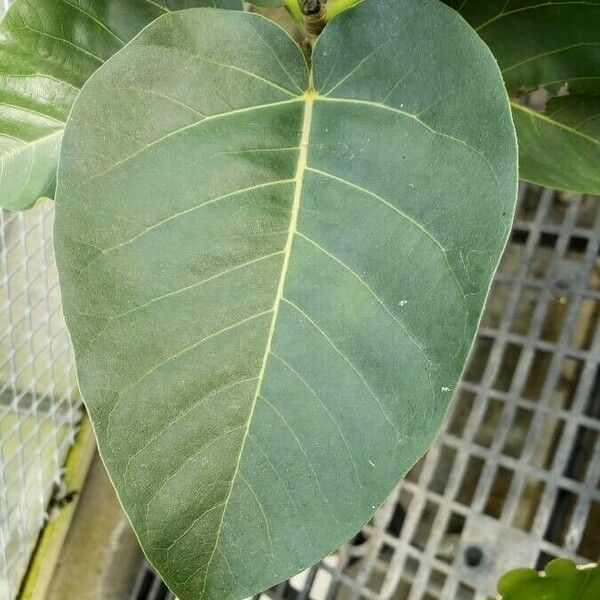
Plant Overview
Often called the Saffron Fig or Jagüey Blanco, Ficus crocata is a majestic tropical giant with a bit of a "stranger than fiction" lifestyle. In the wild, it often starts its life as an epiphyte—a plant that grows on another tree—before eventually sending down massive aerial roots to claim the ground for itself. It is a symbol of endurance and shade throughout Mexico and Central America, where it is loved for its dense, cooling canopy.
🔍 How to Identify
- 🍃 Leathery Foliage: The leaves are thick, elliptical, and remarkably glossy, featuring a deep green color that feels slightly waxy to the touch.
- 🟠 Saffron Fruits: It produces small, pea-sized figs that transition from green to a distinct yellowish-orange or "saffron" hue as they ripen.
- 🪵 Aerial Roots: Even in younger or container-grown plants, you may notice woody, rope-like roots attempting to grow from the branches toward the soil.
🏡 In Your Garden
- 🧱 Foundation Warning: While beautiful, this fig has "muscular" roots. In a garden setting, it should be planted far away from pipes, sidewalks, or house foundations, as its root system is incredibly persistent and strong.
- 🌤️ Light Stability: If you keep this species as a large indoor specimen, pick a sunny spot and leave it there. Ficus crocata is sensitive to "environmental shock" and may drop its leaves in protest if moved to a different room or exposed to a cold draft.
⚠️ Safety & Toxicity
- 🐾 Pet Safety: Like most members of the Ficus family, the leaves and stems contain a milky white sap (latex) that is toxic to cats and dogs, causing gastrointestinal upset if nibbled.
- 🖐️ Skin Irritant: This sap can also cause itchy skin rashes or "phytophototoxicity" (skin that burns easily in the sun) for humans. It is always best to wear gloves when pruning or cleaning your plant.
✨ Fun Fact
The Ficus crocata has a "secret marriage" with a specific species of tiny wasp (Pegoscapus). The wasp is the only insect that can pollinate the tree, and in return, the fig provides a safe nursery for the wasp's larvae inside the fruit!

Detailed Care Instructions

Place in a window with dappled sun or a spot in the middle of a room. Or directly in a window facing west or east.

Some plants require more regular watering than others, which should be done every few days. It's critical to maintain the soil moist all of the time. The water requirements of the same plant placed in pots with varying sizes will differ. Because the water in the smaller pot evaporates faster than the water in the larger pot, it will require more watering. Regardless of pot size, the surface should constantly be maintained moist.








