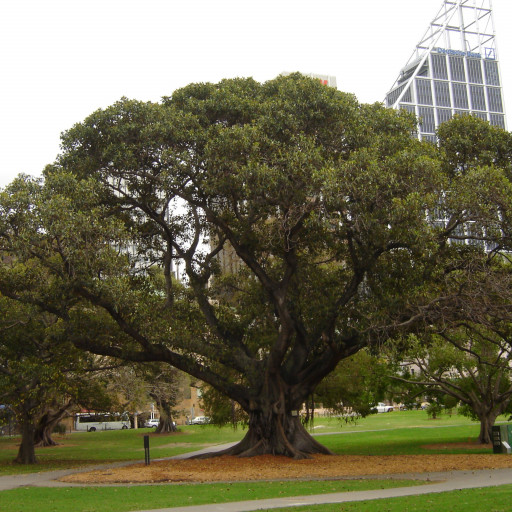
Plant Overview
The Ficus macrophylla, affectionately known as the Moreton Bay Fig, is a true titan of the botanical world. Native to the rainforests of eastern Australia, it is famous for its cathedral-like canopy and dramatic, sculptural buttress roots that look like something out of a fantasy novel. While it begins its life as a modest seedling, it eventually grows into a majestic landmark that can shade an entire city block.
🔍 How to Identify
- 🍃 Leathery Foliage: The leaves are large (up to 10 inches), oval-shaped, and incredibly tough. They feature a glossy, deep-green top and a distinctive "rusty" or brownish velvety underside.
- 🌳 Buttress Roots: In mature specimens, the trunk transitions into massive, wall-like roots that snake across the ground. These provide stability for the tree's enormous weight.
- 🟣 Small Figs: It produces pairs of small, stalked fruits (figs). They start green and ripen into a spotted purple color, providing a feast for local birds and bats.
🏡 In Your Garden
- 🏗️ Infrastructure Warning: This tree is a "gentle giant" with a catch—its roots are incredibly powerful and aggressive. Never plant it near houses, pools, or underground pipes, as it is famous for lifting pavement and cracking concrete in search of moisture.
- 🏠 Indoor Living: In its juvenile stage, it is a striking indoor plant. However, it requires a very large pot and high ceilings. It needs bright, indirect light; if the light is too low, it will quickly protest by dropping its leaves.
- 🚿 Tropical Humidity: To keep the foliage looking lush, it appreciates high humidity. If kept indoors, regular misting or a humidifier will help mimic the Australian rainforest environment it loves.
⚠️ Safety & Toxicity
- 🐾 Toxic to Pets: Like most members of the Ficus family, this plant contains a milky sap called "ficin." It is toxic to dogs and cats, potentially causing drooling, vomiting, and skin irritation if chewed.
- 🧴 Skin Irritant: The white latex sap can cause a mild allergic reaction or dermatitis in humans. It is always a good idea to wear gloves when pruning or handling broken branches.
✨ Fun Fact
The Moreton Bay Fig has a "monogamous" relationship with a specific tiny insect called the Fig Wasp (Pleistodontes froggatti). The tree cannot produce seeds without this specific wasp, and the wasp cannot complete its life cycle without the tree's figs—they have evolved to be completely dependent on one another for millions of years!

Detailed Care Instructions
To grow a Ficus Macrophylla plant, also known as Moreton Bay fig or Australian banyan, you can follow these steps:
- Choose the right location: Moreton Bay fig prefers a sunny or partially shaded location with well-draining soil. Make sure the area is large enough to accommodate the mature size of the tree, as it can reach heights of 60-70 feet (18-21 meters) and spread up to 100 feet (30 meters).
- Prepare the soil: Amend the soil with organic matter like compost or aged manure to improve its fertility and drainage. This plant prefers slightly acidic to neutral soil pH (around 6.0-7.0).
- Planting: Dig a hole that is wider and deeper than the root ball of the Ficus Macrophylla. Place the root ball in the hole, making sure it sits at the same level or slightly above the surrounding soil. Backfill the hole with soil, gently firming it around the roots.
- Watering: Water the newly planted Ficus Macrophylla thoroughly and regularly to keep the soil moist but not waterlogged. However, once established, the tree is relatively drought-tolerant and can withstand periods of dryness.
- Mulching: Apply a layer of organic mulch around the base of the tree to conserve moisture, suppress weed growth, and regulate soil temperatures. Keep the mulch a few inches away from the trunk to prevent rot.
- Pruning: Regular pruning is necessary to maintain the desired shape and size of the Ficus Macrophylla. Prune during the dormant season (winter) to remove dead, damaged, or crossing branches. Avoid heavy pruning during the growing season as it can cause stress to the tree.
- Fertilizing: Moreton Bay figs are generally not heavy feeders, but you can apply a balanced slow-release fertilizer in spring to promote healthy growth. Follow the product instructions for the appropriate application rate.
- Pests and diseases: Keep an eye out for common pests like aphids, mealybugs, scale insects, and spider mites. Treat any infestations promptly with appropriate insecticides or by using organic pest control methods. Also, watch for diseases like leaf spot or root rot and take appropriate measures if detected.
- Support: Since Ficus Macrophylla can grow quite large, provide support if necessary, especially when the tree is young. Staking can help prevent the trunk from bending or breaking under its own weight.
- Patience: Growing a Ficus Macrophylla takes time and patience. It can take several years for the tree to reach its mature size and develop its characteristic aerial roots.
Remember to check your local regulations and ensure that planting a Moreton Bay fig is allowed in your area, as it can be considered invasive in some regions.

Place in a window with dappled sun or a spot in the middle of a room. Or directly in a window facing west or east.

To properly water this plant, you should check the soil regularly to ensure it is not too dry or too wet. When watering, use room temperature water and thoroughly saturate the soil until water comes out of the drainage holes. Avoid letting the plant sit in standing water as this can lead to root rot. It is also important to ensure the pot has good drainage to prevent water from accumulating. Watering frequency will depend on various factors such as the size of the pot, location of the plant, and temperature and humidity levels. As a general rule, water when the top inch of soil feels dry to the touch. Overwatering can be harmful to this plant, so it is better to err on the side of caution and underwater rather than overwater.
To fertilize this plant, use a balanced, water-soluble fertilizer with equal parts nitrogen, phosphorus, and potassium. Apply the fertilizer once every two weeks during the growing season, which is typically spring and summer. Be careful not to over-fertilize, as this can lead to root burn and damage to the plant. Water the plant thoroughly before and after fertilizing to prevent the roots from drying out. Additionally, mulch around the base of the plant to help retain moisture and nutrients in the soil.
The ideal soil for the plant should be well-draining and rich in nutrients. It should consist of a blend of organic matter, such as peat moss or compost, and mineral particles, such as sand or perlite. The pH level of the soil should be slightly acidic to neutral, ranging between 6.0 to 7.0. The soil should also be able to hold moisture, but not be too wet or waterlogged, as this can lead to root rot and other plant diseases. It is recommended to use a good quality commercial potting soil as the base, and amend it with organic matter and mineral particles as necessary to create a soil mix that is suitable for the plant's needs.
To propagate this plant, you will need to collect seeds or take stem cuttings. For seed propagation, make sure the seeds are fresh and fully matured. Soak them in water for 24 hours before sowing them in a well-draining soil mix. Keep the soil moist and warm, and the seeds should germinate in 1-2 weeks.
For stem cutting propagation, take cuttings that are 4-6 inches long and have a few leaves on them. Remove the lower leaves, leaving only 2-3 at the top. Dip the cut end in rooting hormone and plant it in a well-draining soil mix. Keep the soil moist and warm, and the cutting should root in 2-3 weeks.
Both methods require consistent warmth and moisture, so it's important to keep them in a humid environment. Once rooted or sprouted, the young plants can be transplanted into larger pots or outdoors after the risk of frost has passed.








