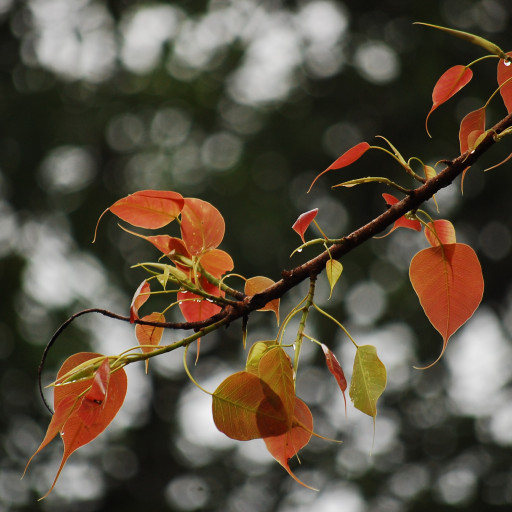
Plant Overview
Known as the Sacred Fig or the Bodhi Tree, Ficus religiosa is one of the most spiritually significant plants in the world. Revered by Buddhists and Hindus alike, it is famous for its distinctive "dancing" leaves that rustle even in a light breeze. Native to the Indian subcontinent, it symbolizes peace, longevity, and enlightenment.
🔍 How to Identify
- 🍃 Drip Tips: The most striking feature is the heart-shaped leaf ending in a very long, slender, and elegant "drip tip" that helps rain shed quickly off the surface.
- 🎋 Vein Pattern: The leaves have a beautiful, intricate network of pale green veins that look almost like a skeleton when held up to the light.
- 🏢 Growth Habit: It typically grows into a massive tree with wide-spreading branches. While it doesn't have as many "hanging" aerial roots as the Banyan, its trunk can become deeply fluted and gnarled over time.
🏡 In Your Garden
- 🪴 Space is Key: If you are planting this in the ground, be extremely careful. Its roots are incredibly strong and "adventurous," known for lifting sidewalks and cracking walls if planted too close to structures.
- ☀️ Light & Warmth: This is a tropical sun-lover. If kept as a bonsai or indoor plant, it needs the brightest window in the house. It is very sensitive to frost and will drop its leaves if the temperature dips too low.
- 💧 Consistency: It prefers well-draining soil and a consistent watering schedule. While it is drought-tolerant once established, it will show its stress by shedding leaves if left dry for too long.
⚠️ Safety & Toxicity
- 🥛 Latex Sap: Like most Ficus species, the stems and leaves contain a milky white sap (latex).
- 🐾 Irritant: This sap can cause skin irritation or rashes in sensitive individuals. If ingested by pets or children, it may cause mild stomach upset and drooling.
✨ Fun Fact
The oldest human-planted tree in the world with a known planting date is a Ficus religiosa called the Jaya Sri Maha Bodhi. It was planted in Sri Lanka in 288 BC and is still alive and guarded today!

Detailed Care Instructions
To grow a Ficus Religiosa plant (also known as the Bodhi tree or Peepal tree), follow these steps:
- Obtain a young Ficus Religiosa plant either from a nursery or by collecting fresh seeds from a mature tree. Seeds are preferable for growing a plant from scratch.
- Prepare a container or pot with well-draining soil. Mix equal parts of garden soil, compost, and sand to ensure good drainage. Fill the pot with this mixture.
- Soak the Ficus Religiosa seeds in water overnight to soften the tough seed coat and improve germination rates. Alternatively, you can sow them damp or moist soil without soaking.
- Sow the seeds about 1 inch deep in the prepared pot. If you're using seedlings, plant them at the same depth as they were growing in their previous container.
- Place the pot in a location that receives bright, indirect sunlight. Ficus Religiosa is a tropical tree and requires warmth and light for optimal growth.
- Water the plant regularly to keep the soil evenly moist but not waterlogged. Overwatering can lead to root rot, so ensure the excess water drains well from the pot.
- Fertilize the plant once a month with a balanced, diluted liquid fertilizer during the growing season (spring and summer). Follow the manufacturer's instructions for proper dilution and application.
- Prune the Ficus Religiosa tree to maintain its shape and size. Remove any dead or decaying leaves and branches, as well as any suckers that appear at the base of the plant.
- Transplant the Ficus Religiosa plant to a larger pot or in the ground when it outgrows its current container. This can be done once every 2-3 years during the early spring.
- Protect the Ficus Religiosa tree from extreme temperatures and frost. It prefers temperatures between 65-85°F (18-30°C) and may suffer damage if exposed to temperatures below 50°F (10°C).
- Monitor the plant for pests such as aphids, mealybugs, or scale insects. If infested, use an appropriate insecticide or treat them with a homemade soap spray solution.
- Finally, be patient. Ficus Religiosa is a slow-growing tree, and it may take several years to reach its full size and develop the distinct heart-shaped leaves.
By following these steps, you can successfully grow a Ficus Religiosa plant and enjoy its beauty and symbolism in your home or garden.

Place in a window with dappled sun or a spot in the middle of a room. Or directly in a window facing west or east.

To water this plant, the soil should be checked for moisture level before each watering. The top two inches of soil should be dry before the plant is watered, as over-watering can lead to root rot. When watering, it is important to slowly and evenly distribute water throughout the soil to ensure the root ball is fully saturated. Additionally, any excess water should be drained from the pot to prevent waterlogging. Watering frequency will depend on factors such as the size of the pot and environment, but generally this plant prefers evenly moist soil without becoming waterlogged.
To fertilize this plant, use a balanced liquid fertilizer that is diluted to half strength. Apply the fertilizer once a month during the growing season (spring and summer) and reduce the frequency of fertilization during the winter. Before fertilizing, make sure the soil is moist and not completely dry. Avoid over-fertilization as it can burn the plant's roots. Instead, follow the instructions on the fertilizer label and stick to the recommended dosage.
The soil that is best suited to Ficus Religiosa is a blend of organic materials such as peat moss, leaf compost, and aged bark. The soil should be well-draining and have a slightly acidic pH level between 6.0 and 7.0. It should be rich in nutrients to promote healthy growth and development in the plant. A mixture that includes perlite or vermiculite can also help improve drainage. It is important to ensure that the soil is well-moistened but not waterlogged, as this can lead to root rot or other issues. The plant may also benefit from occasional fertilization with a balanced, all-purpose fertilizer. Avoid using soil that is heavy or compacted, as this can restrict root growth and lead to poor health and vitality.
The best way to propagate this plant is through vegetative propagation, which involves taking a stem cutting. First, select a healthy and mature stem with at least 3 nodes, which are the points on the stem where leaves emerge. Cut the stem at a 45-degree angle with a clean, sharp knife. Remove the lower leaves, leaving only 2 or 3 at the top. Dip the cut end of the stem in rooting hormone powder and plant it in a pot filled with a well-draining soil mix. Water the cutting thoroughly and cover it with a plastic bag or wrap to retain moisture and humidity. Place the pot in a location with bright, indirect light and keep the soil moist but not waterlogged. The cutting should root within 4-6 weeks, at which point the plastic covering can be removed and the new plant can be gradually acclimated to normal room conditions.
Common pests of the sacred fig include Scale insect, mealybugs, spider mites, thrips. Make a habit of checking your sacred fig frequently for pests so that any infestations can be caught and managed early.








