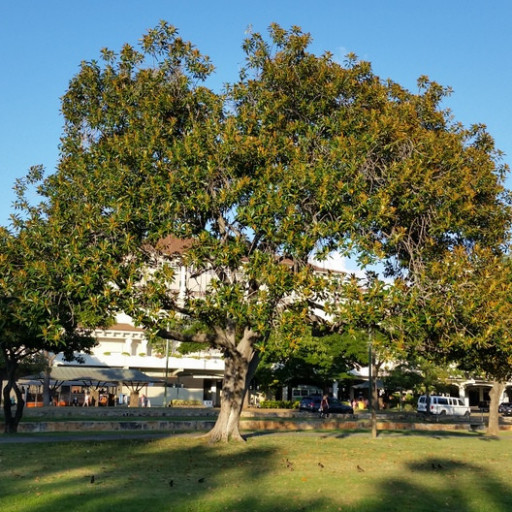
Plant Overview
Known as the Rusty Fig or Port Jackson Fig, this Australian native is a master of adaptation. In the wild, it often begins life as an "epiphyte," clinging to other trees or even sandstone cliffs, before eventually sending down roots to stand on its own. With its dense, spreading canopy and distinctive velvety leaves, it has become a beloved choice for both grand landscape designs and miniature bonsai enthusiasts.
🔍 How to Identify
- 🌿 Rusty Undersides: The most iconic feature is the "rubiginosa" (rusty) fuzz. While the tops of the leaves are glossy dark green, the undersides are often covered in fine, reddish-brown hairs.
- 🍈 Tiny Fruit: It produces small, paired figs that turn from yellow to a deep, warty red as they ripen. Unlike the supermarket variety, these are mostly enjoyed by local birds.
- 🌳 Spreading Stature: It typically grows into a broad, low-branching tree. In humid environments, it may even drop aerial roots from its branches to create a dramatic, multi-trunk appearance.
🏡 In Your Garden
- 🏗️ Root Awareness: While beautiful, the Rusty Fig has incredibly powerful and invasive roots. It should never be planted near plumbing, pool filters, or house foundations, as it will find and exploit any crack in search of moisture.
- 🧂 Coastal Warrior: This is one of the best trees for seaside gardens. It is remarkably tolerant of salt spray and heavy winds, acting as a sturdy windbreak for more delicate plants.
- ✂️ Bonsai Potential: Because it naturally develops a thick trunk and responds well to pruning, it is a favorite for beginners in the world of bonsai. It can be kept small for decades with the right care.
⚠️ Safety & Toxicity
- 🐾 Mildly Toxic: Like most members of the Ficus genus, this plant contains a milky white sap (latex) that is toxic to pets.
- 🤢 Irritant: If a cat or dog chews on the leaves, they may experience drooling, vomiting, or skin irritation. In humans, the sap can cause a mild rash or "phytophototoxicity" if the sap-covered skin is exposed to sunlight.
✨ Fun Fact
The Rusty Fig has a "soulmate" relationship with a tiny creature called the Fig Wasp (Pleistodontes imperialis). This specific wasp is the only insect that can pollinate the tree, and in return, the fig provides a safe nursery for the wasp's eggs. They cannot survive without each other!

Detailed Care Instructions
| Humidity | High |
| Lighting | Full Sun |
| Difficulty | Medium |
| Temperature | 18°C - 24°C |
| Hardiness Zones | Max 10 |
To grow Ficus rubiginosa, also known as the Port Jackson fig, follow these steps:
- Climate and Location: Make sure you live in a region with a suitable climate for Ficus rubiginosa, which is typically warm temperate, subtropical, or tropical. The plant prefers full sun or partial shade.
- Soil: The Port Jackson fig prefers well-draining soil that is slightly acidic with a pH of around 6 to 6.5. Amend the soil with organic matter like compost to improve its fertility and drainage.
- Planting: Select a suitable spot for your Ficus rubiginosa. Dig a hole that is slightly larger than the root ball of the plant. Place the tree in the hole and backfill with soil, ensuring that the plant is at the same depth it was previously planted. Firmly press the soil around the root ball to eliminate air pockets.
- Watering: Water the newly planted Ficus rubiginosa thoroughly. Afterward, provide regular irrigation to keep the soil consistently moist but not waterlogged. Avoid overwatering, as it can cause root rot.
- Mulching: Apply a layer of organic mulch around the base of the plant, which helps retain moisture, suppress weeds, and regulate soil temperature.
- Pruning: Perform regular pruning to maintain the desired shape and size of the tree. You can remove dead or damaged branches, or shape the plant to your preference. Prune during the dormant season.
- Fertilization: Ficus rubiginosa generally doesn't require heavy fertilization. However, you can apply a slow-release, balanced fertilizer in spring to promote healthy growth.
- Pest and Disease Management: Monitor the plant for pests like aphids, mealybugs, or scale insects. If necessary, treat with organic or chemical insecticides. Check for any signs of diseases such as root rot or leaf spots and take appropriate action promptly.
- Propagation: You can propagate Ficus rubiginosa through seeds or by taking stem cuttings. Sow seeds in a well-draining container or directly in the ground. To propagate from cuttings, take a 6 to 8-inch long cutting, remove the lower leaves, and plant it in a pot or in the ground. Keep the soil moist until roots develop.
- Support: If you want to train your Ficus rubiginosa into a specific shape, use stakes or trellises to support the plants until they develop strong trunk and branches.
Remember to research and consider the specific needs of the Port Jackson fig in your particular region to ensure successful growth.

Place in a window with dappled sun or a spot in the middle of a room. Or directly in a window facing west or east.

The Ficus Rubiginosa plant prefers to be watered consistently but not excessively. Using a watering can or a hose with a gentle flow, water the plant at its base until the soil is moist but not soaking. Allow the soil to dry out partially before watering again, as over-watering can cause root rot. It's important to avoid getting water on the leaves as this can lead to fungal diseases. It's also helpful to mist the leaves occasionally to increase humidity. Monitor the plant carefully and adjust the watering schedule based on its individual needs and the growing conditions in its environment.
To fertilize this plant, use a balanced fertilizer with equal parts nitrogen, phosphorus, and potassium, every two weeks during the growing season (spring and summer). Dilute the fertilizer to half strength to avoid overfeeding. Take care not to fertilize in winter when the plant is dormant. Spread the fertilizer evenly around the base of the plant and water thoroughly. Observe the plant for any signs of overfertilization such as leaf burn or stunted growth.
Ficus rubiginosa requires well-draining soil that is rich in nutrients. It prefers a pH range of 6.0 to 7.5. The soil should not be too heavy or compacted, as this can lead to poor drainage and root rot. A mixture of peat moss, perlite, and sand is recommended to improve drainage and aeration. It is also important to ensure that the soil is kept moist but not waterlogged, as overwatering can also lead to root rot. Adding organic matter such as compost or leaf mulch can help to improve the soil structure and provide additional nutrients for the plant.
Ficus Rubiginosa can be propagated through stem cuttings. Choose a healthy branch with leaves and cut a section approximately 6 inches long using clean, sharp pruning shears. Remove the leaves from the bottom two-thirds of the stem, leaving only a few leaves at the top. Dip the cut end of the stem into rooting hormone powder and plant it into a pot filled with a well-draining potting mix. Water the soil until it is evenly moist. Place the cutting in a bright, indirect light location and keep the soil moist while encouraging the roots to form. With proper care, the cutting should root within a few weeks and eventually grow into a new plant.
Common pests of the port jackson fig include Scale insect, mealybugs, spider mites, thrips. Make a habit of checking your port jackson fig frequently for pests so that any infestations can be caught and managed early.








