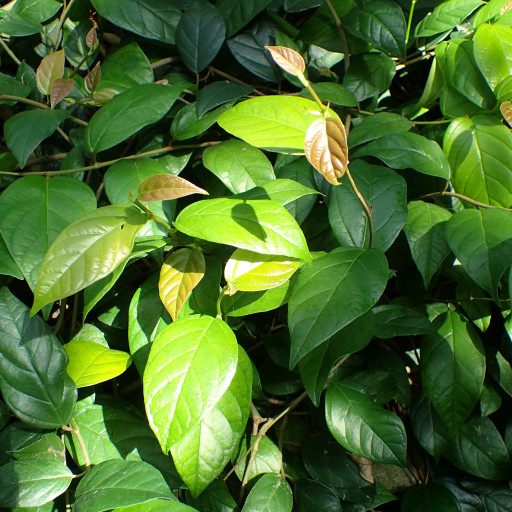
Plant Overview
Often called the Arrowhead Fig, Ficus sagittata is a stealthy climber that transforms from a humble ground cover into a lush vertical wall of greenery. Hailing from the humid rainforests of Southeast Asia, this plant is a master of adaptation, using its aerial roots to scale trees and damp rocks alike. It is the perfect choice for plant parents seeking a tropical, "jungle-core" aesthetic without the massive footprint of its larger cousin, the Fiddle Leaf Fig.
🔍 How to Identify
- 🍃 Leaf Shape: True to its name, the leaves are elongated and pointed, resembling a narrow arrowhead or a sharp spear tip.
- 🧶 Growth Pattern: It functions as a creeping or climbing vine, producing fine, "sticky" roots along the stems that allow it to grip almost any textured surface.
- 🪵 Texture: The foliage is typically leathery and deep green, often featuring a slightly waxy sheen that helps the plant repel excess rainwater in the wild.
🏡 In Your Garden
- 🧗 Vertical Ambitions: Because it is a natural-born climber, it thrives best when given a moss pole or a cedar plank to scale. If left to trail from a hanging basket, the leaves may remain smaller and more juvenile.
- 💧 Humidity Enthusiast: Unlike some of its hardier Ficus cousins, the Arrowhead Fig is a humidity seeker. It prefers consistent moisture and can become "cranky"—dropping leaves—if the air becomes too dry or if it is placed near a drafty heater.
- 🪴 Settling In: Ficus species are notoriously sensitive to change. Once you find a bright, indirect light spot where it is happy, avoid moving it; even a small shift in environment can trigger a temporary "tantrum" of falling leaves.
⚠️ Safety & Toxicity
- 🧪 Sap Irritant: Like nearly all members of the Ficus genus, this plant contains a milky white latex sap. This sap can cause skin irritation or "phytophototoxicity" in sensitive individuals.
- 🐾 Pet Safety: It is considered toxic to cats, dogs, and horses. If leaves or stems are chewed, the sap can cause oral irritation, drooling, and gastrointestinal upset. It is best displayed in a high hanging planter out of reach.
✨ Fun Fact
In its native habitat, Ficus sagittata participates in one of nature’s most exclusive "members-only" clubs. It relies on a specific species of tiny wasp for pollination; the wasp can only enter the fig's specialized flowers, and in return, the fig provides a safe nursery for the wasp's larvae!

Detailed Care Instructions
To grow Ficus Sagittata, also known as creeping fig, you can follow these steps:
- Choose a suitable location: Ficus Sagittata prefers bright, indirect light. It can tolerate some shade, but ensure that it is not exposed to direct sunlight for extended periods of time.
- Prepare the soil: Use well-draining soil that is rich in organic matter. You can also add some perlite or sand to improve drainage.
- Watering: Water the plant thoroughly and allow the top inch of soil to dry out between watering. Overwatering can lead to root rot, so it's important to find the right balance.
- Humidity: Ficus Sagittata thrives in a humid environment. Mist the leaves with water regularly or place a tray of water nearby to increase humidity levels.
- Fertilization: Feed the plant with a balanced, water-soluble fertilizer every two weeks during the growing season (spring and summer). Reduce frequency to once a month during the dormant season (fall and winter).
- Pruning: Ficus Sagittata is a fast-growing vine and can become invasive if not properly maintained. Prune regularly to control its growth and shape. You can also train it on trellises or support structures.
- Propagation: You can propagate Ficus Sagittata through stem cuttings. Take a 4-6 inch cutting from a healthy plant, remove the lower leaves, and place the cutting in water or directly in moist soil. Keep the cutting in a warm, humid location until roots develop.
- Pests and diseases: Keep an eye out for common houseplant pests like aphids, spider mites, and mealybugs. If necessary, treat the infestation with an appropriate organic insecticide. Avoid overwatering to prevent root rot or fungal issues.
Remember to research and follow specific care instructions for your specific plant, as different varieties of Ficus Sagittata may have unique needs.

Place in a window with dappled sun or a spot in the middle of a room. Or directly in a window facing west or east.

To water this plant, you should first wait until the top inch or so of soil is dry before watering. Then, slowly pour water into the soil around the base of the plant, being careful not to get any water on the leaves. Make sure to water deeply enough that the entire root ball gets moist, but avoid overwatering and allowing the plant to sit in standing water. It's best to water in the morning to allow any excess to evaporate throughout the day.
Provide a balanced fertilizer every two weeks during the growing season (spring and summer), diluting it according to package instructions. Reduce fertilization in the fall and winter, providing it only once per month. Additionally, ensure that the soil is moist before fertilizing to prevent burning the roots.
The ideal soil for this plant should be well-draining and nutrient-rich. It should be a mixture of organic matter such as compost or aged manure and coarse sand or perlite to improve drainage. The soil should have a slightly acidic pH level, between 6.0 to 6.5, and be able to retain moisture without becoming waterlogged. The plant prefers a slightly moist soil, so regular watering is necessary, but it should not be allowed to sit in standing water. Additionally, the soil should allow for good airflow to prevent root rot and other fungal diseases.
Ficus Sagittata plants can be propagated through stem cuttings. First, select a healthy stem from the parent plant and make a diagonal cut below a node using a sharp and sterilized pair of scissors or pruners. Remove any leaves from the bottom half of the cutting. Dip the cut end into rooting hormone powder for better rooting chances. Then, place the cutting into a pot filled with a mixture of peat moss, perlite, and sand. Cover the pot with a plastic bag to create a humid environment around the cutting and put it in a well-lit area but not in direct sunlight. Mist the cutting regularly and keep the soil moist but not waterlogged. After several weeks, the cutting should start to grow roots and show new growth. At this point, the plant can be gradually exposed to more light and eventually transplanted into a larger pot or directly into the ground.
Common pests of the trailing fig include Scale insect, mealybugs, spider mites, thrips. Make a habit of checking your trailing fig frequently for pests so that any infestations can be caught and managed early.








