Plant Overview
Known widely as the Dye Fig or Humped Fig, Ficus tinctoria is a master of adaptation found sprawling across the tropical Pacific and Southeast Asia. In many island cultures, it is considered the "fabric of the forest," providing a vibrant red dye used for traditional arts. While it often begins its life as a "strangler" hitching a ride on other trees, it matures into a sturdy, resilient specimen with a very unique silhouette.
🔍 How to Identify
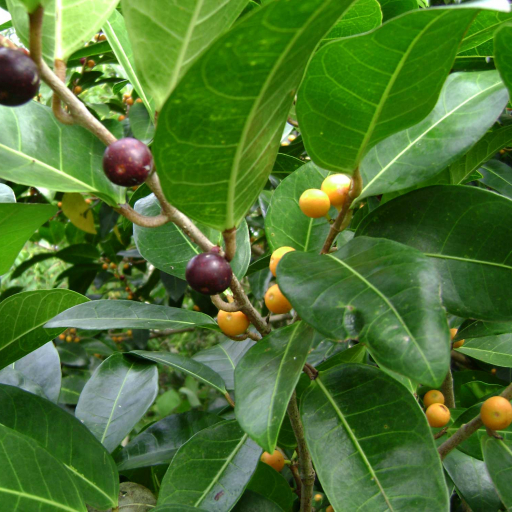
- 🍃 The "Humped" Leaf: The most distinct feature is the leaf base, which is strikingly asymmetrical. One side of the leaf blade is much larger than the other at the stem, giving it a "lopsided" or humped appearance.
- 🪵 Sandpaper Texture: The leaves are often stiff and have a slightly rough, sandpaper-like texture on the surface, which distinguishes it from the glossy leaves of the common Ficus benjamina.
- 🍒 Paired Fruits: It produces small, rounded figs that grow in pairs along the branches. They transition from a pale green to a bright yellow, and finally to a deep orange-red or purple when fully ripe.
🏡 In Your Garden
- 🌱 Versatile Growth: In the wild, it can be a "hemi-epiphyte" (starting life in the canopy of another tree), but in a garden setting, it grows into a medium-sized tree or a sprawling shrub. It is remarkably tough and can even grow out of rock crevices.
- 💨 Coastal Warrior: This fig is exceptionally salt-tolerant and wind-resistant. It is a fantastic choice for coastal landscapes where salty sea breezes often wither more delicate garden plants.
⚠️ Safety & Toxicity
- 🚫 Latex Irritant: Like almost all members of the Ficus family, this plant contains a milky white sap (latex). This sap can cause skin irritation or "phytophototoxicity" (sun-sensitive rashes) in some people.
- 🐾 Pet Safety: The leaves and sap are generally considered toxic to cats and dogs. Ingestion can lead to drooling, vomiting, and mouth irritation, so it is best kept out of reach of curious nibblers.
✨ Fun Fact
The "Dye Fig" earned its name because its fruit juice, when mixed with the sap of another specific plant (Bruguiera gymnorhiza), creates a permanent, rich red dye. This mixture has been used for centuries in the South Pacific to paint intricate patterns on traditional Tapa (bark) cloth!

Detailed Care Instructions
To grow a Ficus tinctoria plant, also known as the dye fig, follow these steps:
- Purchase a young Ficus tinctoria plant from a reputable nursery or online retailer. Alternatively, you can propagate one from a mother plant by taking a stem cutting.
- Choose a suitable planting location. Ficus tinctoria prefers full to partial sun, so find a spot that receives bright indirect sunlight or dappled shade. The plant can also tolerate some direct sunlight in the early morning or late afternoon.
- Prepare the soil. Ficus tinctoria prefers well-draining soil that retains some moisture. Mix equal parts of organic compost or loam soil with sand or perlite to improve drainage.
- Dig a hole that is slightly larger than the root ball of the plant. Place the plant into the hole and backfill it with the prepared soil mixture, pressing gently to eliminate any air pockets around the roots.
- Water the plant thoroughly after planting to settle the soil and ensure proper hydration. However, avoid overwatering, as the plant can be susceptible to root rot. Allow the top inch of soil to dry out before watering again.
- Fertilize regularly. Use a balanced liquid fertilizer or slow-release granules specifically formulated for indoor or container plants. Follow the instructions on the fertilizer packaging, typically applying it every 4-6 weeks during the growing season (spring through fall).
- Prune occasionally. Ficus tinctoria may benefit from pruning to maintain its shape and reduce legginess. Prune during the dormant period or when the plant is not actively growing. Remove any dead, damaged, or diseased branches, as well as any excessive growth.
- Provide proper humidity. Ficus tinctoria appreciates higher humidity levels. You can increase humidity by placing a tray filled with water near the plant or using a humidifier.
- Monitor for pests and diseases. Common pests that may affect Ficus tinctoria include spider mites, scale insects, and mealybugs. Regularly inspect the plant and treat with appropriate insecticides or insecticidal soaps if necessary.
By following these steps, you can successfully grow a Ficus tinctoria plant and enjoy its beautiful foliage.

Place in a window with dappled sun or a spot in the middle of a room. Or directly in a window facing west or east.

Ficus Tinctoria plant should be watered thoroughly but should be allowed to dry out between watering sessions. The best way to check if the plant needs to be watered is by feeling the soil with your finger. If the top inch of the soil feels dry, it's time to water the plant. The amount of water needed depends on factors such as the size of the pot, temperature, humidity, and light conditions. Make sure that water is not stagnant in the pot as this can cause root rot. Water the plant slowly and evenly to allow the soil to absorb the moisture gradually. Avoid overwatering, as it can lead to root rot and fungal problems. If you're unsure about watering, it's better to underwater than overwater the plant.
To fertilize this plant, use a balanced fertilizer once a month during its active growing season. Be sure not to over-fertilize as it can damage the plant. Water the plant thoroughly before applying the fertilizer to prevent root burn. Additionally, consider amending the soil with organic matter to improve its fertility and drainage.
Ficus tinctoria plant requires well-draining soil that is rich in organic matter. The soil should be slightly acidic to neutral with a pH range of 6.0 to 7.0. The plant prefers loamy or sandy soil that holds moisture but does not become waterlogged. A mixture of peat moss, compost, and perlite can be added to the soil to improve drainage and retain moisture. It is best to avoid heavy clay soils as they tend to retain water and can cause root rot. Additionally, the plant prefers slightly moist soil, so it is important not to let the soil become completely dry before watering.
To propagate this plant, begin by taking a healthy stem cutting from a mature plant. Choose a stem that has at least two nodes, or where leaves and buds grow from the stem.
Using a sharp and sterilized knife, make a clean cut just below a node and remove any leaves from the lower half of the stem. Dip the cut end of the stem in rooting hormone powder.
Prepare a well-draining potting mix and moisten it slightly. Make a hole in the soil using a pencil or a skewer, and gently insert the stem into it. Firm the soil around the cutting to hold it in place.
Water the cutting and cover it with a clear plastic bag or container to create a humid environment. Place the container in a bright spot with indirect sunlight. Keep the soil moist but not waterlogged, and mist the leaves occasionally.
Within a few weeks, the cutting should start developing roots. You can check by gently tugging on the stem. Once the roots are established, remove the plastic covering and move the plant to a larger container or pot. Gradually expose it to more sun and water as needed.
With proper care, your propagated Ficus Tinctoria plant will grow into a beautiful mature plant that adds a natural touch to your home or garden.








