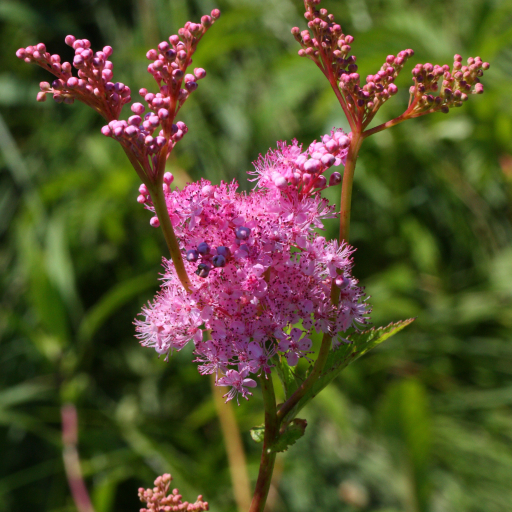
Plant Overview
Known as the "Queen of the Prairie," this majestic North American native looks like a cloud of pink cotton candy floating atop a tall, slender throne. It is a favorite in cottage gardens and meadow restorations, adding a whimsical, airy texture that few other perennials can match. Its sweet, subtle fragrance and dramatic height make it true royalty in the mid-to-late summer landscape.
🔍 How to Identify
- 🌸 Floral Froth: Produces massive, feathery plumes of tiny, deep-pink to peach flowers that look like puffs of smoke or spun sugar.
- 🍃 Jagged Foliage: Features large, deeply lobed, palm-shaped leaves that can reach up to 3 feet in length, resembling oversized, serrated maple leaves.
- 📏 Stately Stems: Grows remarkably tall, often reaching 4 to 6 feet, with sturdy, smooth stems that typically hold their ground without the need for staking.
🏡 In Your Garden
- 💧 Moisture Lover: This "Queen" demands a damp throne. It is the perfect candidate for rain gardens or boggy areas where other plants might suffer from root rot, as it thrives in consistently wet soil.
- 🧘 Settling In: Once established, this plant prefers to be left alone. It develops a thick, spreading root system and generally dislikes being moved or divided frequently.
- ☀️ Sun Sensitivity: While it loves the sun, in hotter southern climates, it appreciates a bit of afternoon shade to prevent its delicate pink blooms from bleaching to a dull white.
⚠️ Safety & Toxicity
- 🛡️ General Safety: Filipendula rubra is generally considered non-toxic to humans, cats, and dogs.
- 💊 Aspirin Connection: Like its cousin Meadowsweet, this plant contains salicylates—the chemical foundation of aspirin. While not dangerous to touch, those with severe aspirin allergies should be cautious when handling crushed foliage.
✨ Fun Fact
- 🧪 Nature's Medicine: Long before modern labs, the roots of the Queen of the Prairie were used by Native American tribes, such as the Meskwaki, as a traditional remedy for heart troubles and as a poultice for skin sores.

Detailed Care Instructions
To grow Filipendula Rubra, also known as Queen of the Prairie, follow these steps:
- Choose a suitable location: Filipendula Rubra thrives in full sun to partial shade. Select a spot in your garden that receives at least six hours of direct sunlight daily. The soil should be well-draining and rich in organic matter.
- Prepare the soil: Loosen the soil using a garden fork or tiller to a depth of about 8-10 inches. Remove any weeds or rocks from the area. Add organic matter like compost or well-rotted manure to improve soil fertility and moisture retention.
- Planting: Dig a hole that is slightly larger than the plant's rootball. Place the Filipendula Rubra plant in the hole, ensuring that the top of the rootball is level with or slightly above the soil surface. Backfill the hole with soil, gently firming it around the plant to remove air pockets. Water the plant thoroughly.
- Watering: Filipendula Rubra prefers consistently moist soil. Water the plant regularly, especially during dry periods or hot summer months. However, avoid overwatering, as it may cause root rot.
- Mulching: Apply a layer of organic mulch around the base of the plant, such as wood chips or straw. Mulching helps to retain moisture, suppress weed growth, and maintain a more consistent soil temperature.
- Fertilization: Filipendula Rubra generally doesn't require excessive fertilization. However, incorporating a slow-release, balanced fertilizer into the soil during planting can be beneficial. Follow the package instructions for appropriate amounts and timing.
- Maintenance: Remove any weeds that may compete with the plant for nutrients and water. Deadhead spent flowers regularly to encourage continuous blooming. In the fall, cut back the stems to ground level to prepare the plant for winter.
- Division: Every few years, when the plant becomes overcrowded or starts to decline in vigor, divide it in early spring or late fall. Dig up the plant and carefully separate the clumps, ensuring that each division has several healthy shoots. Replant the divisions in prepared soil.
With proper care and maintenance, your Filipendula Rubra plant should grow well and reward you with its beautiful blooms.

Place in a bright room that is sun drenched almost all day. Or directly in a south-facing window.

Filipendula Rubra is a perennial plant that requires proper watering to thrive. Watering this plant is crucial, and it needs to be done right. Here's how to water the Filipendula Rubra properly:
1. Start by determining the soil moisture level before watering. You can do this by sticking your finger in the soil to check if it's moist or dry.
2. If the soil is dry to the touch, it's time to water the plant.
3. Use a watering can or a garden hose to water the soil around the plant. Water the soil and not the leaves.
4. However, you should avoid watering too much or too frequently, as this can lead to root rot. The plant requires moist soil but not water-logged conditions.
5. Water the Filipendula Rubra plant deeply, at least once a week. This will help promote deep root growth and make the plant more drought-resistant.
6. During periods of heavy rain or high humidity, reduce the frequency and amount of watering to prevent waterlogging.
7. It's also worth noting that Filipendula Rubra prefers well-draining soils. So, if your soil is prone to waterlogging, you might need to amend it by adding compost or peat moss to improve drainage.
In summary, watering the Filipendula Rubra plant is relatively easy, and you only need to be careful not to overwater or water the leaves. With proper watering, this beautiful perennial plant should thrive in your garden.
To fertilize this plant, use a slow-release organic fertilizer in early spring and again in midsummer. Follow the manufacturer's instructions for dosage and application. Apply the fertilizer evenly over the soil surface and water in well. Avoid getting fertilizer on the foliage or stems.
Filipendula rubra plants require nutrient-rich, moist soil that drains well. A good soil mix would be one that consists of a blend of organic matter, such as compost, peat moss, and aged manure, with sand or perlite added to improve drainage. The soil pH should be acidic to neutral, ranging from 5.5 to 7.0. Adding lime to raise the pH is not recommended. The plant prefers a loamy soil texture, which will help retain water and nutrients while allowing for proper drainage. It is also important to ensure that the soil is well-aerated to prevent waterlogging and root rot. Avoid using heavy soils or soil mixes with high clay content, as they can become waterlogged and compacted, inhibiting plant growth.
To propagate this plant, you will need to collect seeds from mature flowers and store them in a cool, dry place until ready to plant. Start the seeds indoors in a seed starting mix, keeping the soil consistently moist and the temperature around 60-70°F. Once the seedlings have developed their first set of true leaves, transplant them into individual containers. When all danger of frost has passed, harden off the plants by gradually exposing them to outdoor conditions, and then transplant them into their permanent location in the garden. This plant can also be propagated through division of the root system, which is best done in the fall or spring when the plant is not actively growing. Dig up the plant and carefully separate the roots into smaller clumps, replanting each one individually. Ensure that each new division has a healthy portion of both roots and shoots.
Common pests of the queen of the prairie include Aphids. Make a habit of checking your queen of the prairie frequently for pests so that any infestations can be caught and managed early.








