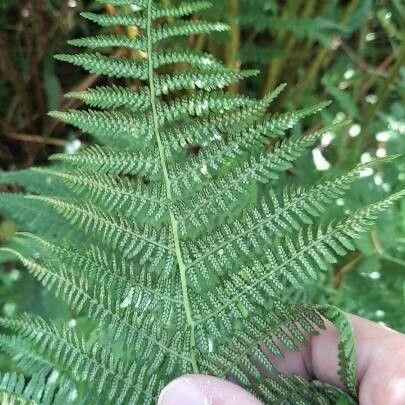
Plant Overview
Known as the "Eagle Fern" or the "King of Ferns," Pteridium aquilinum (formerly categorized as Filix-foemina) is one of the most successful and ancient plants on Earth. It has a prehistoric, rugged look that evokes images of dinosaurs wandering through misty forests. While it is admired for its resilience and graceful, fan-like fronds, it is a fierce competitor that has mastered the art of survival across nearly every continent.
🔍 How to Identify
- 🌿 The Frond Shape: Large, triangular leaves (fronds) that are divided into three main branches, giving the plant a wide, umbrella-like appearance.
- 📏 Substantial Size: Unlike delicate indoor ferns, this species can grow quite tall, sometimes reaching over 3 to 6 feet in height in ideal conditions.
- 🟤 Hidden Spores: If you flip a mature leaf over, you won’t see neat dots like other ferns; instead, the reproductive spores are hidden under the curled-over margins of the leaf edges.
🏡 In Your Garden
- 🌱 The Spreading Habit: Bracken is famous for its deep, horizontal rhizomes (underground stems). Because of this, it is rarely "planted" intentionally in small gardens—it is more likely to show up uninvited and take over.
- ⛰️ Environmental Toughness: It thrives in acidic, poor-quality soil where other plants struggle. It is deciduous, meaning it will turn a beautiful golden-bronze in autumn before dying back completely to the ground for winter.
- 🛡️ Natural Competitor: It releases chemicals into the soil that inhibit the growth of other plants (allelopathy), essentially "clearing the neighborhood" to make room for its own offspring.
⚠️ Safety & Toxicity
- 🚫 Toxic to Livestock: This plant contains ptaquiloside, a compound that is poisonous to horses, cattle, and sheep if grazed upon over time.
- 🐾 Pet Safety: It is generally considered toxic to dogs and cats if ingested, potentially causing vitamin B1 deficiencies or more serious internal issues.
- 🧍 Human Caution: While some cultures eat the young "fiddleheads," scientific research suggests they contain carcinogens if not prepared very specifically and excessively. It is best to admire this plant with your eyes, not your taste buds.
✨ Fun Fact
The species name Aquilina comes from the Latin word for "Eagle." If you cut the base of a mature stem at a sharp angle, the vascular patterns inside are said to look like a tiny, dark silhouette of a double-headed eagle!

Detailed Care Instructions








