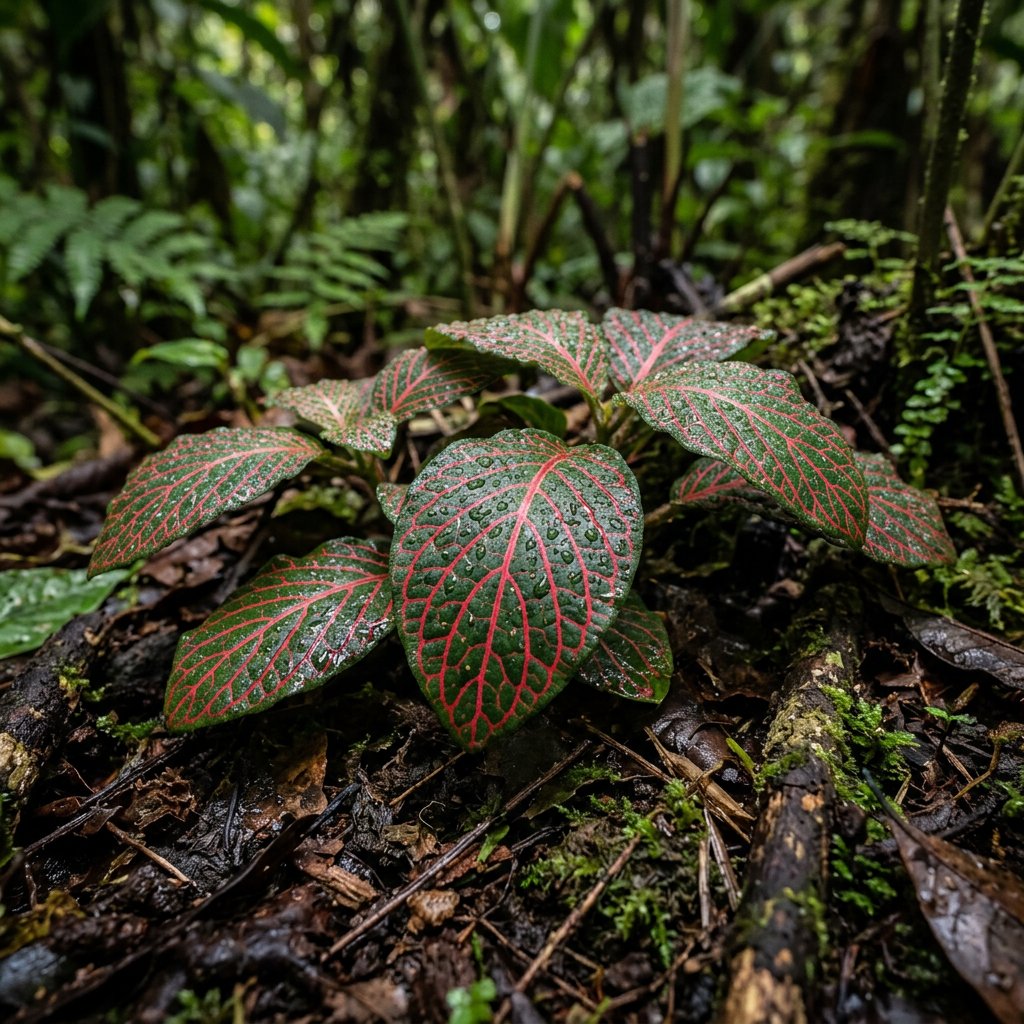
Plant Overview
Known as the Nerve Plant or Mosaic Plant, this Peruvian rainforest native is famous for its intricate, vein-like patterns that look almost like a stained-glass window. It is a top choice for terrarium enthusiasts because it thrives in high humidity and maintains a compact, creeping shape. Gardeners often affectionately call it the "Drama Queen" of the plant world due to its habit of completely collapsing when it’s thirsty, only to "resurrect" minutes after a drink.
🔍 How to Identify
- 🌿 The Foliage: Small, oval leaves featuring a deep green base heavily "veined" in contrasting shades of bright white, vivid pink, or deep carmine red.
- 🌱 Growth Habit: A low-growing, spreading evergreen that rarely exceeds 6 inches in height, preferring to crawl horizontally across the soil.
- 🧤 Texture: The leaves have a delicate, slightly papery feel and are often covered in a very fine, soft fuzz that is barely visible to the naked eye.
🏡 In Your Garden
- 💧 The "Faint" Response: This plant is incredibly communicative; if the soil dries out even slightly too much, the stems will lose turgor pressure and the whole plant will wilt flat against the pot. Don't panic—it usually bounces back perfectly once watered.
- ☁️ Tropical Humidity: Because its ancestors lived on the damp, shaded floor of the Amazon, it struggles in dry, air-conditioned rooms. It is happiest when misted frequently or kept in a glass vessel that traps moisture.
- ☀️ Filter the Light: Direct sunlight will quickly bleach or "burn" the delicate leaf patterns. It prefers the soft, dappled light that mimics the forest canopy.
⚠️ Safety & Toxicity
- ✅ Non-Toxic: The Fittonia is considered non-toxic to both cats and dogs, making it an excellent choice for pet-filled households.
- 👶 Safe for Kids: It is generally safe for children, though the plant itself is quite fragile; its stems snap easily, so it should be kept out of reach of very "active" little hands to protect the plant.
✨ Fun Fact
In its native regions of South America, certain tribes once used the leaves of the Fittonia for medicinal purposes, including treating headaches. Today, however, its most famous "medical" trick is acting as a living hygrometer—if your Fittonia looks sad, it’s a sign your home's humidity is likely too low for you, too!

Detailed Care Instructions
To grow Fittonia Verschaffeltii (also known as nerve plant or mosaic plant), you can follow these steps:
- Light: Fittonia plants prefer bright, indirect light. Avoid direct sunlight as it can scorch the leaves. Place the plant near a north or east-facing window, or provide it with bright filtered light.
- Temperature: These plants prefer a warm environment. Keep the temperature between 60-80°F (15-27°C). Avoid placing it near cold drafts or air conditioning vents.
- Humidity: Fittonia plants thrive in high humidity environments. Mist the leaves regularly with water to increase humidity. Alternatively, you can place the plant on a tray filled with water and pebbles to provide moisture or use a humidifier.
- Watering: Keep the soil moist but not soggy. Water thoroughly when the top inch of soil feels dry. Avoid overwatering as it can lead to root rot. Ensure proper drainage by using well-draining soil.
- Fertilizer: Feed the plant with a balanced liquid fertilizer diluted to half strength once a month during the growing season (spring and summer). Reduce feeding frequency during the rest of the year.
- Potting: Fittonia plants have shallow root systems, so choose a pot that allows excess water to drain. Repot when the roots become overcrowded or the plant outgrows its pot. Use a suitable potting mix for houseplants.
- Pruning: Trim any leggy or yellowing stems to encourage bushier growth. Pinching off the tips of the plant can also promote branching and fullness.
- Propagation: Fittonia plants can be propagated through stem cuttings. Take a stem cutting with several leaves and root it in water or moist soil. Once rooted, transfer it to a pot with well-draining soil.
By following these steps, you can successfully grow and care for your Fittonia Verschaffeltii plant.

Place in a window with dappled sun or a spot in the middle of a room. Or directly in a window facing west or east.

1. Determine the watering needs of the plant by checking the soil moisture level.
2. Water the plant when the top inch of soil feels dry to the touch.
3. Use room temperature water to avoid shocking the plant.
4. Water the soil directly, rather than the leaves or stem, to prevent any fungal or bacterial growth.
5. Allow the water to soak through the soil completely and drain out any excess water from the saucer or pot.
6. Avoid over-watering or letting the plant sit in water for prolonged periods, as this may cause root rot.
7. Consider using a moisture meter to accurately measure the soil moisture levels and ensure the plant is getting the right amount of water.
8. During winter months, reduce watering slightly as the plant may not require as much water due to reduced growth.
To fertilize this plant, mix a balanced liquid fertilizer in water and apply it to the soil once a month in the growing season. Do not fertilize in the winter. Dilute the fertilizer to half strength to avoid burning the roots. Water the plant thoroughly before and after fertilizing to prevent salt buildup in the soil.
Fittonia Verschaffeltii plant requires a soil mixture that provides a good balance of drainage and moisture retention. The soil should be light and porous to allow air circulation and promote root growth. It should also have good water retention capacity to keep the soil moist without becoming waterlogged.
A mix of peat moss, perlite, and coarse sand or vermiculite is a suitable medium for this plant. The peat moss provides organic matter and helps retain moisture, while the perlite or sand improves drainage and prevents the soil from becoming too compacted. The coarse sand or vermiculite also helps with drainage and aids in aeration.
It's important to note that the soil pH should be slightly acidic, between 5.5 and 6.5, as Fittonia Verschaffeltii plant prefer a slightly acidic environment. A good quality potting mix designed for indoor plants can also be used, so long as it meets the drainage and moisture needs of the plant.
A well-draining, shallow container is also recommended for this plant as it has shallow roots. When repotting, it's best to use a container only one size larger than the current one to prevent waterlogging.
Fittonia Verschaffeltii plant can be propagated through stem cuttings. The stem cuttings should be around 4-6 inches long and should have a few leaves attached to them. The leaves should be removed from the bottom half of the stem, and the cut end should be allowed to dry for a few hours to prevent rotting.
The stem cutting should then be planted in moist soil, and it should be covered with a plastic bag to create a humid environment for rooting. The plastic bag should be removed once the plant has rooted, which should take around 4-6 weeks.
It's important to keep the soil moist during the rooting process, but not too wet, as this can lead to rotting. The plant should also be kept in a warm, bright location, but not in direct sunlight.
Once the plant has rooted and started to grow, it can be transplanted into a larger container with well-draining soil. It's important to avoid overwatering the plant, as this can lead to root rot. Regular pruning can also help to promote healthy growth and prevent the plant from becoming too leggy.
Common pests of the nerve plant include Mealybugs, spider mites, thrips. Make a habit of checking your nerve plant frequently for pests so that any infestations can be caught and managed early.







